 Installation guide
 Owner’s manual


What is the most common problem with dryers?
The most common dryer problem is poor airflow from lint buildup in the lint screen or venting; it causes long dry times, overheating, and can trip safety devices. On a GE electric dryer like model DPSR610EG8WT, power supply issues (one tripped breaker) are also a top cause of “runs but no heat.” See the DPSR610EG8WT owner's manual for model-specific troubleshooting steps and safety guidance.
- Clean the lint screen before every load; replace it if it is torn or warped (see dryer lint screen WE18X25100).
- Check the vent path for restriction (crushed duct, heavy lint, blocked exterior hood).
- Confirm the dryer is fully plugged in and the outlet is working.
- Reset both breakers or replace both fuses; most electric dryers use two.
- Verify the cycle and heat setting; “air fluff/no heat” is a common accidental selection.
- Unplug the dryer or switch off the breaker before any internal inspection (turning the knob to Off does not remove power).
| Symptom | Most common cause | What to do next |
|---|---|---|
| Takes too long to dry | Clogged lint screen or vent | Clean lint screen; inspect and clear venting |
| Tumbles but no heat | One breaker tripped or fuse blown | Reset both breakers; test outlet voltage |
| Shuts off mid-cycle | Overheating from restricted airflow | Clear venting; check thermostats |
| Loud scraping/squeal | Worn drum support glides/bearing | Inspect drum supports; replace worn parts |
Airflow and heat problems often trace back to overheating protection or restricted ducting; noise problems often trace to drum support wear. These model-matched parts are common fixes:
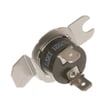
- Dryer high-limit thermostat WE4M137 (overheat protection)
- Dryer operating thermostat WE4M216 (temperature regulation)
- Dryer blower wheel WE16X20393 (moves air through the drum and vent)
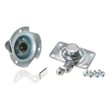
- Dryer drum glide bearing (green) WE03X37317 (front drum support)
Good airflow is the foundation of drying performance. When venting is restricted, the dryer runs hotter, dries slower, and can trip thermostats or other safety devices. Keeping the lint screen and venting clear also reduces wear on the motor and heater.
We match parts to GE model DPSR610EG8WT so you can replace only what failed. Order from the parts list for this model, or search by model number on Sears PartsDirect.
Last updated: February 2026
Is it worth it to fix a dryer?
Yes, it’s worth fixing a GE electric dryer like model DPSR610EG8WT when the problem is a common wear item (heat, airflow, or drum support) and the repair cost stays well below the cost of replacement. It’s usually not worth it when multiple major assemblies fail at once.
- The dryer still tumbles and heats intermittently: repair is typically cost-effective.
- The drum squeals, thumps, or drags: drum support parts are common fixes.
- Dry times are long: airflow and thermostats are often the issue.
- The dryer is dead (no lights, no start): check power supply and controls first.
- The drum or cabinet is badly damaged: replacement is usually the better value.
These are frequent, targeted fixes that restore performance without replacing the whole dryer:
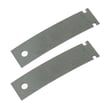
- Drum support wear (noise, scraping): dryer drum glide bearing (green) WE03X37317, dryer drum front glide pad WE03X37318, or GE dryer drum bearing, front WE3M26
- No heat or overheating symptoms: mica unit WE11M10001, dryer high-limit thermostat WE4M137, or dryer operating thermostat WE4M216
- Poor airflow or loud air movement: dryer blower wheel WE16X20393
- Timer not advancing or cycle issues: dryer timer WE4M527
| Situation | What it usually means | Typical best choice |
|---|---|---|
| One clear failure (thermostat, heater, blower, timer) | Single-part repair | Repair |
| Drum noise but dryer still runs | Glide pads/bearings worn | Repair |
| Multiple major failures at once (motor + drum + heat) | High parts and labor | Replace |
| Chronic long dry times after vent cleaning | Deeper airflow/heating diagnosis | Repair if one root cause is found |
A dryer that runs with worn drum glides or restricted airflow can overheat and shorten the life of key components. The owner's manual also calls out safety basics like disconnecting power before maintenance and keeping the lint filter clean.
- Disconnect power at the breaker before opening panels.
- Clean the lint screen every load; inspect the vent path for restrictions.
- Price out the likely part first, then compare to the cost of replacement.
- If you’re ordering parts, use the parts list for DPSR610EG8WT on this page, or search by model at Sears PartsDirect.
Last updated: February 2026
How long do dryers usually last?
Most dryers usually last 10 to 13 years. For your GE DPSR610EG8WT electric dryer, lifespan depends mainly on airflow (a clean lint screen and vent), load size, and how often the dryer runs; good maintenance keeps heat and drying times consistent.
Dryer life varies by use and care. Here are realistic ranges we see for residential dryers:
| Usage and maintenance | Typical lifespan |
|---|---|
| Heavy use, poor venting, infrequent cleaning | 8 to 10 years |
| Average use, basic maintenance | 10 to 13 years |
| Light to moderate use, excellent venting and upkeep | 13 to 20 years |
These steps reduce strain on the drive motor, drum support parts, and heating system:
- Clean the lint screen before every load; replace a damaged screen such as the dryer lint screen WE18X25100.
- Keep the exhaust venting short, smooth, and clear; restricted ducts increase heat and run time.
- Avoid overloading; heavy loads wear drum glides and bearings faster.
- Listen for squealing or scraping; worn glides and bearings are common wear items.
- Have the interior and exhaust duct connection cleaned at least yearly (the manual calls this out for safety and performance).
If the dryer gets noisy, thumps, or the drum feels rough to turn, these model-compatible parts are frequent fixes:
- Dryer drum glide bearing (green) WE03X37317
- Dryer drum front glide pad WE03X37318
- GE dryer drum bearing, front WE3M26
- Dryer blower wheel WE16X20393 (if you hear rattling or airflow drops)
- Dryer operating thermostat WE4M216 (if heat becomes inconsistent)
A dryer that takes longer to dry is not just inconvenient; long run times usually mean restricted airflow or a heating control issue, which increases wear on the heating element, thermostats, and motor. Your DPSR610EG8WT owner's manual also notes that drying times vary with load size, fabric type, and exhaust duct condition.
We list model-specific replacement parts for DPSR610EG8WT on this page; for additional parts by model number, we also support search on Sears PartsDirect.
Last updated: February 2026
How do I tell if my dryer heating element is bad?
If your GE DPSR610EG8WT electric dryer tumbles but doesn’t heat, the heating element is a top suspect, but we check power and airflow first. A bad element typically shows no continuity through the element coil, or it shows continuity to the metal housing (a short).
These items cause “no heat” symptoms and are faster to rule out than a part replacement:
- Confirm full 240V power: most electric dryers use two fuses or two breakers; if one trips, the dryer can run but not heat.
- Verify a heated cycle is selected (not air fluff or no-heat).
- Check airflow: clean the lint screen and make sure the vent is not crushed or clogged.
- Look for overheating symptoms: repeated shutdowns or very hot cabinet can point to restricted venting.
- Unplug the dryer or shut off power at the breaker before any service.
- Access the heater terminals (location varies; use the DPSR610EG8WT owner's manual for access guidance and safety notes).
- Set your multimeter to ohms (Ω).
- Test across the two heater terminals:
- A good element shows continuity (a measurable resistance).
- An open element shows OL/infinite resistance.
- Test for a short to ground:
- Put one probe on a heater terminal and the other on the metal heater housing.
- You should read no continuity; continuity here indicates a shorted element.
| Test | What you should see | What it means if you don’t |
|---|---|---|
| Terminal-to-terminal | Continuity (often roughly 10 to 50 Ω on many dryers) | Open coil, element is failed |
| Terminal-to-housing | No continuity | Shorted element, replace it |
If the element tests good, these parts commonly stop heat on electric dryers:
- Dryer high-limit thermostat WE4M137 (opens if the dryer overheats)
- Dryer safety thermostat WE4M160 (safety cutoff in an overheat condition)
- Dryer operating thermostat WE4M216 or dryer operating thermostat WE4M181 (controls normal cycling temperature)
Running an electric dryer with poor airflow or a shorted heater can cause repeated overheating, longer dry times, and nuisance thermostat trips. Verifying power, venting, and heater integrity prevents unnecessary part swaps and restores normal drying performance.
If you need to order the correct replacement part for your model, use the parts list for DPSR610EG8WT or search by model on Sears PartsDirect.
Last updated: February 2026





