Owner’s manual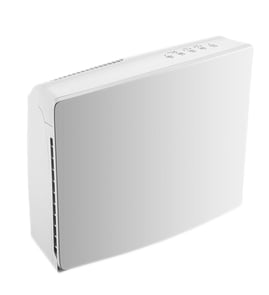
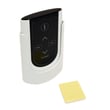

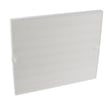
What are the parts of the air purifier?
For the Kenmore 25185450900 air cleaner, the core parts are the cabinet (housing and front panel), the fan and motor that move air, and the filter system that captures particles and odors (True HEPA filter plus a carbon pre-filter). See the 25185450900 use & care guide for the full feature and maintenance overview.
Main components you will see on this model
- Front panel: Removes so you can access the filters.
- True HEPA filter: The primary particle-capture filter (replaced periodically).
- Carbon pre-filter (with frame): Helps with odors and traps larger debris before the HEPA filter.
- Fan and motor assembly: Pulls room air through the filters and pushes cleaned air back out.
- Control panel: Includes power and filter reset functions.
- Air quality sensor: Detects air conditions; it needs light vacuuming about every three months.
- Remote control system: Remote, battery, and wall-mountable cradle (included with some versions).
How the airflow path works (simple view)
| Stage | What it does | What you maintain |
|---|---|---|
| Intake through front panel | Pulls room air into the unit | Keep panel clean and seated |
| Carbon pre-filter | Captures larger particles and helps reduce odors | Clean or replace as directed |
| True HEPA filter | Captures fine airborne particles | Replace when indicated |
| Fan and motor | Moves enough air for effective cleaning | Keep vents clear |
Filter access and replacement basics
We follow these steps for this Kenmore design:
- Turn the unit off and unplug it.
- Pull the front panel off gently from the lower portion.
- Remove the carbon pre-filter and frame, then remove the True HEPA filter.
- Install the new True HEPA filter with the airflow arrow pointing toward the back.
- Reinstall the frame and pre-filter, then snap the front panel back on.
- Use a paperclip to press RESET FILTER until the indicator confirms reset.
Why it matters
Air purifiers only clean well when airflow is strong and filters are installed correctly. A clogged pre-filter or a backwards HEPA filter can reduce airflow, increase noise, and lower cleaning performance.
Last updated: January 2026
How many air purifiers for a 3000 sq ft house?
For a 3,000 sq ft home, we typically recommend 3 to 6 air purifiers, depending on ceiling height, open floor plan vs. closed rooms, and your target air changes per hour (ACH). Kenmore air cleaners like model 25185450900 are generally sized for a single room, so whole-home coverage usually means multiple units placed where you spend the most time.
How to estimate the right number (simple method)
Use room-by-room sizing instead of trying to cover the entire house with one unit.
- Break the home into “zones” (bedrooms, living area, basement, office)
- Prioritize sleeping areas first (best comfort payoff)
- Choose a target ACH:
- 2 to 3 ACH: light dust, general freshness
- 4 to 5 ACH: allergies, pets, smoke sensitivity
- 6+ ACH: heavy smoke or high particle load (often needs multiple units per large zone)
- Match each purifier’s rated room size to the zone size
- Add units for closed-door rooms (air does not mix well through hallways)
Practical placement tips (what works in real homes)
The Kenmore manual guidance aligns with good airflow practices.
- Place each unit at least 2 feet from walls for better circulation
- Avoid drafty spots that can confuse sensors and reduce effective cleaning
- Run AUTO mode for day-to-day use; it adjusts fan speed based on detected impurities
- Use TURBO temporarily for fast cleanup (cooking odors, guests, vacuuming)
- Keep doors open if you want one unit to help adjacent spaces
Quick sizing examples for 3,000 sq ft
| Home layout | Typical recommendation | Why |
|---|---|---|
| Open concept, 8 ft ceilings | 3 to 4 units | Air mixes better across fewer zones |
| Many closed rooms, 2 stories | 4 to 6 units | Each room needs its own cleaning capacity |
| Pets or frequent cooking | Add 1 unit | Higher odor and particle load |
Why it matters
Air purifiers are most effective when they can move enough air through the filter in the room you are actually in. Even strong units struggle to clean air through doorways and around corners, so multiple correctly placed air cleaners usually outperform one oversized unit.
For model-specific operating details (AUTO mode, fan speeds, sensor behavior, and filter setup), follow the 25185450900 owner's manual.
Last updated: January 2026
What is the best air purifier for a large area?
For a large area, the best air purifier is one that is correctly sized for your square footage and uses true HEPA filtration with enough airflow to cycle the room air multiple times per hour. For Kenmore model 25185450900, use the coverage and specs listed in the 25185450900 owner’s manual to match the right capacity.
How to choose the right size for a large room
Start with room size, then size up for heavier pollutant loads (pets, smoke, cooking).
- Measure the main room (length x width) to get square feet
- If doors stay open to other rooms, add that square footage too
- Choose a purifier rated at or above your total square footage
- For smoke, pets, or allergies, pick the next size up for faster cleanup
- Use higher fan speeds when you need quicker results
Quick sizing guide (typical)
| Space type | Typical coverage target | What to prioritize |
|---|---|---|
| Bedroom or office | 100 to 250 sq. ft. | Quiet operation, true HEPA |
| Living room | 250 to 500 sq. ft. | Higher airflow, easy filter access |
| Open concept area | 500 to 1,200+ sq. ft. | High-capacity airflow, multiple fan speeds |
Filters and features that matter most
A large-room purifier performs best when it combines particle filtration with odor control and automatic operation.
- True HEPA filter for smoke, dust, pollen, and fine particles
- Carbon pre-filter for odors and larger debris (pet hair, lint)
- Air quality sensor and Auto mode to ramp fan speed when pollutants rise
- Light sensor or quiet mode for nighttime use
- Clear filter-change indicator so performance stays consistent
Maintenance expectations (so it stays “best”)
Filter condition drives real-world performance.
- Replace the carbon pre-filter about every 3 months for best odor control
- Replace the true HEPA filter when the CHECK FILTER indicator turns on
- Do not wash and reuse the true HEPA filter or carbon pre-filter
Why it matters
Large spaces need higher airflow and the right filter surface area; when the purifier is undersized or filters are loaded, dust and allergens linger longer and odor control drops.
Last updated: January 2026
What is the largest air purifier?
For a Kenmore air cleaner like model 25185450900, “largest” is best defined by the biggest room-size rating (coverage) rather than the biggest cabinet. Use the room-size specification and power rating in the 25185450900 owner’s manual to compare capacity and choose the right size for your space.
What “largest” usually means
When people ask for the largest air purifier, they typically mean one of these:
- Largest room coverage (square feet rating)
- Highest airflow (often tied to turbo/high fan speed)
- Highest cleaning performance (True HEPA plus pre-filter surface area)
- Most automation features (auto mode, air quality sensor, light sensor)
- Largest physical footprint (least important for air cleaning results)
How to size an air purifier for your room
We recommend sizing by the room you want to clean most often.
- Measure the room’s length and width; multiply for square feet
- Choose a unit rated for at least that square footage
- If you have smoke, pets, or allergies, size up so you can run a lower fan speed
- Keep the intake and outlet clear of walls, curtains, and furniture
Quick comparison guide (what to look for)
| “Largest” goal | What to compare | What you get |
|---|---|---|
| Biggest coverage | Room-size rating (sq. ft.) | Better whole-room cleaning |
| Strongest airflow | Fan speeds and turbo/high mode | Faster cleanup after odors/smoke |
| Best filtration | True HEPA + carbon pre-filter stages | Better dust, pollen, odor control |
Why it matters
If the purifier is too small for the room, it has to run on higher speeds more often; that increases noise and reduces how quickly it can improve air quality.
Maintenance notes that affect “capacity” over time
A clogged filter reduces airflow and makes any purifier act “smaller.” For this Kenmore design:
- Replace filters when the CHECK FILTER indicator tells you to
- Do not wash and reuse the True HEPA filter or the carbon pre-filter
- Follow the filter replacement and care steps in the 25185450900 owner’s manual
Last updated: January 2026