Installation guide
 Owner’s manual
 Error Codes



What is the difference between GE and GE Profile wall ovens?
GE and GE Profile wall ovens are both made by GE, but GE Profile models typically include more premium features and design upgrades than standard GE models. For a built-in wall oven like GE model JTP55SM1SS, the exact feature set depends on the specific series and control package listed in the owner's manual.
Typical differences you will see
In most lineups, GE Profile is positioned above standard GE Common differences include:
- More advanced cooking modes (for example, convection options and specialty settings)
- More precise temperature management (often with additional sensors and control logic)
- More premium styling (handles, trim, glass, and display design)
- More convenience features (expanded self-clean options, delayed start, or enhanced timers)
- More connectivity on newer products (varies by model year and series)
How to compare your exact oven features
Because features vary by model number, we recommend comparing these items side-by-side:
| What to compare | Standard GE wall oven | GE Profile wall oven |
|---|---|---|
| Controls | Basic electronic or knob-based | More advanced electronic controls |
| Cooking modes | Core bake and broil | Often adds more convection and specialty modes |
| Cleaning | Standard or self-clean (varies) | Self-clean is more common; may add options |
| Design | Functional, classic look | More premium finishes and trim |
For JTP55SM1SS specifically, the control panel functions and available cooking modes are laid out in the JTP55SM1SS installation guide and the user documentation.
Why it matters
Choosing between GE and GE Profile usually comes down to how you cook and what you want to pay for. If you want straightforward bake and broil performance, standard GE often fits well. If you want more cooking modes, upgraded controls, and a more premium look, GE Profile is usually the better match.
Last updated: January 2026
How to find GE wall oven model number?
For GE wall oven model JTP55SM1SS, we find the model and serial number on the rating label located on the side trim or on the front of the lower oven frame behind the oven door. Use that exact model number when ordering parts or scheduling service.
Where to look on a GE JTP55SM1SS wall oven
Check these common label locations first:
- Side trim (visible when the oven door is open)
- Front frame of the lower oven, behind the oven door
- Around the oven opening where the door seals against the frame
- On the trim area near the door hinge side (varies by installation)
Quick steps to find it fast
- Open the lower oven door.
- Look along the front frame and side trim for a white or silver rating label.
- Write down both the model number and serial number exactly as shown.
- Keep the info with your paperwork or note it in your phone.
What the label information is used for
| Label item | What it helps with | Example |
|---|---|---|
| Model number | Matching correct parts and diagrams | JTP55SM1SS |
| Serial number | Dating the unit and service history | Varies |
Why it matters
GE wall ovens can look similar across series (JTP, JKP, ZET, ZEK), but parts like the temperature sensor, thermostats, and control boards can differ by model and revision. Using the exact model number prevents wrong-part returns and repeat repairs.
For diagrams and model-specific details, use the JTP55SM1SS owner’s manual.
Last updated: January 2026
How to disable control lock on GE wall oven?
To disable Control Lock on your GE JTP55SM1SS electric wall oven, press and hold the correct two keys together for 3 seconds until the display changes from LOCON (locked) to LOCOFF (unlocked). The exact key pair depends on your control style; see the owner's manual.
Steps to turn Control Lock off (LOCOFF)
Use the pair that matches your keypad:
- Press and hold HOUR and MIN- together for 3 seconds.
- Or press and hold 9 and 0 together for 3 seconds.
- Watch the display: LOCON means locked; LOCOFF means unlocked.
- If you hear a beep and see LOCON when pressing pads, the lock is still on.
What Control Lock does (and does not do)
Control Lockout disables the press pads so settings cannot be changed accidentally.
| Feature | What you will see | What it means |
|---|---|---|
| Locked | LOCON | Press pads will not work; control beeps when pressed |
| Unlocked | LOCOFF | Normal keypad operation returns |
If the oven still seems “locked”
Sometimes the oven is not in Control Lock; it is in a heat-related lockout after Self Clean.
- If the oven just ran Self Clean, the door can stay locked until the oven cools and the LOCKED light goes out.
- Press CLEAR/OFF to stop a clean cycle; then wait for the oven to cool before trying the door.
- If the oven temperature seems inaccurate or the lock behavior is tied to overheating, check the oven temperature sensor circuit; the wall oven temperature sensor WB23T10015 is a common part involved in temperature feedback.
Why it matters
Control Lock prevents unintended changes to bake, broil, and timer settings, which helps avoid undercooking, overcooking, and surprise shutoffs during normal use.
Last updated: January 2026
How long do GE wall ovens last?
GE wall ovens typically last 15 years. For the GE JTP55SM1SS electric wall oven, lifespan depends most on heat exposure over time (self-clean use, ventilation, door seal condition) and how quickly small issues like overheating or temperature drift are corrected; see the maintenance and operating guidance in the owner's manual.
Typical lifespan and what affects it
Most built-in electric wall ovens reach the 15-year mark when they heat evenly, cool properly after use, and the door seals tightly.
Key factors that shorten or extend life:
- High-heat cycles (especially frequent self-clean) increase stress on wiring and controls
- Cooling airflow; the cooling fan may run after shutdown and that is normal on many GE wall ovens
- Door seal condition; heat leaks can overwork components
- Accurate temperature sensing; drifting temps can cause longer bake times and extra run time
- Electrical supply stability; loose connections and heat at the junction box can damage wiring
Quick “is it aging normally?” checklist
If your JTP55SM1SS is approaching mid-life, these checks help you decide whether to maintain, repair, or plan for replacement:
- Preheat time is reasonable and consistent
- Bake and broil heat evenly without large hot spots
- Cooling fan runs as designed and shuts off after cooldown
- Door closes squarely and the gasket seals all the way around
- No recurring error beeps, burning smell, or tripped breakers
Common wear items that impact longevity
When these parts weaken, the oven often still powers on but performance drops.
| Symptom | Likely wear area | Example part for this model |
|---|---|---|
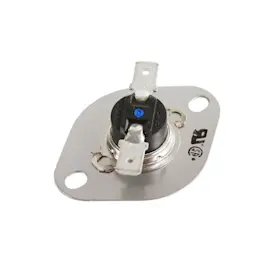
| Oven temperature swings or food under/overcooks | Temperature sensing | Wall oven temperature sensor WB23T10015 |
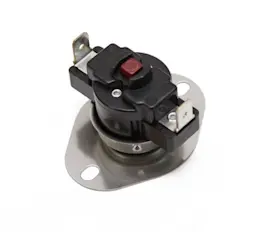
| Oven overheats or shuts down on high heat | Safety limit protection | Wall oven high-limit thermostat WB24T10150 |
| Excess heat around the door, longer cook times | Door sealing | Range oven door gasket WB04T10050 |
Why it matters
A wall oven that is running hot, running too long, or leaking heat can wear out controls, thermostats, and wiring faster. Keeping temperatures accurate and airflow unobstructed helps you reach the full 15-year service life.
Last updated: January 2026