Owner’s manual
 Error Codes


What are the common problems with Kenmore Elite refrigerators?
Common problems we see with the Kenmore Elite refrigerator model 79573132410 include cooling issues (often tied to the sealed system or airflow), ice maker or water dispensing failures, and control or sensor problems that cause erratic temperatures or alarms. The troubleshooting steps and feature checks in the 79573132410 owner's manual help narrow the cause quickly.
- Not cooling or warm temperatures: compressor or sealed system issue, condenser airflow restriction, or evaporator fan problem
- Ice maker not making ice: water supply restriction, ice maker fault, or inlet valve problem
- Water dispenser slow or not dispensing: clogged filter, filter head issue, or inlet valve problem
- Frost buildup or moisture inside: door not sealing, frequent door openings, or normal moisture after an automatic defrost cycle
- Lights or dispenser behavior is odd: door switch or electronic control issue
- Confirm temperature settings and allow 24 hours after any adjustment.
- Check doors close fully and gaskets seal; reduce warm-air leaks.
- Inspect for blocked vents inside the refrigerator and freezer.
- If water or ice is weak, replace the water filter and purge air from the line.
- Use the built-in diagnostics features described in the manual (including Kenmore Connect on some units).
| Symptom | Common part involved | Example part for this model |
|---|---|---|
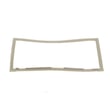
| No ice or small cubes | Ice maker or water supply component | Lg refrigerator ice maker AEQ72910412 |
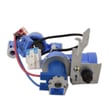
| No water to dispenser/ice maker | Water inlet valve | Lg refrigerator water inlet valve AJU72992601 |
| Lights do not respond to door | Door switch | Refrigerator door switch 6600JB1010A |
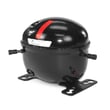
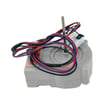
| Warm fridge, noisy or no airflow | Evaporator fan motor | Lg refrigerator evaporator fan motor 4681JB1027C |
Catching the symptom pattern early helps prevent food spoilage and reduces strain on major components like the compressor. It also keeps you from replacing the wrong part when the real issue is airflow, a clogged filter, or a door seal problem.
Last updated: January 2026
What does DH mean on Kenmore Elite refrigerator?
On Kenmore Elite refrigerator model 79573132410, dH (often shown as Er dH) points to a defrost heating issue; the refrigerator is not warming the evaporator enough during the defrost cycle, so frost can build up and airflow can drop. Use the 79573132410 owner's manual troubleshooting section to confirm the exact display behavior and checks.
- Refrigerator section warming up while the freezer seems “okay” at first
- Frost or ice buildup on the rear freezer panel
- Weak airflow from vents, or uneven temperatures
- Water dripping after a defrost attempt, then refreezing
- Fan noise changes (fan hitting ice) or reduced fan sound
- Power reset: Unplug for 5 minutes, plug back in, then monitor for the code returning.
- Door seal and door closing: Make sure doors fully close; warm air leaks increase frost load.
- Airflow: Keep packages from blocking freezer vents and the return air path.
- Listen for the evaporator fan: If airflow is weak, the fan may be iced in.
| What’s failing | What it affects | Example part for this model |
|---|---|---|
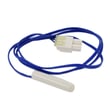
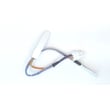
| Defrost sensor/thermistor | Defrost timing and temperature feedback | Refrigerator defrost sensor assembly 6615JB2005N |
| Control not initiating/finishing defrost | Defrost cycle control logic | (varies by symptom) |
| Heater circuit issue (heater, wiring, connectors) | Actual melting of frost on evaporator | (heater not listed in common parts above) |
A defrost heating problem can quickly turn into heavy frost on the evaporator, which blocks airflow and makes the refrigerator run longer, warm up, and struggle to maintain safe food temperatures.
Last updated: January 2026
What size is Kenmore refrigerator model 79573132410?
Kenmore Elite refrigerator model 79573132410 is a bottom-mount style refrigerator; the exact exterior dimensions (height, width, depth) vary by configuration and are listed in the 79573132410 owner's manual. Most bottom-mount refrigerators of this type are roughly 33 inches wide and 65 to 70 inches tall.
We recommend measuring your refrigerator and comparing it to the specifications section in the manual.
- Measure width at the widest point (often the door edges or hinges)
- Measure height from floor to top of hinge cover
- Measure depth with doors closed (and note if you include handles)
- Confirm you have clearance for door swing; the manual notes allowing 24 inches in front to open doors
- If you are moving it through a tight opening, plan for door removal (the manual describes handle and door removal steps)
| Measurement | What it tells you | Common notes |
|---|---|---|
| Width | Fit between cabinets | Include hinges if they stick out |
| Height | Fit under soffits/cabinets | Include hinge cover |
| Depth | How far it protrudes | Record “with handles” and “without handles” |
Getting the correct size prevents installation problems like doors that cannot open fully, poor airflow around the cabinet (which can hurt cooling performance), and headaches when replacing the unit or ordering door bins, drawers, or other refrigerator parts.
Last updated: January 2026
Why is my Kenmore Elite refrigerator leaking water out of the bottom?
Water leaking from the bottom of Kenmore Elite model 79573132410 is usually caused by a clogged or frozen defrost drain that overflows during the automatic defrost cycle, or by a water supply connection issue (including water hammer or incorrect water pressure). Use the 79573132410 owner's manual to locate access points and follow safe service steps.
- Defrost drain clogged or frozen: Water from defrost cannot flow to the drain pan, so it spills and leaks out.
- Drain tube restricted: Debris or ice in the drain path can force water to the cabinet bottom.
- Water line connection seepage: A loose fitting behind the unit can drip and track to the front.
- Water inlet valve leaking: The valve can seep slowly even when not dispensing.
- Door left ajar or warm air leaks: Extra frost can create more meltwater than the drain can handle.
- Unplug the refrigerator before working near fans, wiring, or the bottom area.
- Check for ice buildup on the freezer back wall; heavy frost often points to a drain issue.
- Clear the drain: melt visible ice with warm air, then flush the drain with warm water until it flows freely.
- Inspect the rear lower area for drips at the water line and valve.
- If the leak is tied to the dispenser or icemaker supply, inspect the valve and tubing; replace the valve if it seeps.
| Symptom | Likely part | What it does |
|---|---|---|
| Water pooling after defrost | Refrigerator drain tube 5251JA3003D | Routes defrost water to the drain pan |
| Drips from rear water connections | Lg refrigerator water inlet valve AJU72992601 | Controls water flow to icemaker and dispenser |
A recurring bottom leak can damage flooring and can also lead to ice buildup that reduces airflow and cooling performance. The manual also notes that water hammer and incorrect water pressure can contribute to leakage, so correcting plumbing issues prevents repeat failures.
Last updated: January 2026