Owner’s manual
 Error Codes



What is the average lifespan of a Kenmore Elite refrigerator?
Most Kenmore Elite refrigerators average 10 to 15 years of service life. For your Kenmore Elite 79571043010 bottom-mount refrigerator, regular maintenance (clean condenser coils, keep doors sealing, and maintain steady temperatures) is what most directly determines whether you land closer to 10 years or closer to 15.
Typical lifespan and what changes it
A refrigerator’s lifespan is mainly driven by compressor workload, airflow, and door sealing.
- 10 to 15 years is the normal range for modern refrigerators
- Heavy use (frequent door openings, warm kitchen, overpacked compartments) shortens life
- Poor airflow (dirty condenser coils, blocked vents) increases run time and wear
- Weak door sealing (gasket leaks, misalignment) forces longer cooling cycles
- Stable temperatures reduce stress on the sealed system and control board
Maintenance that helps your 79571043010 last longer
Use the care and cleaning schedule in the 79571043010 owner's manual as your baseline.
- Vacuum and brush condenser coils regularly to keep heat exchange efficient
- Confirm doors close fully; avoid overloading door bins and shelves
- Keep interior vents clear so the evaporator fan can circulate air
- Set practical temps: 37°F to 40°F fresh food; 0°F freezer
- Address water leaks quickly (they can lead to icing and airflow problems)
Repair vs. replace: a simple rule of thumb
When a refrigerator is older, high-cost sealed-system repairs can outweigh the value of keeping it running.
| Situation | What it usually means | Practical next step |
|---|---|---|
| Minor issues (lights, door closing, small leaks) | Normal wear items | Repair and maintain |
| Cooling is weak but fans run | Airflow or defrost issue | Diagnose defrost and airflow |
| Not cooling and compressor is involved | Higher-cost repair category | Compare repair cost to replacement |
Why it matters
A bottom-mount refrigerator that runs longer than normal is often compensating for heat buildup (dirty coils), air leaks (gasket), or airflow restrictions. Reducing run time helps protect major components like the compressor and control board.
Last updated: February 2026
Why is my refrigerator not getting cold at the bottom?
If your Kenmore Elite refrigerator model 79571043010 is warmer at the bottom, the most common causes are restricted airflow (blocked vents or a weak evaporator fan), dirty condenser coils reducing heat removal, or a defrost problem that builds frost and chokes circulation. Use the temperature-control steps in the owner's manual first.
Quick checks that fix most “warm bottom” complaints
- Set the refrigerator control 1 increment colder; wait 24 hours for temperatures to stabilize.
- Make sure food packages are not blocking air vents or the return-air path.
- Clean condenser coils and the condenser fan area (dust and pet hair can cause poor cooling).
- Confirm the doors close fully and the gaskets seal all the way around.
- Listen for the evaporator fan; if it is not running, cold air will not circulate down into the fresh-food section.
Temperature settings: what to change first
The refrigerator control acts as the main thermostat for the whole appliance; adjust it first, then wait 24 hours before changing anything else.
| Symptom | What to adjust first | What to do next |
|---|---|---|
| Fresh-food section warm (often felt “at the bottom”) | Refrigerator control | Wait 24 hours; then fine-tune freezer control if needed |
| Freezer OK but fridge warm | Refrigerator control | Check vents, fan operation, frost buildup |
| Temps swing after changes | Controls changed too quickly | Make 1-step changes; wait 24 hours between adjustments |
Parts that commonly solve airflow and cooling issues
If cleaning and vent checks do not help, these model-matched parts are common fixes:
- Evaporator fan not running or noisy: lg refrigerator evaporator fan motor 4681JB1027C
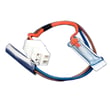
- Frost buildup from a defrost failure: refrigerator defrost sensor assembly 6615JB2005H and lg refrigerator defrost heater 5300JK1005D
- Door not sensing closed (fan and lights can act up): refrigerator door switch 6600JB1010A
Why it matters
Bottom-warm symptoms usually mean cold air is not moving correctly. Restoring airflow protects food safety, reduces compressor run time, and helps prevent ice buildup that can lead to repeated cooling problems.
For deeper troubleshooting steps and control guidance specific to your refrigerator, follow the owner's manual.
Last updated: February 2026
What are the common problems with Kenmore Elite refrigerators?
Common problems on Kenmore Elite bottom-mount refrigerators like model 79571043010 include not cooling or weak cooling, frost buildup from defrost issues, unusual fan or defrost-cycle noises, and water leaks from a clogged defrost drain. Many of these symptoms trace back to airflow, door sealing, or the defrost system; use the 79571043010 owner's manual troubleshooting section to narrow it down.
Most common symptoms and what they usually mean
- Fridge warm, freezer OK (or vice versa): airflow problem, evaporator fan issue, or frost blocking the evaporator
- Frost or ice buildup: defrost heater, defrost sensor, or door gasket not sealing
- Puddles or water under the unit: defrost drain restriction or drain tube issue
- Lights work but no cooling: unit may be in Demo (Demonstration) Mode
- Buzzing, rattling, sizzling, popping: often normal during defrost and refrigerant movement; persistent loud fan noise points to a fan motor
Quick checks we recommend first (before buying parts)
- Confirm it is not in Demo Mode: on many 795-series controls, opening a door and holding specific buttons can disable Demo Mode (details are in the manual).
- Check door closure and sealing: look for gaps, torn gasket areas, or doors that sit uneven.
- Listen for fans: evaporator fan noise typically changes when doors open and close.
- Look for frost patterns: heavy frost on the back freezer panel often indicates a defrost problem.
- Inspect for drain issues: water in the freezer bottom or under crispers often points to a clogged drain.
Parts that commonly solve these problems on model 79571043010
| Symptom | Common part involved | Example part on this model |
|---|---|---|
| Door not sensing closed, lights acting odd | Door switch | Refrigerator door switch 6600JB1010A |
| Frost buildup, warm temps | Defrost system | Refrigerator defrost sensor assembly 6615JB2005H or lg refrigerator defrost heater 5300JK1005D |
| Warm temps, weak airflow | Evaporator fan | Lg refrigerator evaporator fan motor 4681JB1027C |
| Water leaks from defrost drain | Drain path | Refrigerator drain tube 5251JA3003D |
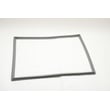
| Poor sealing, moisture, frost | Door gasket | Refrigerator door gasket MDS64172919 |
Why it matters
Cooling and ice-making depend on steady airflow and a working defrost cycle. When frost blocks the evaporator or a door seal leaks warm air, the compressor can run longer than normal and temperatures drift.
Last updated: February 2026
What size is Kenmore refrigerator model 79571043010?
Kenmore Elite refrigerator model 79571043010 is in the 795.7104* bottom-freezer platform; the exact exterior dimensions and total capacity for your specific unit are listed in the specifications section of the 79571043010 owner's manual. Use those published measurements for cabinet fit and door-swing planning.
What “size” usually means (and what to look up)
In the manual, confirm these specs for 79571043010:
- Overall width (widest point, door to door)
- Overall height (floor to top hinge cover)
- Overall depth (case only, and with doors/handles)
- Required clearances (top, sides, back for airflow)
- Total capacity (cubic feet)
How to measure your refrigerator so it matches the spec sheet
Even with published dimensions, measuring your installed unit helps confirm fit (especially depth):
- Measure width at the widest point of the doors
- Measure height from the floor to the top hinge cover (after leveling)
- Measure depth two ways: cabinet only, then to the front of the handles
- Check door swing clearance to nearby walls and counters
Quick comparison: spec sheet vs. tape measure
| Item | Use the manual for | Use your tape measure for |
|---|---|---|
| Width/height/depth | Official published dimensions | Real-world fit with flooring and leveling |
| Depth with handles | Exact “sticks out” number | Confirms counter and walkway clearance |
| Clearances | Minimum airflow requirements | Verifies you can meet those minimums |
Why it matters
Using the model-specific dimensions prevents installation surprises like doors hitting cabinets, drawers not clearing, or the refrigerator sitting too close to the wall, which can affect airflow and cooling performance.
Last updated: February 2026
Can I run my Kenmore refrigerator without a water filter?
Yes. Your Kenmore Elite refrigerator model 79571043010 will run and cool without a water filter; the main tradeoffs are water and ice taste, odor, and more mineral or sediment buildup in the dispenser and ice maker water path. Use the guidance in the 79571043010 owner's manual for your exact setup.
What changes when the filter is removed
- Cooling performance: no change
- Water and ice taste or odor: more likely to taste or smell “off” if your water has minerals (the manual notes a filter may be needed for taste and odor minerals)
- Ice maker reliability: more sensitive to water supply issues (pressure, restrictions, debris)
- Water system cleanliness: more scale can collect in tubing, the valve, and the ice maker over time
Water pressure requirements (from the manual)
The manual lists different minimum pressures depending on whether a filter is installed.
| Configuration | Water pressure range | If pressure is too low, you may see |
|---|---|---|
| Without a water filter | 20 to 120 psi | Slow dispenser flow, small or incomplete ice cubes, intermittent ice production |
| With a water filter | 40 to 120 psi | Slow dispenser flow, small or incomplete ice cubes, intermittent ice production |
Best practices if you run without a filter
- Flush several gallons of water through the dispenser after any change to the filter or water line.
- Discard the first few batches of ice after reconnecting water.
- If you notice weak flow or no ice, check for a kinked supply line or a clogged inlet screen.
- If symptoms point to a valve problem (no fill, slow fill, buzzing), test or replace the refrigerator water inlet valve 5220JB2010A.
Why it matters
A water filter is primarily about water quality, but it also reduces sediment that can restrict flow. Low flow affects both the dispenser and ice maker, and it can make normal issues look like a failing ice maker.
Last updated: February 2026