Owner’s manual
 Error Codes



Is GE CFE28TSHRSS considered high end?
Yes. The GE CFE28TSHRSS is typically considered a premium, higher-end refrigerator within GE’s lineup because it’s part of the Café family, which focuses on upgraded design, features, and finishes compared with standard GE models.
How we classify “high end” for this model
We look at a few practical factors that usually separate premium refrigerators from mainstream models:
- Product family positioning: Café is marketed as a step up in styling and features.
- Feature set: More advanced controls, dispenser options, and convenience features are common.
- Fit and finish: Premium exterior styling and interior lighting/trim are typical.
- Replacement part costs: Higher-end models often use more specialized electronics and assemblies.
For model-specific details on features and controls, use the owner's manual.
What “high end” means in real-world ownership
A higher-end refrigerator can still need normal maintenance and occasional repairs. For the CFE28TSHRSS, common ownership items include filtration, ice production, and temperature management.
- Replace the water filter on schedule to keep flow strong and taste consistent.
- Keep door seals clean and sealing evenly to prevent temperature swings.
- Address unusual fan noise early to avoid cooling performance issues.
Common premium parts you may see on this model
These are examples of parts on this model that often reflect a more feature-rich design:
| System | Example part on this model | What it affects |
|---|---|---|
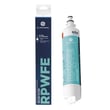
| Water filtration | GE refrigerator water filter RPWFE | Water taste, flow rate, ice quality |
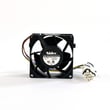
| Cooling airflow | Refrigerator evaporator fan motor | Even temperatures, noise level |
| Electronics | Refrigerator main control board | Cooling logic, defrost timing, dispenser behavior |
Why it matters
Knowing the CFE28TSHRSS is “high end” helps set expectations: you’re usually getting more features and a more premium look, but maintenance (like filter changes) and part replacement costs can be higher than basic models.
Last updated: February 2026
What is the most common problem with a GE refrigerator?
The most common issue we see with GE refrigerators like model CFE28TSHRSS is a cooling complaint (warm fresh food section, warm freezer, or both). In many cases, the root cause is restricted airflow or heat not being released properly, which makes the compressor run longer and temperatures drift.
Most common causes of poor cooling
Start with the simplest, highest-impact checks first:
- Clean the condenser area (dust buildup reduces heat transfer and cooling capacity).
- Confirm interior vents are not blocked by food packages.
- Make sure doors close and seal fully; a small air leak can cause constant running and temperature swings.
- Listen for the evaporator fan; if it is not running, cold air will not circulate.
- Check for heavy frost on the evaporator cover; that points to a defrost problem.
- Verify temperature settings and any “turbo” or “quick cool” features in the owner's manual.
Quick symptom-to-part guide (common matches)
These parts are commonly involved when cooling or airflow problems show up on this model.
| Symptom | What it often points to | Example part for CFE28TSHRSS |
|---|---|---|
| Fridge warm, freezer cold | Airflow problem in fresh food section | GE refrigerator evaporator fan motor WR60X26866 |
| Temps inconsistent, short cycling | Sensor feedback issue | Refrigerator temperature sensor WR55X10025 |
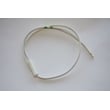
| Heavy frost, weak airflow | Defrost system problem | Refrigerator defrost heater WR51X10132 or refrigerator defrost bi-metal thermostat WR50X10108 |
| Unit runs but won’t cool correctly | Control or sealed system diagnosis | Refrigerator main control board WR55X46805 |
Why it matters
Cooling problems are usually progressive. Fixing airflow restrictions early helps protect food quality, reduces energy use, and can prevent secondary failures (like an overworked compressor).
Helpful DIY guidance
If you suspect a fan or airflow issue, we recommend following the steps in how to fix your evaporator cooling fan to narrow down whether the fan motor, frost buildup, or an airflow blockage is the real cause.
Last updated: February 2026
How to remove the bottom shelf of a GE fridge?
To remove the bottom shelf in your GE CFE28TSHRSS refrigerator, we recommend emptying the shelf first, then tilting the front up and lifting the back up to unhook it from the track so you can pull it out safely. See the CFE28TSHRSS owner's manual for the exact shelf style and track locations.
Steps to remove the shelf (and glass, if equipped)
- Remove all food and bins sitting on the shelf.
- Tilt the shelf up at the front.
- Lift the shelf up at the back to release the hooks from the track slots.
- Pull the shelf straight out of the refrigerator compartment.
- If your shelf has a separate glass insert, lift the glass up slightly and slide it out carefully after the frame is free.
Important safety and handling tips
Glass shelves are strong, but they can break if handled the wrong way.
- Do not clean or rinse cold glass with warm water; sudden temperature change can crack it.
- Use two hands and keep the shelf level when carrying it.
- Avoid bumping the shelf edges on the door liner or cabinet walls.
- Set the shelf on a flat, padded surface if you are cleaning it.
Reinstalling the shelf
To put the shelf back in:
- Tilt the shelf up.
- Insert the top hook(s) at the back into the correct slot(s) on the track.
- Lower the front until the bottom locks into place.
Quick check table
| What you see | What it usually means | What to do |
|---|---|---|
| Shelf will not lift at the back | Hooks still loaded by weight or jammed | Remove items, lift front higher, then lift back |
| Shelf feels stuck | Shelf not tilted enough to clear the track | Tilt front up more, then lift back and pull out |
| Glass insert shifts | Insert is not seated in the frame | Remove glass first (if possible) and reinstall squarely |
Why it matters
Removing the shelf the right way prevents cracked glass, broken shelf hooks, and damage to the shelf tracks, which helps your GE refrigerator keep stable storage and proper airflow.
Last updated: February 2026
How to remove bottom grille on GE refrigerator?
On the GE CFE28TSHRSS bottom-mount refrigerator, remove the bottom grille by taking out the Phillips-head screws along the grille edge, then pulling the grille straight forward to release it. Use the CFE28TSHRSS owner's manual to confirm screw locations and any trim pieces on your exact configuration.
Steps to remove the bottom grille
- Unplug the refrigerator or switch off power at the breaker.
- Open the fresh food doors for easier access to the lower front.
- Locate the Phillips-head screws securing the bottom grille.
- Remove the screws and keep them in a cup so they do not get lost.
- Pull the grille straight out from the front; support both ends to prevent bending.
- Set the grille on a flat surface to avoid warping.
If you need to move the refrigerator for access
The manual’s care guidance applies when pulling the unit out for cleaning or service.
- Raise the leveling legs at the bottom front before moving the refrigerator.
- Pull the refrigerator straight out (avoid twisting sideways).
- When pushing it back, do not roll over the power cord or water supply line.
| Action | What it prevents |
|---|---|
| Raise leveling legs | Floor damage and cabinet drag |
| Pull straight out | Scratched flooring and misalignment |
| Watch cord and water line | Pinched line, leaks, electrical damage |
Why it matters
The bottom grille protects lower components and helps maintain proper airflow. Reinstall it securely after cleaning so dust buildup stays controlled and cooling performance stays steady.
Last updated: February 2026