 Error Codes


What's the average lifespan of a Maytag washer?
Most Maytag washers average 10 to 13 years of service life with normal household use and basic maintenance. For your Maytag MAV7357AWW, lifespan depends most on load size, how often you run cycles, and whether wear parts (like the drive belt and lid switch) are replaced when symptoms start.
Typical lifespan ranges
These are practical, real-world expectations for a top-load washer like the MAV7357AWW:
- Average: 10 to 13 years
- Often achievable with good care: 13 to 15 years
- Shortened lifespan drivers: frequent overloads, chronic out-of-balance spinning, and running with leaks or slipping belts
| Usage pattern | What we typically see | What helps most |
|---|---|---|
| Light (1 to 3 loads/week) | Longer life | Avoid sitting water, keep loads balanced |
| Average (4 to 7 loads/week) | 10 to 13 years | Don’t overload, fix small issues early |
| Heavy (8+ loads/week) | Shorter life | Replace wear parts promptly, reduce strain |
What usually ends a washer’s life (and what you can fix)
Many “end of life” calls are really wear items that are repairable:
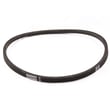
- Won’t spin or weak spin: check the washer drive belt WP22003483 for glazing, cracking, or looseness
- Stops mid-cycle or won’t run with lid closed: inspect the washer lid switch WP22003804 and actuator alignment
- Not draining well: look for kinks, clogs, or soft spots in the drain hose
- Excess vibration: reduce load size, redistribute items, verify the washer sits level
- Water leaks: check hoses, clamps, and tub-to-pump connections
Why it matters
A washer that is overloaded or allowed to run with a slipping belt, intermittent lid switch, or slow drain wears the motor, transmission components, and suspension faster. Fixing small symptoms early is the simplest way to push past the average lifespan.
Last updated: February 2026
Where can I order Maytag washing machine parts?
You can order replacement parts for your Maytag MAV7357AWW washer directly from our Maytag parts catalog by searching the model number and matching the part to your symptom or diagram. For common repairs, we also list model-fit items like the washer drive belt WP22003483 and washer lid switch WP22003804.
How to order the right part for MAV7357AWW
- Confirm the model number on the washer’s model tag matches MAV7357AWW.
- Identify the problem first (no spin, no drain, leaking, won’t start).
- Use the parts list/diagram to match the part name and location.
- Compare your old part to the listing (mounting points, connectors, hose size).
- Order using the part ID shown on the part page to avoid mix-ups.
Common parts customers order for this washer
| Symptom | Part to check | Example model-fit part |
|---|---|---|
| Won’t spin or weak spin | Drive belt, motor/pulley system | Washer drive belt WP22003483 |
| Won’t start or stops mid-cycle | Lid switch and actuator pieces | Washer lid switch WP22003804 |
| Not draining or slow drain | Drain hose, pump, clogs | Washer drain hose WP22003410 |
| Leaking at hoses | Hose clamps, hose connections | Hose clamp WP285655 |
Why it matters
Ordering by model number + part ID helps ensure the part fits your exact Maytag washer design, which reduces returns and gets your washer back to washing, draining, and spinning correctly.
Last updated: February 2026
What is the most common problem with a Maytag washer?
The most common Maytag washer problem is a drain or spin failure: the washer fills and agitates, but won’t drain fully or won’t spin out water. On the Maytag MAV7357AWW, the most frequent causes are a restricted drain path, a failing lid switch, or a worn drive belt such as the washer drive belt WP22003483.
Quick checks we recommend first
- Make sure the load is balanced; a severely unbalanced load can stop or limit spin.
- Confirm the lid closes firmly; a lid switch issue can prevent spin.
- Check the drain hose for kinks, crushing, or a clogged standpipe.
- Listen during drain: a loud hum with little water movement points to a drain restriction or pump issue.
- If the tub drains but won’t spin, inspect the belt and drive system.
Most common symptoms and what they usually mean
| Symptom | Most likely cause | What to check next |
|---|---|---|
| Won’t drain or drains slowly | Drain restriction or pump problem | Drain hose routing, clogs, pump inlet/outlet |
| Drains but won’t spin | Lid switch not closing or drive issue | Washer lid switch WP22003804, belt condition |
| Spins weakly, burning rubber smell | Belt slipping | Washer drive belt WP22003483, pulley alignment |
| Stops mid-cycle intermittently | Control or switch input issue | Lid switch operation, wiring connections |
Parts that commonly fix drain and spin problems
These are frequent repair parts for the MAV7357AWW when the issue is drain/spin related:
- Washer lid switch WP22003804 (spin safety interlock)
- Washer drive belt WP22003483 (drives spin and agitation)
- Washer drain hose WP22003410 (kinks, internal blockage, poor draining)
- Washer lid switch plunger WP22002754 (lid strike/plunger not engaging switch)
Why it matters
Drain and spin problems leave clothes soaking wet, increase cycle time, and can strain the motor and belt. Fixing the root cause early helps prevent secondary damage to the drive system and reduces vibration and noise.
Last updated: February 2026
What is the most expensive part to replace on a washing machine?
On a Maytag top-load washer like model MAV7357AWW, the most expensive repairs are typically the transmission/gearcase area, the main control board, or major drive components because the parts cost is high and labor time is significant. In many cases, the total can reach several hundred dollars.
Most expensive parts (typical)
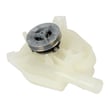
- Transmission/gearcase: heavy labor; often requires major disassembly
- Main control board: expensive electronic part; diagnosis matters
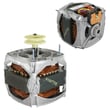
- Motor and drive system: can include belt, pulleys, and related hardware
- Outer tub/spin basket related repairs: can be labor-intensive if seals or bearings are involved
Examples of higher-cost parts we see for MAV7357AWW
These are not always the most expensive repair once labor is included, but they are commonly among the pricier parts on this model:
| Part type | Example part for MAV7357AWW | Why it can be costly |
|---|---|---|
| Control board | Control board WP22003906 | Higher part price; must confirm correct diagnosis |
| Control panel | Control panel 22003865 | High part price; cosmetic and electronic components |
| Drive system | Washer drive belt WP22003483 | Lower part price, but often replaced with related drive parts |
How to decide if it is worth repairing
Check these before buying a major part
- Confirm the symptom is consistent (no-spin, no-agitate, no-drain, dead console)
- Inspect for simple causes first (broken belt, loose wiring, clogged drain path)
- Price the repair as parts + tools + time (or parts + labor if hiring service)
- Consider the washer’s overall condition (leaks, rust, repeated failures)
- If the issue is intermittent, test electrical components before replacing boards
Why it matters
Big-ticket parts like a control board or transmission can make a repair cost approach the value of an older washer. A quick diagnosis step can prevent replacing the wrong component and paying twice.
Last updated: February 2026


