Installation guide
 Owner’s manual
 Error Codes


Are bottom mount fridges better?
Bottom-mount refrigerators like the GE CFCP1NIZESS are “better” for many kitchens because the fresh-food section sits at eye and waist level, so the items you use most are easier to see and reach; the freezer stays in a lower drawer for bulk storage.
When a bottom-mount is the better choice
- You cook often and want produce, dairy, and leftovers at comfortable reach
- You prefer wide refrigerator shelves over bending for a top-freezer compartment
- You store lots of frozen foods and like pull-out baskets for organization
- You want easier access for kids to the refrigerator section (snacks, drinks)
- You don’t mind bending for freezer items
Trade-offs to consider
Bottom-mount designs are not automatically “best” for every home. Here are the common pros and cons.
| Feature | Bottom-mount refrigerator | Top-freezer refrigerator |
|---|---|---|
| Fresh-food access | Easier, more ergonomic | Requires more bending |
| Freezer access | Lower drawer, more bending | Easier to reach |
| Organization | Often better freezer organization | Often simpler layout |
| Typical cost/complexity | Often higher | Often lower |
What matters most day to day (why it matters)
Ergonomics and visibility drive satisfaction more than the freezer location. If you open the refrigerator section far more than the freezer, a bottom-mount layout reduces bending and makes it easier to keep food from getting lost and spoiling.
Model-specific tip for GE CFCP1NIZESS owners
For exact feature details (storage layout, controls, and recommended settings) for your GE CFCP1NIZESS, use the owner's manual.
Last updated: February 2026
What is the most common problem with a GE refrigerator?
The most common issue we see on GE refrigerators like model CFCP1NIZESS is poor cooling (fresh food too warm, freezer not holding temperature). In many cases, the cause is restricted airflow or heat not being removed efficiently, so the compressor runs longer and temperatures drift.
Most common causes of poor cooling
- Dirty or blocked condenser area (heat cannot dissipate well)
- Evaporator fan not moving cold air through the compartments
- Air vents blocked by overpacked food (especially in the fresh food section)
- Defrost system problem causing frost buildup on the evaporator
- Temperature sensing issue, such as a failed temperature sensor WR55X10025
- Airflow control issue, such as a sticking refrigerator air damper WR17X12456
Quick checks we recommend first
- Confirm settings: refrigerator about 37°F and freezer about 0°F (typical targets).
- Check door closure and gasket seal; look for gaps, wrinkles, or warm air leaks.
- Make sure vents are not blocked by containers or bags.
- Listen for the evaporator fan (often a steady fan sound when the compressor is running).
- Clean dust from the condenser area and ensure the unit has breathing room.
Symptoms and what they usually point to
| Symptom | Most likely direction | Common next step |
|---|---|---|
| Fresh food warm, freezer OK | Airflow from freezer to fridge restricted | Check vents and damper operation |
| Freezer warm and fridge warm | Cooling system not removing heat | Check condenser area and fans |
| Frost blanket on back freezer panel | Defrost problem | Inspect defrost components |
| Temps swing up and down | Sensor or control issue | Test sensor and wiring |
Why it matters
Cooling complaints are often fixable with airflow and maintenance steps, but ignoring them can lead to longer run times, higher energy use, and food spoilage. Catching a fan, sensor, or defrost issue early helps prevent bigger failures.
Helpful model-specific resources
- Use the owner's manual for the correct temperature setting method, control features, and recommended clearances.
- If the door alarm is involved (beeping after closing), follow how to reset the door alarm on a GE refrigerator.
Last updated: February 2026
Is GE CFCP1NIZESS considered high end?
Yes. The GE CFCP1NIZESS is typically considered a higher-end GE refrigerator because it’s part of the GE Café lineup, which is positioned as a premium, design-forward series with upgraded styling and features compared to standard GE models.
What “high end” usually means for this model
For GE Café bottom-mount refrigerators like CFCP1NIZESS, “high end” usually refers to a mix of premium design and feature set, plus a higher price tier.
- More premium exterior styling and finishes than many standard GE models
- Feature-focused design (often including advanced temperature management and filtration)
- Higher replacement-part costs for some assemblies (common in premium lines)
- Built for a “designer kitchen” look, not just basic refrigeration
How to judge it in a practical way
We recommend using these checkpoints to decide if CFCP1NIZESS is “high end” for your needs.
| Checkpoint | What to look for | Why it matters |
|---|---|---|
| Fit and finish | Door alignment, handle feel, gasket seal | Impacts daily use and efficiency |
| Temperature performance | Stable fresh food and freezer temps | Protects food quality |
| Water and ice system | Filter type, flow rate, ice production | Convenience and taste |
| Parts and serviceability | Availability of common parts | Affects long-term ownership |
Parts that commonly support “premium” features
If you’re evaluating ownership costs, these model-compatible parts are good examples of the systems that often differentiate premium refrigerators:
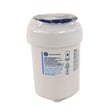
- GE refrigerator water filter MWFP (filtration and taste)
- Temperature sensor WR55X10025 (temperature feedback and control)
- Refrigerator evaporator fan motor WR60X10277 (air circulation and even cooling)
Why it matters
“High end” is most meaningful when it matches your priorities. If you value appearance, filtration, and feature set, CFCP1NIZESS fits the premium category. If your priority is lowest cost of ownership, comparing part prices and maintenance needs is just as important.
For model-specific feature details and care recommendations, use the owner's manual for CFCP1NIZESS.
Last updated: February 2026