Owner’s manual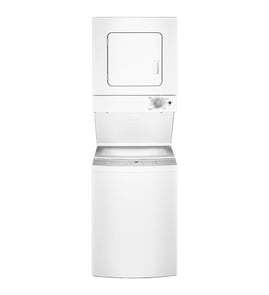




Do Haier washing machines have a dryer?
Yes, some Haier washing machines include a built-in dryer. Your Haier HLC1700AXW is a combination front-load washer and ventless dryer in one stacked laundry center, so it both washes and dries in the same unit (using condensing drying technology); see the HLC1700AXW owner's manual.
How the dryer works on this model
This model dries without an external vent. It uses condensing drying technology, which relies on cold water during drying to help the condenser operate correctly.
- Use cold water only when running the dryer function.
- Do not supply hot or warm water to the cold inlet during drying.
- Make sure the cold water faucet is fully open.
- Use HE detergent for washing cycles.
Quick check: washer-only vs washer-dryer
| Feature | Washer-only Haier washer | Haier HLC1700AXW |
|---|---|---|
| Dryer included | No | Yes (ventless) |
| Drying method | N/A | Condensing drying |
| Water needed during drying | N/A | Cold water required |
Why it matters
Knowing whether your Haier unit has a dryer changes how you install and run it. On the HLC1700AXW, the dryer depends on cold water for proper condensing performance; using warm or hot water during drying can lead to poor drying results and component damage.
Last updated: February 2026
What is the quick wash cycle on Haier?
On the Haier HLC1700AXW stacked laundry center, Quick Wash is a wash cycle designed for lightly soiled garments you need in a hurry. It is a shorter, convenience-focused cycle, and you can confirm the exact cycle behavior and available options in the HLC1700AXW owner's manual.
What Quick Wash is best for
Quick Wash works well when you want to refresh a small load without the time and water use of a longer cycle.
- Lightly soiled everyday items (T-shirts, socks, underwear)
- Small loads that need fast turnaround
- Clothes that just need a quick refresh (not heavy stain removal)
- Fabrics that can handle normal wash action and spinning
What to expect (typical settings and limits)
Quick cycles trade deep cleaning time for speed. On most front-load washer cycles like this, you will get less soak and agitation time than Normal or Heavy Duty.
| Cycle | Best for | Tradeoff |
|---|---|---|
| Quick Wash | Light soil, small loads | Less time for stain removal |
| Normal | Everyday mixed loads | Longer cycle time |
| Heavy Duty | Durable fabrics, heavy soil | Highest time and energy use |
Tips to get better results on Quick Wash
- Use HE detergent and measure carefully; too much detergent can leave residue.
- Keep the load small; overloading reduces cleaning and rinsing.
- Pre-treat visible stains; Quick Wash is not meant for set-in stains.
- Choose the best available wash temperature for the fabric (warmer cleans better when safe for the garment).
- If items come out too wet, select a higher spin speed if the cycle allows it.
Why it matters
Using Quick Wash for the right load helps you save time while avoiding common issues like poor cleaning, leftover detergent, or damp clothes from overloading.
Last updated: February 2026
How to do laundry using a washing machine?
To do laundry in your Haier HLC1700AXW stacked laundry center, sort and prep clothes, load items loosely, add HE detergent in the correct dispenser compartment, choose a cycle and settings (temp, spin, soil), then press Start/Pause to begin. Use the owner's manual for cycle details.
Step-by-step: washing a load
- Sort whites, darks, lights, and non-colorfast items.
- Separate lint makers (towels, fleece) from lint collectors (knits, synthetics).
- Prep garments: close zippers, empty pockets, remove pins, and pre-treat stains.
- Load loosely; do not overload, and keep items from getting caught in the door gasket.
- Add detergent: use High Efficiency (HE) detergent only.
- Select cycle and settings: adjust wash temp, spin speed, and soil level as needed.
- Press Start/Pause to start immediately or begin a delay start countdown.
Using the dispenser correctly
Your HLC1700AXW dispenser drawer has separate compartments for detergent and softener.
| Compartment | What to add | Key tip |
|---|---|---|
| Prewash | Powdered HE detergent (only if Prewash is selected) | Liquid in main wash can flow into the drum early during prewash |
| Main wash | HE detergent (powder or liquid depending on options) | Main wash compartment flushes during the wash cycle |
| Fabric softener | Fabric softener | Use the softener compartment only |
If you plan to use the drying option
When you use the Drying option on this laundry center, we recommend loading the washer only half full so clothes have room to tumble freely.
Why it matters
Correct sorting, proper loading, and using HE detergent help your washer clean better and reduce issues like excess suds, vibration, and clothes that do not rinse well.
Last updated: February 2026
What is the downside to a stackable washer and dryer?
A stackable laundry center like the Haier HLC1700AXW saves floor space, but the tradeoff is tighter access: loading, controls, cleaning, and repairs are less convenient than side-by-side units. You also give up flexibility, and drying performance is more sensitive to correct setup and load size.
Common downsides we see with stacked laundry centers
- Harder ergonomics: The dryer door and controls sit higher, which can be uncomfortable for shorter users.
- More involved service: Access panels and internal components are harder to reach; some repairs take longer.
- Less flexibility: You cannot separate the washer and dryer later or swap one unit without considering the full stack.
- Smaller effective drying loads: For combo-style drying, the manual directs loading only half full when using the drying option so clothes tumble freely.
- More vibration sensitivity: A stacked unit amplifies out-of-level floors; leveling matters more.
Model-specific notes for HLC1700AXW
The HLC1700AXW manual calls out two operating limitations that can feel like “downsides” compared to a traditional vented dryer:
- It uses condensing drying technology.
- When using the drying option, load the drum only half full.
For the exact operating and installation requirements, follow the HLC1700AXW owner's manual.
How to minimize the downsides
- Level the unit carefully to reduce banging and vibration.
- Keep loads balanced; mix large and small items.
- Empty pockets to prevent noise and damage.
- Use HE detergent to reduce residue and performance issues.
- If the washer will not drain, check the drain setup and clean the trap; a failing pump can also be a cause (see ge washer drain pump WH23X26327).
Quick comparison
| Topic | Stackable laundry center | Side-by-side |
|---|---|---|
| Footprint | Smaller | Larger |
| Service access | Tighter | Easier |
| Drying load tolerance | More sensitive | More forgiving |
| Future flexibility | Limited | Higher |
Why it matters
Most complaints about stacked units come down to access and performance sensitivity. With the HLC1700AXW, correct loading and setup directly affect dry times, vibration, and day-to-day convenience.
Last updated: February 2026