Installation guide
 Owner’s manual
 Error Codes



What is the life expectancy of a Kenmore washer?
Most Kenmore washers, including model 11021302013, commonly last about 10 to 15 years with normal household use. Actual life varies based on load size, installation (leveling and drain setup), water quality, and how quickly worn parts are repaired using the 11021302013 installation guide.
What affects lifespan the most
- Overloading or consistently washing heavy items (comforters, rugs)
- Unbalanced loads that cause repeated vibration and “walking”
- Hard water and heavy detergent use (buildup can stress components)
- Poor installation (not level, incorrect drain height, loose hoses)
- Delaying small repairs until they become major failures
Maintenance habits that help a washer last longer
Use these habits to reduce wear on the drive system, suspension, and drain components:
- Keep loads evenly distributed; mix large and small items
- Use the right amount of HE detergent (too much can cause residue)
- Leave the lid open between loads when possible to reduce odor and moisture
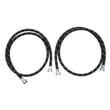
- Periodically check inlet hoses for bulges or leaks; replace on schedule
- If the washer starts vibrating more than normal, re-level it and inspect the suspension
“Repair or replace” quick guide
| If your washer is… | Usually worth doing | Why |
|---|---|---|
| Under ~10 years old | Repair common wear items | Often restores full performance at lower cost |
| 10 to 15 years old | Repair if the tub and cabinet are solid | Many fixes are still practical |
| Over 15 years old | Compare repair cost vs. replacement | Multiple parts may be nearing end of life |
Why it matters
Knowing the typical lifespan helps you plan for maintenance and avoid secondary damage. For example, running a washer that is badly out of balance can accelerate wear on the drive and suspension, turning a small issue into a bigger repair.
Last updated: January 2026
How do I reset my Kenmore washer?
For Kenmore model 11021302013, the most reliable reset is a basic power reset: unplug the washer for 1 minute, plug it back in, then select a cycle and press Start. For model-specific button sequences (diagnostics/calibration), follow the steps in the 11021302013 user manual.
Quick reset steps (safe for most situations)
- Press Pause/Cancel once to stop the cycle.
- Unplug the washer (or turn off the breaker) for 60 seconds.
- Plug back in.
- Lift and close the lid once.
- Select Drain/Spin (or a normal cycle) and press Start.
If the washer is “stuck” or won’t respond
These checks often fix what looks like a control problem on model 11021302013:
- Make sure the outlet has power (test with a lamp).
- Avoid extension cords; plug directly into a grounded outlet.
- Confirm the lid is fully closed and latching.
- If the lid won’t lock or the washer won’t start, inspect the washer lid lock assembly W10404050.
- If the washer won’t drain after a reset, check for a drain restriction and consider the washer drain pump assembly WPW10276397.
Reset vs calibration: what’s the difference?
| Action | What it does | When to use it |
|---|---|---|
| Power reset | Clears minor glitches and restarts the control | Random stopping, unresponsive buttons |
| Diagnostic/calibration | Re-teaches control sensing and operation (varies by model) | After certain repairs, persistent odd behavior |
For calibration steps that match your exact control panel, use the 11021302013 user manual (some Kenmore washers use different knob/button patterns even within the same series).
Why it matters
A reset can clear temporary electronic “hang-ups,” but repeated issues usually point to a real cause such as a lid lock problem, draining issue, or a failing control component.
Last updated: January 2026
How to unclog drain hose on Kenmore washer?
To unclog the drain hose on your Kenmore washer model 11021302013, unplug the washer, shut off the water, then remove and flush the hose to clear lint, coins, or small socks. If draining is still slow, check the pump inlet hose and drain pump for debris.
Step-by-step: unclog the drain hose
- Unplug the washer (and turn off both water faucets).
- Pull the washer forward and place towels and a shallow pan behind it.
- Locate the drain hose at the back; confirm it is not kinked or crushed.
- Loosen the clamp and disconnect the hose from the home drain/standpipe.
- If you can, disconnect the hose from the washer end and drain remaining water into a pan.
- Flush the hose with hot water; for buildup, soak the hose end in hot water with a small amount of vinegar, then rinse again.
- Reinstall the hose using the correct standpipe depth and secure it.
For the correct drain-hose routing and standpipe depth limits, follow the 11021302013 installation guide.
What to check if it still will not drain
A clog is not always in the outer drain hose. On model 11021302013, also inspect these common restriction points:
- The standpipe or laundry tub drain (house plumbing)
- The drain hose U-bend and any sharp bends
- The tub-to-pump hose (often traps lint and small items)
- The drain pump inlet area (coins, hair pins, fabric)
- The drain pump itself if it is noisy, jammed, or leaking
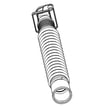
If the hose is split, permanently kinked, or won’t flush clean, replacement is typically the most reliable fix; use the model-matched washer drain hose W11244231.
Drain setup specs that matter (quick reference)
| Item | Recommended for 11021302013 |
|---|---|
| Standpipe minimum diameter | 2 in. |
| Standpipe height range | 39 in. to 96 in. |
| Drain hose insertion into standpipe | About 4.5 in. max |
Why it matters
A partially clogged drain path can cause slow draining, poor spin performance, and water left in the tub. Clearing the hose and verifying the correct drain setup helps protect the drain pump and reduces overflow risk.
Last updated: January 2026