Owner’s manual
 Error Codes


Do you remove cardboard from the bottom of a Whirlpool refrigerator?
For a Whirlpool GX5FHDXVY010 bottom-mount refrigerator, we leave the cardboard (or fiberboard) panel at the bottom/rear in place. It is designed to protect the condenser area and help direct airflow for proper cooling and efficiency; removing it can cause overheating and poor performance.
What that “cardboard” piece does
That panel is typically an airflow and safety cover for the machine compartment.
- Helps channel air across the condenser coil and condenser fan
- Protects wiring and components from bumps, dust, and debris
- Reduces the chance of rattles from loose items contacting the fan area
- Helps the refrigerator run at normal temperatures and cycle times
When it is OK to remove it
We only remove the bottom/rear cover temporarily for service or cleaning, then reinstall it.
- Unplug the refrigerator before removing any access panel
- Vacuum dust from the condenser area (use a soft brush if needed)
- Reinstall the panel exactly as it was (all screws/clips in place)
For model-specific access and panel locations, follow the owner's manual.
Quick decision guide
| Situation | What we recommend |
|---|---|
| You see a flat cardboard/fiberboard cover under the rear | Leave it installed |
| You need to clean the condenser area | Remove temporarily, then reinstall |
| The panel is wet, sagging, or damaged | Replace it so airflow stays correct |
Why it matters
That cover is part of the refrigerator’s cooling airflow path. If airflow is disrupted, the compressor and condenser can run hotter, food temperatures can drift, and energy use can increase.
Last updated: February 2026
What's the average lifespan of a Whirlpool refrigerator?
Most Whirlpool refrigerators, including the Whirlpool GX5FHDXVY010 bottom-mount style, typically last 10 to 15 years with normal household use. Regular cleaning, good airflow around the cabinet, and fixing small issues early help you reach the high end of that range; see the owner's manual for model-specific care guidance.
What affects refrigerator lifespan most
- Condenser cleanliness: Dust buildup makes the compressor run hotter and longer.
- Door seal condition: Air leaks force longer run times and can cause frost issues.
- Fan performance: Weak evaporator or condenser airflow reduces cooling efficiency.
- Temperature settings: Over-cold settings increase run time and wear.
- Usage habits: Frequent door openings and overpacking reduce airflow.
Quick maintenance checklist (high impact)
- Vacuum the condenser area and keep airflow clear behind the refrigerator.
- Keep door gaskets clean and fully seated; replace a torn gasket if it will not seal.
- Listen for abnormal fan noises (rattling, squealing, intermittent stopping).
- Confirm stable temps (typical targets: 37°F fresh food, 0°F freezer).
- Level the refrigerator so doors close on their own and seal consistently.
Common wear items and what they do
| Symptom | Likely area | Example part for this model |
|---|---|---|
| Warm fridge, freezer OK or noisy airflow | Evaporator fan system | Refrigerator evaporator fan motor WPW10128551 |
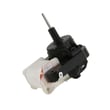
| Poor cooling, hot cabinet sides, loud rear fan | Condenser fan system | Refrigerator condenser fan motor W11613295 |
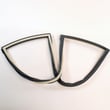
| Moisture, frost, or visible gaps at door | Door sealing | Refrigerator door gasket W10443320 |
Why it matters
A refrigerator near the end of its expected life often shows up as longer run times, temperature swings, and moisture or frost problems. Addressing airflow and sealing issues early can prevent food spoilage and reduce strain on major components like the compressor.
Last updated: February 2026
What is the most common problem with Whirlpool refrigerators?
The most common Whirlpool refrigerator problem is poor cooling caused by restricted airflow, most often from dirty condenser coils. On your Whirlpool GX5FHDXVY010 bottom-mount refrigerator, the next most frequent culprits are a failing condenser fan motor or evaporator fan motor that cannot move air through the compartments.
Quick checks we recommend first
- Make sure the temperature controls were not accidentally changed.
- Confirm the doors close fully and the gasket seals all the way around.
- Clean the condenser coils and the area around the condenser fan.
- Listen for the evaporator fan in the freezer (you should hear it when the compressor is running).
- Check for heavy frost on the freezer back panel (a defrost issue can block airflow).
- Verify vents inside the refrigerator are not blocked by food packages.
Common causes and the parts that often fix them
If cleaning and airflow checks do not restore normal temperatures, these are the most common repair paths for this model:
| Symptom you notice | Most likely cause | Part to consider for GX5FHDXVY010 |
|---|---|---|
| Warm fridge and freezer, compressor running | Condenser fan not running or restricted | Refrigerator condenser fan motor W11613295 |
| Freezer cold but fridge warm | Evaporator fan not running or weak | Refrigerator evaporator fan motor WPW10128551 |
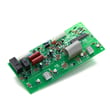
| Temps fluctuate, odd behavior after power outage | Control not regulating correctly | Refrigerator electronic control board WPW10503278 |
| Moisture, frost, or air leaks around door | Door not sealing | Refrigerator door gasket W10443320 |
Why it matters
A refrigerator cools by moving heat out of the cabinet. When coils are dirty or a fan motor is failing, heat cannot leave efficiently, so temperatures rise, food spoils faster, and the compressor can run longer than normal.
Helpful model-specific resources
- Use the owner's manual for the correct temperature settings, airflow locations, and cleaning guidance.
- If your refrigerator is showing a fault code, use our Whirlpool refrigerator error codes guide to narrow down the problem before replacing parts.
Last updated: February 2026