Error Codes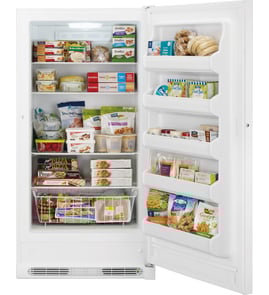



What are the disadvantages of an upright freezer?
Upright freezers like Kenmore model 25321402100 are convenient to organize, but the main disadvantages are higher energy use than most chest freezers, less usable space for bulky items, and more risk of freezer burn if the door gasket leaks or the door is opened often.
Common disadvantages (what owners notice most)
- Less room for bulky items: shelves and bins limit tall or wide packages.
- More temperature swings: frequent door openings let cold air spill out faster than a chest freezer.
- Higher energy use: uprights typically run more often to recover temperature after openings.
- More frost or ice issues (on some designs): airflow restrictions can lead to warm spots.
- More parts that can affect cooling: controls, fans, and defrost components can create symptoms that look like “not freezing.”
What to check if performance is the concern
If the “disadvantage” you are seeing is poor freezing, start with these quick checks:
- Confirm the control is set colder and the door closes firmly
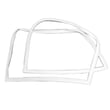
- Look for gaps, tears, or hard spots in the gasket (air leaks cause frost and warmer temps)
- Keep vents clear; avoid packing food tightly against the back wall
- Clean dust from the condenser area so heat can leave the system
- If the temperature knob is cracked or slipping, replace the freezer temperature control knob 216707200
Upright vs chest freezer (quick comparison)
| Feature | Upright freezer | Chest freezer |
|---|---|---|
| Storage for bulky items | Lower | Higher |
| Organization | Easier (shelves/bins) | Harder (stacking) |
| Cold air loss when opened | Higher | Lower |
| Typical energy use | Higher | Lower |
Why it matters
Understanding these tradeoffs helps you decide whether you need better organization (upright) or maximum capacity and efficiency (chest). If you already own an upright, focusing on door sealing, airflow, and control settings prevents warm spots and freezer burn.
Last updated: January 2026
Where to find model number on upright freezer?
On the Kenmore upright freezer model 25321402100, the model number is typically printed on a rating label inside the cabinet (often on a side wall or near the top/ceiling area). It can also be located around the door opening or behind the lower front kick plate.
Common places to check
- Inside the freezer compartment on a side wall (left or right)
- On the ceiling area inside the cabinet (near the light or air vents)
- On the frame around the door opening (door jamb)
- Behind or just above the lower front kick plate or toe grille
- On the back exterior panel (less common, but worth checking)
Quick step-by-step
- Open the freezer door and scan the inside walls and upper interior first.
- Check the door opening frame (the area the door seals against).
- If you see a lower grille or kick plate, remove it carefully and look for a label behind it.
- Wipe dust or frost off the label so the full model number is readable.
What the label usually includes
| Label item | What it’s used for | Example |
|---|---|---|
| Model number | Identifies the exact freezer design | 25321402100 |
| Serial number | Production tracking and age reference | Varies |
| Electrical info | Helps match controls and wiring | Volts/amps |
Why it matters
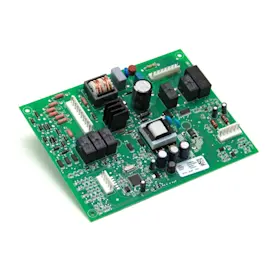
We use the full model number to match the correct Kenmore parts and diagrams for your freezer, especially for model-specific items like the freezer electronic control board 5304491584 or the freezer door gasket 5304507201. Using the complete model number prevents ordering a similar-looking part that will not fit.
Last updated: January 2026
How many cubic feet is my upright freezer?
For Kenmore upright freezer model 25321402100, the exact cubic-foot capacity is tied to the model’s specification label; most upright freezers fall into common size bands (compact through large). Use the rating label inside the cabinet to confirm the precise capacity for your unit.
How to find the exact capacity on your freezer
Check the appliance rating label (data plate). On most Kenmore uprights, you will find it:
- Inside the freezer compartment on a side wall
- Near the lower front edge of the liner (inside)
- Sometimes behind the kick plate area
- Occasionally on the back exterior panel
The label often lists capacity in cubic feet (or liters), along with the model and serial number.
Typical upright freezer size ranges (quick guide)
If you only have exterior measurements, these ranges help you estimate capacity:
- Compact: 3 to 5 cu. ft.
- Small: 5 to 9 cu. ft.
- Medium: 10 to 16 cu. ft.
- Large: 17+ cu. ft.
| Size class | Typical capacity | Typical exterior size (W x H x D) |
|---|---|---|
| Compact | 3 to 5 cu. ft. | 20 to 24 in. x 31 to 37 in. x 20 to 25 in. |
| Small | 5 to 9 cu. ft. | 21 to 25 in. x 55 to 60 in. x 22 to 26 in. |
| Medium | 10 to 16 cu. ft. | 23 to 31 in. x 60 to 73 in. x 27 to 30 in. |
| Large | 17+ cu. ft. | 27 to 34 in. x 64 to 76 in. x 29 to 30 in. |
Why it matters
Capacity affects how much food you can store, how you organize shelves and bins, and what replacement parts fit best (for example, shelves, door gaskets, and control components). If you are troubleshooting temperature issues, knowing the size also helps set realistic cooling and loading expectations.
Related help
If your freezer display is showing an error or you suspect a control issue, use Kenmore electronic control module freezer error codes to match symptoms to the right checks.
Last updated: January 2026