Installation guide
 Owner’s manual
 Error Codes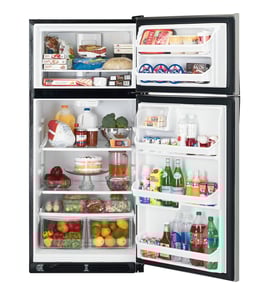



How big is a Kenmore chest freezer model 2536419240D?
Kenmore model 2536419240D is a top-mount refrigerator, not a chest freezer. For exact exterior dimensions for your specific unit, we recommend checking the specifications section in the 2536419240D owner's manual; most top-mount refrigerators are roughly 28 to 33 inches wide, 60 to 67 inches tall, and 30 to 34 inches deep.
Use these quick checks to make sure you are measuring the right product:
- The freezer compartment is on top (top-mount design)
- The model/serial tag typically shows 253 (or 970) as part of the model family
- Measure with doors closed; include handles if they stick out
- Measure depth both to the door and to the handle (two different depths)
- Allow clearance behind the cabinet for airflow and cord/water line routing
- Width: left to right at the widest point.
- Height: floor to top of cabinet (and note hinge height if it sits higher).
- Depth: front to back; record two numbers (cabinet-only and with handle).
| Measurement | What to include | Typical range for top-mount refrigerators |
|---|---|---|
| Width | Cabinet and any trim | 28 to 33 in. |
| Height | Cabinet (note hinge cap if taller) | 60 to 67 in. |
| Depth | Cabinet-only and with handle | 30 to 34 in. |
Correct dimensions help prevent delivery issues, ensure proper ventilation, and avoid door-swing clearance problems, especially if you are replacing an older Kenmore unit with a similar-looking model.
Last updated: February 2026
How many cubic feet is my Kenmore refrigerator model 2536419240D?
The exact cubic-foot capacity for Kenmore refrigerator model 2536419240D is listed in the product specifications for your unit; the most reliable source is the 2536419240D owner's manual. As a reference point, most Kenmore 253-series top-mount refrigerators are in the mid-20 cu. ft. class.
Use these checks in order; they give the definitive number for your specific configuration.
- Open the 2536419240D owner's manual and look for a Specifications section or a spec table.
- Check the model and serial tag inside the fresh food compartment; some versions list total volume.
- Look for the EnergyGuide label (often on the side wall or saved with paperwork); it commonly lists total volume.
- If you are comparing listings, match the full model number exactly, including the "D" suffix.
This helps you sanity-check what you find in the specs.
| Refrigerator style | Typical total capacity (cu. ft.) | Notes |
|---|---|---|
| Top-mount (top freezer) | 18 to 26 | Most common range for this design |
| Side-by-side | 22 to 28 | Narrower doors, more vertical storage |
| French door | 20 to 30+ | Wider shelves, larger fresh-food section |
Cubic feet affects how much food you can store and helps us match storage parts correctly (shelves, door bins, drawers) when you are ordering replacements for your Kenmore 2536419240D.
Last updated: February 2026
What are the common problems with Kenmore Elite refrigerators?
Common Kenmore Elite refrigerator problems include warm temperatures (cooling failure), water leaks, ice maker issues, and unusual noises. On Kenmore model 2536419240D (top-mount), the most frequent root causes are airflow restrictions, dirty condenser coils, defrost-system trouble, and worn door sealing that lets warm air in; our 2536419240D owner's manual troubleshooting section is a solid first stop.
- Not cooling or weak cooling: blocked air vents, dirty condenser coils, evaporator fan issues, or defrost problems
- Freezer too cold or fresh food too warm: control settings out of range, airflow blocked by packages, door not sealing
- Water on the floor or inside the fridge: clogged defrost drain, cracked drain pan, door left ajar causing excess frost melt
- Noises (buzzing, rattling, clicking): fan blade hitting ice, loose items, condenser fan or evaporator fan problems
- Lights out: failed bulb such as the refrigerator light bulb 316538904
- Confirm the refrigerator is on a dedicated 115V, 60 Hz outlet and the plug is fully seated (per the manual).
- Verify temperature controls are not set to “0” (off).
- Allow 24 hours after any control change for temperatures to stabilize.
- Clear packages away from air vents; keep airflow paths open.
- Clean condenser coils and confirm fans run when the compressor is running.
| Symptom | What to check first | Common next step |
|---|---|---|
| Warm fridge/freezer | Coils, vents, door seal | Check defrost components like the refrigerator defrost bi-metal thermostat 5303918202 |
| Leaking water | Drain and drain pan | Inspect/replace the refrigerator defrost pan 241697603 if damaged |
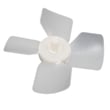
| Loud fan noise | Ice buildup near fan | Inspect the refrigerator evaporator fan blade 5308000010 for damage or rubbing |
Cooling, defrost, and door sealing work together. A small airflow blockage or a weak seal can force longer run times, create frost buildup, and lead to leaks or temperature swings.
Last updated: February 2026
What are the disadvantages of a top mount fridge?
Top-mount refrigerators like Kenmore 2536419240D put the freezer on top and the fresh-food section below; the main disadvantages are less convenient access to everyday refrigerated items, fewer built-in organization features than many bottom-freezer designs, and fewer dispenser options on many models.
- More bending for fresh food: the refrigerator compartment is lower, so you reach down more often.
- Freezer can feel crowded: top freezers often have simpler shelving and fewer dividers.
- Fewer premium features: many top-mount units skip exterior water and ice dispensers.
- Door storage limits: door bins and racks are convenient, but they can reduce usable interior shelf space when heavily loaded.
- Tighter placement constraints: you may need extra side clearance if the hinge side is near a wall so the door can open wider.
Your 2536419240D can still be organized well, but top-mount layouts typically rely more on adjustable bins and shelves than on dedicated zones.
| Feature area | Top-mount trade-off | Practical workaround |
|---|---|---|
| Fresh-food access | Lower compartment means more bending | Keep daily items at eye level on upper shelves |
| Freezer storage | Fewer dividers in many designs | Use bins to group items (meat, veggies, breakfast) |
| Door storage | Great for quick access, can get cluttered | Move bins to fit tall items and reduce overloading |
For model-specific storage features and bin adjustment steps, follow the 2536419240D owner's manual.
Top-mount refrigerators are often installed in tighter kitchen cutouts, so clearances and leveling matter.
- Plan for typical clearances (often 3/8 inch at sides and top, 1 inch at the back).
- If coils/tubing are exposed on the back, extra top clearance may be needed for airflow.
- Leveling affects door swing and sealing; adjust front rollers or leveling screws as needed.
Those setup details are covered in the 2536419240D installation guide.
These disadvantages mainly affect comfort and convenience. If you shop the refrigerator section daily, the lower fresh-food access is the biggest downside; if you use the freezer most, a top-mount can actually feel more convenient.
Last updated: February 2026
What is the upper part of a fridge called?
On a Kenmore 2536419240D top-mount refrigerator, the upper section is the freezer compartment (often just called the freezer). It is designed to keep foods frozen, support proper cold-air circulation, and may house features like an ice maker on some models; see the 2536419240D owner's manual for your exact layout.
Common freezer-area components and features you may see:
- Freezer shelves or door bins for frozen items
- Cold-air vents that circulate air between freezer and fresh-food sections
- Automatic defrost system (you may notice normal sounds during defrost)
- Ice maker and ice bin on models equipped with an automatic ice maker
- Freezer door gasket that seals the door to prevent warm air leaks
The freezer works best when air can move freely and the door seals tightly.
- Leave space between packages so cold air can circulate
- Avoid overloading with warm food at one time (it slows freezing)
- Store temperature-sensitive items (like ice cream) in the interior, not the door
- Keep vents clear so airflow is not blocked
- Level the refrigerator so doors close tightly
| Term you might hear | What it means | Where it is |
|---|---|---|
| Freezer compartment | Upper frozen-food section | Top of a top-mount refrigerator |
| Freezer door | Door that opens to the freezer | Upper door |
| Freezer door shelves/bins | Storage on the freezer door | Inside upper door |
| Defrost cycle | Automatic melting of frost on coils | Happens periodically |
Knowing the correct name helps when ordering parts, reading troubleshooting steps, or following storage and airflow guidance. For example, airflow and loading recommendations are different for the freezer compartment than for the fresh-food section.
Last updated: February 2026
What model Kenmore refrigerator do I have?
Your Kenmore refrigerator’s model number is printed on the serial plate inside the fresh food (refrigerator) compartment. On Kenmore model 2536419240D, the manual directs you to record the model and serial numbers from that plate so you can match the correct parts, instructions, and diagrams.
Check these common locations on a Kenmore top-mount refrigerator:
- Inside the refrigerator compartment on a side wall
- Near the top (ceiling area) of the fresh food compartment
- Near the crisper drawers (side wall or frame area)
- On the door frame when the refrigerator door is open
- Behind the lower kick plate (toe grille) on some installations
For the exact label location and what the plate looks like, use the 2536419240D owner's manual.
Record both numbers exactly as shown:
- Model number (example format: 2536419240D)
- Serial number (unique to your unit)
- Any letter suffixes or extra digits (they matter for part fit)
| Item on label | What it tells us | Why it matters |
|---|---|---|
| Model number | The design family | Ensures parts match your exact refrigerator |
| Serial number | Production run info | Helps confirm revisions and compatible replacements |
| Brand | Kenmore | Helps narrow manuals and troubleshooting steps |
Kenmore model numbers determine which shelves, door bins, gaskets, and cooling-system parts fit. For example, door storage components can vary by model even when refrigerators look similar, so confirming 2536419240D prevents ordering the wrong part.
Last updated: February 2026
What's the average lifespan of a Kenmore refrigerator?
Most Kenmore refrigerators last 10 to 15 years on average; with steady maintenance, many units can reach the upper end of that range. For your Kenmore 2536419240D top-mount refrigerator, routine care like cleaning coils and keeping door seals tight is what most directly extends service life.
A refrigerator’s lifespan is mainly driven by heat management, door sealing, and how hard the sealed system has to work.
- 10 to 15 years is the typical lifespan for a household refrigerator
- Dirty condenser coils can shorten life by forcing longer run times
- Worn door gaskets raise humidity and frost, increasing compressor workload
- Poor airflow (overpacked shelves, blocked vents) reduces cooling efficiency
- Power issues (frequent outages, surges) can stress controls and motors
We recommend following the care and cleaning schedule in the 2536419240D owner’s manual.
- Vacuum or brush condenser coil area regularly (more often with pets)
- Keep doors closing squarely; avoid slamming and overloading door bins
- Clean and dry door gasket folds; confirm a tight seal all the way around
- Set stable temps: 37°F to 40°F fresh food, 0°F freezer
- Defrost and clear any ice buildup that blocks airflow
| What you’re seeing | Most common cause | What we do first |
|---|---|---|
| Warm fridge, freezer OK | Airflow/evaporator issue | Check vents, listen for fan, inspect frost pattern |
| Frost buildup, sweating | Door seal not sealing | Clean gasket, check alignment, replace gasket if torn |
| Loud humming, hot sides | High run time from dirty coils | Clean coils, confirm airflow around cabinet |
| No cooling at all | Start components or sealed system | Basic electrical checks, then pro service |
A refrigerator that runs longer to hold temperature wears out the compressor, fan motors, and defrost components faster. Simple airflow and sealing maintenance reduces run time, lowers energy use, and helps your Kenmore 2536419240D reach its full expected lifespan.
Last updated: February 2026