Owner’s manual
 Error Codes



How to remove bottom grille on GE refrigerator?
On the GE PFSS5RKZASS bottom-mount refrigerator, the bottom grille (base grille/toe grille) typically comes off by releasing its retaining clips and then pulling the grille straight out from the front. If your grille uses screws, remove the screws first, then slide or pull the grille off.
Before you start
- Unplug the refrigerator or switch off power at the breaker (recommended when working near wiring and fans)
- Pull the refrigerator forward a few inches for better access
- Protect the floor with cardboard or a towel
- Use a flashlight to spot clips or screws along the top edge of the grille
Steps to remove the bottom grille
- Check for screws first: Look along the left and right ends (and sometimes the center). If present, remove them with a Phillips screwdriver.
- Release the clips: Grip the grille near the ends and pull outward. If it feels stuck, press along the top edge to pop the clips free, then pull the grille toward you.
- Lift and remove: Some versions drop slightly or lift off small tabs after the clips release.
- Reinstall: Align the tabs/clips, push the grille in until it snaps flush, then reinstall any screws.
Quick troubleshooting if it will not come off
- It flexes but will not release: Pull from one end at a time; clips often release sequentially.
- It feels like it is hooked: Try lifting slightly while pulling outward to clear lower tabs.
- You see wiring or a fan behind it: Stop and unplug power before continuing.
What you can access after the grille is off
| What you are checking | Why it matters |
|---|---|
| Condenser area and airflow path | Better airflow helps cooling performance and efficiency |
| Water line routing (if equipped) | Prevents kinks and leaks |
| Fan area (model dependent) | A blocked area can cause warm temps or noise |
Why it matters
A properly seated bottom grille helps direct airflow across the condenser area. If the grille is loose, cracked, or not fully snapped in, the refrigerator can run longer and may cool less consistently.
For model-specific diagrams and any fastener locations used on your exact configuration, follow the PFSS5RKZASS owner's manual.
Last updated: February 2026
What is the life expectancy of a GE Monogram refrigerator?
GE Monogram refrigerators typically last 15 to 20 years. If you maintain temperatures, keep airflow clear, and stay on top of routine care (like filter changes and condenser cleaning), you can reach the upper end of that range; use your owner's manual for model-specific maintenance intervals.
Typical lifespan by refrigerator type
Premium built-in and high-end refrigerators (including GE Monogram) are designed for longer service life than many standard freestanding units.
| Refrigerator type | Typical life expectancy |
|---|---|
| Standard freestanding refrigerator | 10 to 12 years |
| Premium / built-in class (including Monogram) | 15 to 20 years |
What most affects how long it lasts
These are the biggest factors we see that shorten or extend refrigerator life:
- Condenser cleanliness: dust buildup raises compressor load and heat.
- Door seal condition: air leaks force longer run times.
- Water system upkeep: clogged filters restrict flow and stress valves.
- Stable temperatures: frequent warm-ups increase wear.
- Fan airflow: blocked vents or failing fans reduce cooling efficiency.
Maintenance that helps you reach 15 to 20 years
Use these practical steps to protect the sealed system and cooling performance:
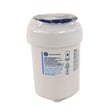
- Replace the water filter on schedule; for this GE PFSS5RKZASS platform, a common filter option is the GE refrigerator water filter MWFP.
- Vacuum and brush the condenser area periodically (especially with pets).
- Check door gaskets for gaps, tears, or warping; replace if the seal is weak.
- Keep interior vents clear so the evaporator fan can circulate air.
- Address temperature swings early; a failing sensor can cause inconsistent cooling (see temperature sensor WR55X10025 if you are troubleshooting erratic temps).
Why it matters
A refrigerator that runs hotter, longer, or with restricted airflow wears out expensive components sooner (compressor, inverter, fan motors). Simple upkeep reduces run time, improves temperature stability, and helps you get the full expected lifespan.
Last updated: February 2026
What is the best bottom mount fridge?
The best bottom-mount refrigerator is the one that fits your kitchen, keeps stable temperatures, and matches your must-have features (ice and water, storage layout, noise level, and filter system). If you already own a GE PFSS5RKZASS, the “best” choice is often keeping it running efficiently with the right maintenance and replacement parts listed in the PFSS5RKZASS owner's manual.
What to look for in a “best” bottom-mount fridge
- Temperature stability: consistent fresh-food temps and a freezer that holds 0°F.
- Door seal quality: tight gaskets reduce frost, sweating, and compressor run time.
- Airflow design: strong evaporator fan performance and a responsive air damper.
- Water and ice reliability: easy filter changes and steady water pressure.
- Usable storage: adjustable shelves, bins, and freezer baskets that fit how you shop.
Quick comparison: how to choose the best fit
| Priority | What to check | Best for |
|---|---|---|
| Food freshness | Even temps, good airflow | Families, meal prep |
| Low maintenance | Easy filter access, fewer clogs | Busy households |
| Quiet operation | Fan and condenser noise level | Open kitchens |
| Long-term value | Parts availability, serviceability | Keeping a fridge 10+ years |
If you already have GE PFSS5RKZASS: upgrades that matter most
These common wear items often make a bigger real-world difference than switching models:
- Replace the water filter on schedule using GE refrigerator water filter MWFP.
- Fix warm spots or temperature swings by checking the temperature sensor WR55X10025.
- If ice maker or dispenser flow is weak, inspect the refrigerator water valve WR57X33326.
- For frost buildup or defrost issues, test the refrigerator defrost bi-metal thermostat WR50X10065.
- If doors do not seal well, a fresh refrigerator door gasket (gray) WR14X10305 can reduce moisture and energy use.
Why it matters
Bottom-mount refrigerators are popular because the fresh-food section sits at eye level, but they rely on tight door seals, good airflow, and a healthy defrost system. When those basics are right, you get better temperature control, fewer ice and water problems, and lower day-to-day hassle.
Last updated: February 2026