 Installation guide
 Owner’s manual



How to figure out a Frigidaire dishwasher model?
Your Frigidaire dishwasher model number for service and parts lookup is printed on the appliance ID label; on the FFBD2406NW10B, you will typically find it when you open the door and look along the inner door frame (door jamb) or on the tub rim near the door seal. Use the FFBD2406NW10B owner's manual as a reference for recording the model and serial number.
- Open the dishwasher door fully and inspect the inner frame on the left and right sides.
- Check the top edge of the tub opening (the rim) near the door gasket.
- Look on the tub wall just inside the opening if you do not see it on the frame.
- Pull out the lower rack for a clearer view of the tub rim and side walls.
- Use a flashlight; the label is often small and easy to miss.
Most Frigidaire dishwasher model numbers are a mix of letters and numbers (for example, FFBD2406NW10B). Copy it exactly as shown.
| Item on the label | Why you need it | Example format |
|---|---|---|
| Model number | Ensures correct parts and diagrams | FFBD2406NW10B |
| Serial number | Helps match production details | Letters and numbers |
| Electrical ratings | Useful for installation checks | Volts/amps |
- Do not use the marketing name (like “24-inch built-in”); use the full model number.
- Do not drop the last characters; the suffix (like 10B) can change the parts list.
- If the label is worn, take a photo and zoom in to confirm each character.
Using the exact model number helps us match the correct Frigidaire dishwasher parts (such as a drain pump, water inlet valve, or heating element) and prevents ordering a similar-looking part that will not fit or connect correctly.
Last updated: February 2026
What is the average lifespan of a Frigidaire dishwasher?
Most Frigidaire dishwashers, including model FFBD2406NW10B, last about 10 years on average with normal household use. Regular cleaning, correct detergent use, and fixing small issues early typically keeps the wash system, drain system, and heater performing longer (see the owner's manual).
A dishwasher’s service life depends more on conditions than brand name alone.
- Usage frequency: 1 load/day wears parts faster than 3 to 4 loads/week
- Water quality: hard water speeds up mineral buildup on the heater and in the sump
- Cleaning habits: a clogged filter and dirty spray arms reduce performance and strain the pump
- Drying demands: heavy heated-dry use increases wear on heating components
- Early leak/drain fixes: stopping leaks and drain problems prevents motor and control damage
These are the most common “it’s wearing out” symptoms we see.
| Symptom | Most common cause | What to check first |
|---|---|---|
| Not draining | Clog or weak drain pump | Air gap/garbage disposal inlet, drain hose routing |
| Not drying | Heater or airflow issue | Heated dry setting, rinse aid, heater continuity |
| Poor cleaning | Low water flow or filtration issue | Filter, spray arms, loading pattern |
| Won’t start | Door latch or control issue | Door closes firmly, latch engagement |
When performance drops, replacing the worn part is often more cost-effective than replacing the whole unit.
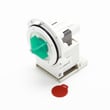
- If it won’t drain, check the drain pump a A00126401 and the dishwasher drain hose 807117001
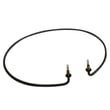
- If it won’t dry, test the Frigidaire dishwasher heating element 154825001
- If it won’t fill, inspect the dishwasher water inlet valve 807047901
- If it isn’t cleaning well, clean or replace the dishwasher filter 5304532206
A dishwasher that is draining slowly, heating poorly, or washing with restricted flow runs longer cycles, leaves residue, and puts extra load on the pump and motor. Basic maintenance and timely part replacement helps you get the full expected lifespan.
Last updated: February 2026
What is the most common problem with a Frigidaire dishwasher?
The most common Frigidaire dishwasher issues are poor cleaning and draining problems caused by restricted water flow (dirty filter, blocked spray paths) or a drain restriction. On the FFBD2406NW10B, these symptoms often show up as food soils left on dishes, standing water, or cycles that seem to run longer than expected; our owner's manual troubleshooting section covers these patterns.
- Food soils left on dishes: filter or wash system restriction, overloading, low water temperature, or low water pressure
- Not draining: clogged filter area, restricted drain hose, or a failing drain pump
- Won’t run or won’t start: door not fully latched, Delay Start selected, or a control issue
- Long cycle times: cool incoming water, heavy soil load, or options that extend heating time
- Odor: dishes sitting too long, or incomplete draining
- Confirm the door closes firmly and latches.
- Verify Delay Start is not selected and START/CANCEL was pressed after choosing a cycle.
- Clean the filter area and remove any debris that can block circulation or draining.
- Check hot water supply basics:
- Incoming water temperature should be about 120°F (49°C).
- Home water pressure should be 20 to 120 psi.
- Use fresh, household automatic dishwasher detergent (industrial detergents can damage internal components).
If the basic checks do not change the symptom, these model-matched parts are common solutions:
| Symptom | Common cause | Part to check for FFBD2406NW10B |
|---|---|---|
| Standing water after cycle | Weak or jammed drain pump | Drain pump a A00126401 |
| Slow drain or backflow | Kinked or restricted drain line | Dishwasher drain hose 807117001 |
| Wet dishes | Heater not warming water for drying | Frigidaire dishwasher heating element 154825001 |
Cleaning and draining problems are often connected: when water cannot circulate freely or drain completely, wash performance drops, odors increase, and cycles may extend while the dishwasher tries to reach target temperatures.
Last updated: February 2026





