Owner’s manual
 Error Codes

What are the most common issues with 11020692000?
On the Kenmore 11020692000 compact washer, the most common problems are no drain or slow drain, won’t spin, won’t agitate, leaks, and excessive vibration. These symptoms usually trace to a few high-wear parts plus simple checks like lid closure, hose kinks, and load balance; see the 11020692000 owner's manual for model-specific operating and care guidance.
Most common symptoms and what they usually point to
- Won’t drain / water left in tub: clogged pump or restricted drain hose; a failing washer drain pump WP3363394 is also common.
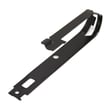
- Won’t spin: lid switch not sensing closed lid, clutch wear, or drive coupling wear; check washer lid switch WP3949238 first.
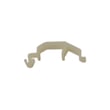
- Won’t agitate / weak agitation: worn agitator dog 80040 or a worn coupling.
- Leaks: loose or cracked hoses, tub gasket seepage, or center post seal wear.
- Shakes or bangs: out-of-balance loads, weak suspension springs, or counterweight spring issues.
Quick checks we recommend before replacing parts
- Unplug the washer; turn off water.
- Confirm the lid closes fully and the strike aligns with the switch.
- Check the drain hose for kinks, clogs, or an overly deep standpipe insertion.
- Run a small test load; redistribute items evenly around the basket.
- Look for water trails under the pump area and at hose connections.
Common parts tied to these issues (by symptom)
| Symptom | Common part to inspect | What it does |
|---|---|---|
| No spin or intermittent operation | Washer lid switch WP3949238 | Prevents spin/agitate with lid open |
| No drain / slow drain | Washer drain pump WP3363394 | Pumps water out during drain |
| No agitate / weak agitation | Agitator dog 80040 | Helps the agitator “ratchet” and move clothes |
| Won’t move or noisy drive | Coupling (drive coupling) | Connects motor to transmission |
Why it matters
Catching a failing lid switch, drain pump, or agitator dogs early prevents repeat cycle failures, standing water odors, and extra strain on the drive system (motor, clutch, and gear case).
Last updated: March 2026
What is the cubic feet capacity of a Kenmore washer model 11020692000?
The Kenmore compact washer model 11020692000 is labeled as “Super Capacity” in the product literature, but the manual excerpt for this model does not list an exact cubic feet number. For the precise tub capacity, we recommend checking the specifications section in the 11020692000 owner's manual.
How to find the exact capacity for model 11020692000
Use these quick checks to get the true cubic feet rating for your specific washer:
- Look in the Specifications section of the manual (often near the back)
- Check the model and serial number plate location noted in the manual (typically under the lid area)
- If your washer is installed in a tight space, measure the basket diameter and depth to estimate capacity
- Compare your basket size to typical “compact” vs “standard” top-load baskets
- Use the model number 11020692000 when searching any spec sheet or parts diagram
Typical capacity range (for context)
Most Kenmore top-load washers marketed as “super capacity” are commonly in this general range:
| Washer type label | Typical capacity range (cu ft) | What you’ll notice |
|---|---|---|
| Compact top load | 1.5 to 2.5 | Smaller basket, smaller loads |
| Standard capacity top load | 2.6 to 3.4 | Medium loads |
| Super capacity top load | 3.2 to 3.8 | Bulkier loads, more room |
Why it matters
Capacity affects how much laundry you can wash per load and how you should set water level and cycle selection. On the 11020692000, the manual highlights multiple water level settings and a dual-action agitator, so matching load size to tub size helps cleaning performance and reduces out-of-balance issues.
Last updated: January 2026
What is the life expectancy of a Kenmore washer?
Most Kenmore washers typically last 10 to 15 years with normal household use. For the Kenmore 11020692000 compact washer, consistent care (proper loading, correct water level, and fixing small problems early) is what most directly determines whether it reaches the high end of that range.
What affects washer lifespan the most
- Load size and balance: frequent overloading and out-of-balance spinning shortens the life of the drive system and suspension.
- Water quality: hard water can increase mineral buildup and wear on valves and seals.
- Drain performance: slow draining strains the pump and can leave residue behind.
- Lid switch and cycle use: repeated interruptions and heavy-duty cycles add wear over time.
- Maintenance habits: cleaning, leveling, and addressing leaks early prevents bigger failures.
Typical lifespan by usage pattern
| Usage pattern | Typical life expectancy | What usually fails first |
|---|---|---|
| Light use (1 to 3 loads/week) | 12 to 15 years | Hoses, lid switch, minor leaks |
| Average use (4 to 7 loads/week) | 10 to 13 years | Drain pump, motor coupling, clutch |
| Heavy use (8+ loads/week) | 7 to 10 years | Gear case, suspension, drive components |
Maintenance that helps you reach 10 to 15 years
Use these as your baseline care steps for the 11020692000; cycle and feature details are in the 11020692000 owner's manual.
- Keep the washer level so the tub stays centered during spin.
- Avoid overfilling; use the smallest water level that still allows clothes to move freely.
- Check pockets and wash small items in a bag to reduce pump clogs.
- Inspect fill and drain hoses for bulges, cracks, or seepage.
- If the washer stops spinning or won’t run with the lid closed, test the lid switch early.
When a repair is usually worth it
Many common failures on this Kenmore design are straightforward and cost-effective to fix.
- No spin or agitation: consider the coupling 285753A
- Won’t start or stops mid-cycle: consider the washer lid switch WP3949238
- Won’t drain or leaves water in the tub: consider the washer drain pump WP3363394
Why it matters
A washer that is maintained and repaired early usually avoids secondary damage (for example, a small drain issue turning into a motor or gear case problem). That is the difference between a washer that lasts 7 to 10 years and one that reaches 12 to 15 years.
Last updated: January 2026