Installation guide
 Owner’s manual


What is the lifespan of a GE dryer?
A GE dryer like model GFD45ESPM1DG typically lasts about 10 years with normal household use. With consistent care (lint removal, proper venting, and periodic internal cleaning), many dryers reach 10 to 15 years before major repairs become more common.
What affects dryer lifespan most
- Lint control: Clean the lint filter every load; never run the dryer without the filter installed.
- Vent and duct condition: Keep airflow strong; restricted venting increases heat stress and wear.
- Load size: Avoid chronic overloading; it strains the drive system and drum support.
- Heat management: Overheating can shorten the life of thermostats, thermistors, and the heater.
- Annual deep cleaning: Have a qualified technician clean inside the cabinet and exhaust duct about once a year.
Maintenance checklist we recommend
- Clean the lint screen after every cycle.
- Inspect and clean the exhaust duct at least yearly.
- Wipe the drum and door opening; remove residue that can transfer to clothes.
- Keep the area around the dryer clear so it can pull in air.
- Follow the care and cleaning schedule in the GFD45ESPM1DG owner’s manual.
Common “end-of-life” symptoms and likely parts
| Symptom | What it often points to | Example part for this model |
|---|---|---|
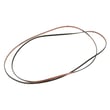
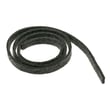
| Drum not turning, motor runs | Worn or broken belt, idler issue | Dryer drum belt WE03X29897 |
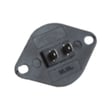
| No heat or weak heat | Heater circuit issue | Dryer heating element, thermistor, heater assembly |
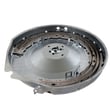
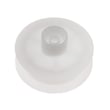
| Loud thumping or scraping | Drum support wear | Drum glide bearing, felt seal |
Why it matters
A dryer that is kept clean and properly vented runs cooler and moves air better; that reduces stress on the heating system, drum supports, and drive components, which is the biggest factor in reaching the full expected lifespan.
Last updated: January 2026
What brand of dryer has the least problems?
Speed Queen dryers have the least problems overall because they are built with simpler, commercial-style designs that prioritize durability and serviceability. For a mainstream home dryer like the GE GFD45ESPM1DG, GE is a solid reliability choice when you follow the maintenance and venting requirements in the GFD45ESPM1DG installation guide.
Brands that typically have fewer service issues
In our experience, “least problems” usually comes down to build style (simple vs. feature-heavy), parts availability, and how well the dryer is installed and vented.
- Speed Queen: lowest problem rates long-term; simple controls, heavy-duty components
- Whirlpool family (Whirlpool, Maytag, Amana): strong reliability and widely available parts
- LG: good performance and generally low service rates; more electronics and features
- GE: dependable overall; good support and common replacement parts
- Samsung: can perform well, but feature complexity can increase repair frequency
What matters more than brand (especially for drying performance)
Even the best brand will act “problem-prone” if airflow is restricted or maintenance is skipped.
- Clean the lint filter before every load
- Inspect and clean the exhaust ducting at least yearly
- Keep ducting short, smooth, and free of kinks
- Level the dryer to reduce vibration and noise
- Avoid overloading; heavy fabrics take longer and strain the system
Quick comparison: best fit by shopper priority
| Priority | Best brand fit | Why |
|---|---|---|
| Fewest problems, simplest design | Speed Queen | Commercial-style durability, fewer failure points |
| Easy repairs and parts access | Whirlpool family | Common designs, broad parts availability |
| Advanced features with strong performance | LG | Feature-rich with generally good reliability |
| Balanced choice for many homes | GE | Solid reliability; good maintenance guidance and support |
Why it matters
A dryer that is properly installed and vented runs cooler, dries faster, and puts less stress on the heater, thermistors, motor, and control board. That reduces nuisance shutdowns, long dry times, and premature part wear.
Last updated: January 2026
What is the most common problem with a GE dryer?
On the GE GFD45ESPM1DG dryer, the most common problems we see are airflow and heating related: clogged lint buildup or a restricted exhaust vent that causes long dry times, overheating, or no-heat symptoms. A worn drive system (belt or idler) is another frequent cause when the drum will not turn.
Most common issues (and what you notice)
- Restricted airflow (most common overall): clothes take too long to dry, dryer feels hot, cycles end early.
- No heat or weak heat: dryer tumbles but does not dry; often tied to power supply issues or heating circuit problems.
- Drum not turning: motor runs but drum does not move; commonly a worn belt or idler.
- Won’t start: door not sensed as closed, control not starting a cycle, or power issue.
- Lint on clothes or static: usually lint screen maintenance, sorting, or overdrying.
Quick checks we recommend first
Use these steps before replacing parts; they solve a large share of GE dryer complaints.
- Clean the lint screen before every load and reinstall it fully (the dryer should never run without it); see the GFD45ESPM1DG owner’s manual.
- Inspect the exhaust duct and outside hood for blockage; the duct should be cleaned at least yearly.
- Confirm proper installation and venting to the outdoors; see the GFD45ESPM1DG installation guide.
- If the dryer tumbles but does not heat, check the home breaker or fuses (electric dryers can run on one leg of power but not heat).
- Avoid overloading; large loads dry unevenly and can trigger longer dry times.
Common part-related causes on this model
If the symptoms match, these are frequent wear items for the GFD45ESPM1DG.
| Symptom | Likely area | Example part for this model |
|---|---|---|
| Drum won’t turn | Drive belt/idler | Dryer drum belt WE03X29897 |
| Squealing or thumping | Drum support surfaces | Dryer drum glide bearing, upper WE03X37320 |
| No heat/poor heat | Heater circuit sensing/heater | GE dryer heater assembly WE11X21156 |
| Won’t start when door closes | Door switch circuit | Dryer door switch WE4M415 |
Why it matters
Airflow problems do more than slow drying; they also raise operating temperatures, which can shorten the life of heating and control components. Keeping the lint screen and exhaust duct clean is the simplest way to prevent repeat failures.
For display or fault messages, use GE gfd model series error codes to match the code to the most likely cause.
Last updated: January 2026