Owner’s manual
 Error Codes


Is Kenmore Elite high end?
Yes. Kenmore Elite is Kenmore’s higher-end appliance line, and the Kenmore Elite washer model 11045091401 is positioned above standard Kenmore models with more premium features, stronger performance expectations, and a more upscale fit and finish. For model-specific features and cycle options, use the 11045091401 owner's manual.
What “high end” means for Kenmore Elite washers
Kenmore Elite typically focuses on a more premium ownership experience than entry-level or mid-range washers.
- More specialized cycles and options (for example, heavy-duty cleaning, delicate care, and higher-speed spin)
- Better vibration control and stability compared with basic models
- More robust component set (motor control, door lock system, drain system)
- Higher expectations for efficiency and fabric care
- More serviceable design with widely available replacement parts
How Kenmore Elite compares within the Kenmore lineup
| Kenmore line | Typical positioning | What you usually get |
|---|---|---|
| Kenmore (standard) | Value to mid-range | Core cycles, fewer premium options |
| Kenmore Elite | Upper-tier | More features, stronger performance, upgraded feel |
| Kenmore PRO | Pro-style tier | Pro aesthetics and higher-end positioning |
Why it matters when you are troubleshooting or buying parts
A “high-end” washer often uses more sensors and control components, so accurate diagnosis matters. When issues come up (no drain, won’t lock, won’t fill), matching parts to the exact model number helps avoid repeat failures.
- Drain problems often point to the pump or a restriction in the drain path
- Door won’t start can involve the lock or strike alignment
- Fill issues can involve the inlet valve or flow measurement
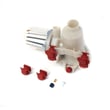
If you are chasing a drain symptom, the water pump 280187 is a common repair part for this model.
Last updated: January 2026
What is the average lifespan of a Kenmore washer?
A Kenmore washer typically lasts 10 to 15 years with normal household use. For your Kenmore Elite washer 11045091401, lifespan depends most on load size, detergent use, and routine care; following the maintenance steps in the 11045091401 owner's manual helps you reach the upper end of that range.
Typical lifespan ranges
Most Kenmore washers fall into these real-world averages:
| Washer type | Typical lifespan | Notes |
|---|---|---|
| Top-load (traditional) | 12 to 15 years | Simpler mechanical design often lasts longer |
| Front-load (high efficiency) | 10 to 12 years | More seals, bearings, and drain components to maintain |
| Light use vs. heavy use | +2 years vs. -2 years | Large families and daily loads shorten life |
What shortens a washer’s life fastest
We see these issues most often on high-efficiency washers like model 11045091401:
- Overloading the drum, which stresses the drive system and suspension
- Too much HE detergent, which causes residue buildup and odors
- Skipping periodic cleaning cycles, leading to grime in the tub and hoses
- Running with a slow drain, which overworks the drain pump
- Ignoring small leaks, which can damage bearings and electrical parts
Parts that commonly wear as the washer ages
If performance changes over time, these parts are frequent wear items:
- Water pump 280187 (draining problems, humming, or leaks)
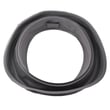
- Washer door boot WP8182119 (front seal leaks, mildew, tears)
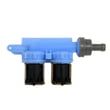
- Washer water inlet valve WP8181694 (slow fill, no fill, hot or cold water issues)
- Washer drive belt WPW10388414 (slipping, weak spin, squealing)
Why it matters
Knowing the typical 10 to 15 year lifespan helps you decide whether to repair or refresh key components. Replacing a wear part early (like a pump, door boot, or inlet valve) often restores reliability and prevents secondary damage.
Last updated: January 2026
How to force a Kenmore Elite washer to drain?
On Kenmore Elite washer model 11045091401, the fastest way to force a drain is to cancel the cycle and run a Drain/Spin (or Spin Only) cycle; if the washer will not pump out, manually drain through the pump cleanout and then clear the blockage so the drain pump can run normally. See the steps in the 11045091401 owner's manual.
Quick ways to force a drain
- Press Pause/Cancel (or Stop) to end the current cycle.
- Select Drain/Spin (or Spin Only) and press Start.
- If the door stays locked, wait a few minutes; many front-load washers unlock only after water level drops.
- If the washer still will not drain, proceed to manual draining below.
Manual drain (when the washer will not pump out)
- Unplug the washer.
- Place towels and a shallow pan under the lower front access area.
- Slowly open the pump cleanout (filter cap) to let water drain into the pan.
- Remove debris from the filter area (coins, lint, small socks).
- Reinstall the cap tightly, plug the washer back in, and run Drain/Spin again.
If the pump is jammed, leaking, or noisy and the washer will not evacuate water, replacement of the water pump 280187 is a common fix.
What to check if it still will not drain
- Drain hose: kinked, crushed, or pushed too far down the standpipe.
- Standpipe or sink drain: clogged and backing up.
- Pump filter: blocked with lint or foreign objects.
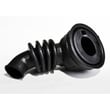
- Tub-to-pump hose: clogged; inspect the washer tub-to-pump hose WPW10467168 for obstructions.
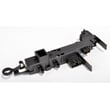
- Door lock: if the washer will not start Drain/Spin, a failed lock can prevent operation; inspect the washer door lock assembly WP8182634.
Symptom-to-likely-cause guide
| What you see | Most common cause | What we do next |
|---|---|---|
| Hums but no draining | Pump jam or blocked filter | Clean filter; inspect pump impeller |
| Drains slowly | Partial clog in hose/standpipe | Clear hose and household drain |
| Won’t start Drain/Spin | Door not locking or control issue | Check door lock, then wiring |
Why it matters
Forcing a proper drain protects the control system and prevents water from sitting in the outer tub, which can cause odors and repeat drain errors.
Last updated: January 2026
How many cubic feet is my Kenmore Elite washer?
Your Kenmore Elite washer model 11045091401 has a 4.5 cu. ft. tub capacity. This capacity helps you size loads correctly so the washer can tumble freely, rinse well, and spin without excessive vibration.
What 4.5 cu. ft. means for everyday loads
- Wash full-size loads without packing the drum tight; leave space at the top for proper tumbling
- Bulky items (comforters, blankets) should move freely; add a second item only if the load still shifts easily
- If the washer struggles to spin or shakes, reduce the load size and redistribute items
- Use HE detergent and measure carefully; oversudsing can reduce cleaning and rinsing performance
Quick capacity reference
| Capacity | Typical use | What to watch for |
|---|---|---|
| 4.5 cu. ft. | Large family loads, towels, mixed loads | Overfilling can cause poor cleaning and out-of-balance spinning |
Where to confirm capacity and loading guidance
We recommend checking the 11045091401 owner's manual for the manufacturer’s loading recommendations, cycle details, and any notes about bulky items or maximum load height.
Why it matters
Matching load size to a 4.5 cu. ft. washer improves cleaning, reduces wear on the drive system, and helps prevent drain and spin issues that can stress parts like the water pump 280187.
Last updated: January 2026