Owner’s manual
 Error Codes


What is the life expectancy of a Jenn Air refrigerator?
A Jenn-Air refrigerator typically lasts 12 to 18 years in normal home use. For the JENN-AIR JFD2589KES bottom-mount refrigerator, keeping temperatures stable, cleaning the condenser area, and addressing cooling or ice maker issues early are the biggest factors in reaching the upper end of that range.
Typical lifespan and what affects it
Most refrigerators fail early due to heat stress, airflow problems, or sealed-system strain. These are the most common life-shorteners we see:
- Dirty or blocked condenser coil causing high compressor run time
- Door gasket leaks letting warm air and moisture in
- Evaporator fan problems reducing airflow through the fresh food section
- Ice maker or water system leaks creating ice buildup or corrosion
- Poor temperature settings (too warm or frequent large swings)
Quick benchmarks (what “normal” looks like)
| Item | Typical expectation | What it means for you |
|---|---|---|
| Overall refrigerator lifespan | 12 to 18 years | Many units reach mid-to-late teens with routine care |
| Sealed system (compressor, evaporator, condenser) | 10 to 20 years | Long life depends heavily on clean coils and good airflow |
| Wear items (switches, gaskets, fans) | 5 to 12 years | Often repairable and worth fixing if cooling is strong |
What to do to help your JFD2589KES last longer
These steps reduce compressor workload and prevent temperature problems:
- Keep the condenser area clean and unobstructed
- Confirm doors close fully and the gasket seals all the way around
- Avoid overpacking; leave space for air circulation in both compartments
- Set and verify temperatures using the guidance in the JFD2589KES owner’s manual
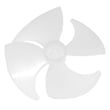
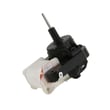
- If you hear unusual fan noise or see warm spots, inspect airflow-related parts early (for example, the refrigerator evaporator fan blade WP2169142)
Why it matters
A refrigerator that runs hot or can’t move air efficiently forces the compressor to run longer. That extra run time is the fastest path to shortened life, higher energy use, and inconsistent fresh food and freezer temperatures.
Last updated: January 2026
How to move a Jenn air refrigerator?
To move a Jenn-Air JFD2589KES bottom-mount refrigerator safely, we unplug it, secure shelves and drawers, tape the doors shut, and move it upright using an appliance dolly. This prevents interior damage and helps protect the sealed system during transport.
Safe steps to move the refrigerator
- Unplug the power cord before you start.
- Remove or tape down loose items (shelves, bins, drawers) so they cannot slide.
- Tape the doors shut so they cannot swing open.
- Protect vinyl or other flooring with cardboard, rugs, or other protective material.
- Use an appliance dolly; keep the refrigerator upright while moving.
- Truck the refrigerator from its side or back, never from the front.
Leveling legs and toe grille basics
Many Jenn-Air bottom-mount units use front adjustment screws and stabilizing legs behind the toe grille. For moving, you typically access the toe grille first, then adjust as needed.
| Item | What we do | Why |
|---|---|---|
| Power | Unplug before moving | Prevents electrical shock and damage |
| Interior parts | Tape shelves and drawers | Prevents cracking and broken rails |
| Doors | Tape shut | Prevents hinge and cabinet damage |
| Transport | Use dolly; keep upright | Protects compressor and refrigerant lines |
After you place it in the new spot
- Let it sit upright before plugging in if it was tilted during moving (a common best practice is 2 to 4 hours).
- Reinstall shelves and drawers.
- Level the refrigerator so the front is slightly higher than the back, then set stabilizing legs firmly on the floor (details are in the JFD2589KES user guide).
Why it matters
Moving a refrigerator incorrectly can crack shelves, damage flooring, and strain the compressor and sealed system. Keeping the unit upright and stabilized reduces the chance of cooling problems after the move.
Last updated: January 2026
What are common problems with Jenn Air refrigerators?
Common problems we see on the Jenn-Air JFD2589KES bottom-mount refrigerator include temperature imbalance (freezer cold but fresh food warm), ice maker or water issues, water leaks, odors, and noisy operation. Many of these trace back to restricted airflow, dirty condenser areas, or a failed fan, damper, or temperature-sensing part.
Most common symptoms and what they usually point to
- Fresh food warm, freezer OK: airflow restriction, a stuck/failed damper, or evaporator fan problems
- Not making ice: ice maker issue, water supply problem, or inlet valve problem
- Water leaking: water line connection, inlet valve, or drain/defrost-related icing
- Loud humming, rattling, or clicking: condenser area needs cleaning, fan blade interference, or start device/compressor concerns
- Odors: food spills, old filters, or interior surfaces needing deep cleaning (the manual includes an odor-removal procedure)
For model-specific operating and care steps, use the JFD2589KES user guide.
Parts that commonly solve these issues on JFD2589KES
If troubleshooting points to a failed component, these are common matches for the symptoms above:
| Symptom | Likely system | Example part for this model |
|---|---|---|
| Fridge warm, freezer cold | Airflow control | Refrigerator electronic damper WPW10196393 |
| Warm temps, weak airflow | Evaporator fan | Evaporator motor WPW10128551 or refrigerator evaporator fan blade WP2169142 |
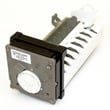
| No ice or slow ice | Ice maker system | Refrigerator ice maker D7824706Q |
| No water to ice maker | Water supply control | Refrigerator water inlet valve assembly WP67006531 |
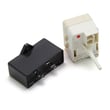
| Clicking, hard starting | Compressor start circuit | Refrigerator start device W10613606 |
Quick checks we recommend before replacing parts
- Confirm temperature settings and allow 24 hours after changes for temps to stabilize
- Make sure air vents are not blocked by food packages (overcrowding reduces circulation)
- Clean door gaskets regularly so doors seal tightly (the manual recommends periodic gasket cleaning)
- Vacuum dust from the condenser area to improve cooling efficiency
- Verify the refrigerator is level so doors close fully and consistently
Why it matters
Airflow and sealing problems make the refrigerator run longer, warm up the fresh food section, and increase frost and moisture issues. Keeping vents clear, gaskets clean, and the condenser area dust-free prevents many “not cooling” and “noisy” complaints.
Last updated: January 2026
Why is my Jenn Air refrigerator leaking water from the bottom?
Water leaking from the bottom of your Jenn-Air JFD2589KES refrigerator is usually caused by a defrost drain problem (water can’t reach the drain pan), a water supply connection leak, or a door seal issue that creates excess condensation. Use the steps below to pinpoint the source using the JFD2589KES owner’s manual.
Quick checks that identify the leak source
- Look at the water: clear water often points to the defrost drain or condensation; water near the back can point to the water supply connection.
- Check when it happens: leaks after ice maker use often point to the water line or inlet valve area.
- Inspect the freezer floor: ice buildup on the freezer bottom often indicates a restricted defrost drain.
- Check door closing: drawers or bins that prevent full closure can cause sweating and puddles.
- Confirm the refrigerator is level: a tilt can affect door sealing and drainage.
Most common causes on this style of refrigerator
| Likely cause | What you’ll notice | What to do next |
|---|---|---|
| Defrost drain restricted or frozen | Water or ice on freezer bottom; puddle later at front | Clear the drain path and remove ice; clean any debris |
| Drain pan shifted or cracked | Water appears under unit, often toward rear | Inspect the drain pan; replace if damaged (example: pan, 1 way d WP12579803) |
| Water supply connection leaking | Drips near back/bottom; worse after dispensing or ice maker fill | Tighten fittings, check for kinks, and recheck for leaks over time |
| Door gasket not sealing | Moisture, frost, or sweating around door edges | Clean gasket and sealing surfaces; correct obstructions; replace if torn |
Water line and ice maker leak points to check
Our manual guidance for this model’s water connection is to use copper tubing, avoid kinks, and monitor for leaks after turning the water on.
- Check the tubing for kinks and rubbing points.
- Check the inlet connection and fittings for slow drips.
- Avoid plastic tubing; it is less durable and more likely to leak.
- If the leak is tied to ice production, inspect the ice maker fill area and connections.
Why it matters
Bottom leaks can lead to hidden moisture under the refrigerator and recurring ice buildup in the freezer. Fixing the root cause (drain, pan, gasket, or water connection) prevents repeat puddles and helps the refrigerator maintain stable temperatures.
Last updated: January 2026