Owner’s manual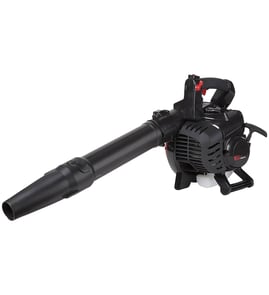







What is the gas oil mixture for a Craftsman leaf blower?
For the Craftsman gas leaf blower model 358794960, we mix unleaded gasoline with synthetic 2-cycle air-cooled engine oil at a 40:1 ratio. That equals 3.2 ounces of 2-cycle oil per 1 gallon of gas; shake the container briefly to fully blend before fueling. See the owner's manual for the exact fueling steps and safety notes.
Quick mix chart (40:1)
Use this as a fast reference when you are measuring fuel for your 2-cycle blower.
| Gasoline amount | 2-cycle oil needed | Notes |
|---|---|---|
| 1 gallon | 3.2 oz | This is the manual’s stated mix for model 358794960 |
| 1/2 gallon | 1.6 oz | Mix in an approved fuel can, then shake |
| 1 quart | 0.8 oz | Measure carefully; small errors matter more |
How we recommend mixing fuel
Mixing in a separate, approved fuel container helps protect the carburetor and fuel lines.
- Use fresh unleaded gasoline.
- Use synthetic 2-cycle air-cooled engine oil (the manual recommends Craftsman brand).
- Measure oil first, then add gasoline.
- Cap the container and shake momentarily to blend.
- Fill the tank slowly; remove the fuel cap slowly when refueling.
What not to use (to prevent engine damage)
Using the wrong oil is one of the fastest ways to score the piston and ruin compression.
- Do not use automotive (4-cycle) motor oil
- Do not use marine or boat 2-cycle oil
- Do not “eyeball” the ratio when mixing small batches
Why the 40:1 mix matters
Your 2-cycle Craftsman blower relies on oil mixed into the fuel to lubricate internal engine parts (like the piston, rings, and crankshaft). Too little oil can cause overheating and rapid wear; too much oil can foul the spark plug and increase smoke and carbon buildup.
Storage tip for mixed fuel
If you will not use the blower for 30 days or longer, we recommend draining the tank and running the engine until the fuel lines and carburetor are empty. Using fuel stabilizer can also help reduce gum deposits during storage.
Last updated: February 2026
Why are gas-powered leaf blowers bad?
Gas-powered leaf blowers can be “bad” mainly because they create exhaust fumes, noise, dust, and flying-debris hazards. With Craftsman model 358794960, our safety guidance focuses on preventing carbon monoxide exposure, reducing noise disturbance, and avoiding injuries from objects that can ricochet or be thrown.
Main drawbacks people notice
- Exhaust and carbon monoxide risk: Using a gas blower in unventilated areas can allow carbon monoxide to build up; breathing exhaust fumes is dangerous.
- Noise impact: Gas blowers can be loud enough to disturb neighbors; operating at reasonable hours and using the lowest effective throttle helps.
- Dust and air quality: Blowing dry debris can create dust clouds; lightly dampening surfaces can reduce airborne dust.
- Flying debris and property damage: Rocks, sticks, and other hard objects can be picked up and thrown, which can injure people or break glass.
- Vibration exposure: Prolonged use of gasoline-powered hand tools can expose hands and fingers to vibration; take breaks and stop if you notice numbness or pain.
What we recommend for safer, less disruptive use (model 358794960)
Use these practices from the owner's manual to reduce the downsides:
- Inspect the area first; remove rocks, glass, wire, and other hard objects.
- Wear eye protection; keep bystanders, pets, and open windows out of the discharge path.
- Avoid unventilated areas; never run the blower where exhaust can accumulate.
- Use the lowest throttle that still gets the job done; limit how many machines run at once.
- In dusty conditions, slightly dampen surfaces before blowing.
Quick “problem to prevention” guide
| Concern | What causes it | What helps most |
|---|---|---|
| Exhaust fumes | Running in enclosed or poorly ventilated areas | Operate outdoors with good airflow; avoid unventilated spaces |
| Noise complaints | High throttle, early/late use | Use lowest effective throttle; operate at reasonable hours |
| Dust clouds | Dry, powdery debris | Lightly dampen surfaces; blow close to the ground |
| Injuries/damage | Debris ricochets from hard objects | Clear the area first; direct airflow away from people and glass |
Why it matters
Most complaints about gas leaf blowers come down to safety and neighborhood impact. Following the operating and safety rules for the Craftsman 358794960 reduces risk of injury, limits dust, and helps keep noise at a more acceptable level.
Last updated: February 2026
Who makes Craftsman leaf blowers?
Craftsman is a brand name used on leaf blowers that are manufactured for Craftsman by various equipment makers, depending on the model and production year. For your Craftsman gas blower model 358794960, the best way to confirm the original manufacturer and exact specifications is to check the identification and parts information in the owner's manual.
How to identify the actual manufacturer on your 358794960
We use the model and ID labels on the blower to match the correct parts list and documentation. Check these common locations:
- On the blower housing near the starter rope
- Near the fuel tank or handle area
- On the vacuum tube or rear housing (blower/vac models)
- In the parts list section of the manual
Why the maker can vary (even within the Craftsman brand)
Craftsman-branded outdoor power equipment is often produced by different OEM manufacturers over time. That is why two Craftsman blowers can look different and use different carburetor, fuel line, or starter parts.
What stays consistent
- The Craftsman brand on the product
- The model number 358794960 used to match parts and service info
- The operating requirements in the manual (fuel mix, safety rules, maintenance schedule)
Quick model facts that help with parts matching
From the documentation for model 358794960, this unit is a gasoline-powered 2-cycle blower/vac with these key identifiers:
| Item | What to look for | Why it matters |
|---|---|---|
| Model number | 358794960 | Ensures correct parts diagrams and part fit |
| Engine type | 2-cycle | Determines fuel mix and tune-up parts |
| Fuel mix | 40:1 gas to 2-cycle oil | Prevents hard starting and engine damage |
Why it matters
Knowing the correct maker is less important than matching the exact model number when ordering parts. For example, fuel delivery parts are common wear items on gas blowers; ordering by model helps you get the right sizes, such as the poulan lawn & garden equipment fuel line, small 530069247 or ayp lawn & garden equipment fuel line, large 530069216.
Last updated: February 2026
What is the best gas-powered leaf blower on the market?
There is no single “best” gas-powered leaf blower for everyone; the best choice depends on whether you need maximum power, easier handling, or blower-vac capability. If you already own the Craftsman 358794960, it is a 25cc 2-cycle blower/vac rated at 205 MPH and 410 CFM, which is a strong residential benchmark. See the owner's manual for operating and maintenance details.
How to choose the best gas leaf blower for your yard
We recommend comparing these factors first, because they directly affect performance and comfort:
- Air volume (CFM): higher CFM moves more leaves at once
- Air speed (MPH): higher MPH helps lift wet or stuck debris
- Type: handheld vs backpack vs blower/vac
- Weight and balance: matters most for longer jobs
- Noise and run time: important for neighborhood use and all-day work
Where the Craftsman 358794960 fits
This model is a gasoline powered blower/vac (not just a blower). That makes it a good fit when you want to collect dry leaves and light debris instead of only pushing it around.
Quick comparison (what to look for)
| Need | What to prioritize | Typical best match |
|---|---|---|
| Heavy leaf piles, large lots | High CFM, backpack comfort | Backpack blower |
| Driveways, patios, quick cleanup | Lighter weight, easy starting | Handheld blower |
| Picking up dry leaves | Vacuum kit, bag, unclog-friendly design | Blower/vac |
Why fuel and maintenance matter as much as brand
A “top” blower that is fueled or maintained incorrectly will run poorly. For the Craftsman 358794960, use fresh unleaded gas mixed with synthetic 2-cycle air-cooled engine oil at 40:1 (3.2 oz oil per 1 gallon gas). Using the right mix helps prevent hard starting, power loss, and piston damage.
Parts that commonly affect performance
If your blower is hard to start, surges, or won’t stay running, these parts are often involved:
- Poulan lawn & garden equipment fuel line, small 530069247 (cracked or leaking line)
- Ayp lawn & garden equipment fuel line, large 530069216 (restricted fuel flow)
- Line trimmer fuel cap 578931605 (venting issues that can starve fuel)
Last updated: February 2026
What is the life expectancy of a gas leaf blower?
A gas leaf blower typically lasts about 10 years with normal homeowner use and consistent maintenance. For your Craftsman 358794960 2-cycle blower/vac, clean fuel practices, regular tune-ups, and replacing wear items on time are what most directly determine how long it keeps starting easily and running strong.
Typical lifespan and what changes it
Most gas leaf blowers reach their full life when the engine maintains good compression and the fuel system stays clean.
- Maintenance quality (fresh fuel mix, clean air filter, correct adjustments)
- Storage habits (dry, stabilized fuel, clean unit before storage)
- Operating conditions (dusty work, heavy vacuuming, frequent clogging)
- Wear parts replaced on schedule (fuel lines, spark plug, air cleaner)
- Overheating and lean running (often tied to air leaks or restricted fuel flow)
Maintenance that adds years (high impact)
Use the procedures and intervals in the owner's manual. For a 2-cycle blower like the 358794960, these habits matter most:
- Mix fuel correctly and use fresh gas/oil mix
- Empty or stabilize fuel before long storage
- Keep the cooling air intake areas clear of debris
- Replace cracked or soft fuel lines before they leak air
- Avoid forcing the vacuum into wet piles that can clog and overwork the engine
Quick guide: symptoms vs likely wear item
| What you notice | Common cause | What we check/replace |
|---|---|---|
| Hard starting, surging, won’t stay running | Fuel delivery restriction or air leak | Fuel lines and fittings |
| Runs but lacks power | Dirty intake, exhaust restriction, engine wear | Air cleaner, muffler condition, compression |
| Fuel smell or wet spots | Split line or loose connection | Fuel line and fitting |
If you’re seeing fuel-related issues, the parts list for this model includes items like the poulan lawn & garden equipment fuel line, small 530069247, the ayp lawn & garden equipment fuel line, large 530069216, and the ayp chainsaw fuel line fitting 530023877.
Why it matters
A blower can look “worn out” when it is really just losing fuel flow or pulling air through aged lines. Fixing small fuel-system problems early helps prevent lean running, overheating, and premature engine damage.
Last updated: February 2026