Owner’s manual
 Error Codes


What does DH mean on Kenmore Elite refrigerator?
On Kenmore Elite refrigerator model 79574013410, DH typically indicates a defrost heater (or defrost heating) problem, meaning the refrigerator is not warming the evaporator enough during the defrost cycle and frost can build up until cooling airflow is restricted.
- Refrigerator section getting warm while the freezer still seems cold
- Frost or ice buildup on the freezer back wall
- Fan noise changing (fan hitting ice) or reduced airflow
- Water leaking or refreezing near the freezer floor after defrost
- Temperature swings and longer run times
- Power reset: Unplug for 5 minutes, then restore power.
- Confirm doors seal tightly: A leaking gasket can cause heavy frost that overwhelms defrost.
- Look for obvious ice buildup: Heavy frost on the freezer rear panel points to a defrost system issue.
- Make sure vents are not blocked: Overpacked shelves can reduce airflow and mimic a cooling failure.
A DH/defrost heat issue is usually tied to one of these:
| Likely cause | What it affects | Common symptom |
|---|---|---|
| Defrost sensor/thermistor issue | Tells the control when to heat/stop heating | Frost buildup, erratic temps |
| Control board issue | Sends power to the defrost heater circuit | Repeating DH, no defrost |
| Airflow restriction from ice | Prevents cold air from moving | Warm fresh food section |
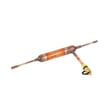
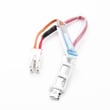
For this model, a common defrost-related component is the refrigerator defrost sensor assembly 6615JB2005R.
When the defrost system cannot clear frost off the evaporator, airflow drops. That can make the refrigerator compartment warm up even though the compressor is running, and it can eventually lead to ice buildup that causes leaks and fan problems.
Use the 79574013410 owner's manual for the control panel indicators, troubleshooting flow, and any model-specific diagnostic steps (including Kenmore Connect instructions if your unit supports it).
Last updated: January 2026
What are the common problems with Kenmore Elite refrigerators?
Common problems on the Kenmore Elite 79574013410 bottom-mount refrigerator include cooling failures (sealed-system or compressor related), ice maker issues, and control or sensor problems that cause temperature swings or defrost trouble. For model-specific troubleshooting steps and feature details, use the 79574013410 owner's manual.
- Not cooling or warm temperatures: compressor, sealed system, condenser airflow, or control issues
- Ice maker not making ice: ice maker assembly, water supply, or dispenser-related problems
- Frost buildup or thawing/freezing cycles: defrost sensor, evaporator airflow, or control logic
- Bad odors: overdue air filter replacement or spills in hidden areas
- Door not sealing well: gasket wear, door alignment, or a torn seal
If your symptoms match, these are common repair paths for this model:
| Symptom | Common part area | Example model part |
|---|---|---|
| No/poor cooling | Compressor start or compressor | Refrigerator compressor start relay EBG60663230 or refrigerator compressor TCA38091801 |
| Frost/defrost problems | Defrost sensing | Refrigerator defrost sensor assembly 6615JB2005R |
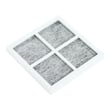
| Odors | Air filtration | Lg refrigerator air filter ADQ73214408 |
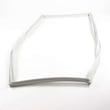
| Door leaks/sweating | Door sealing | Refrigerator door gasket, right ADX72930461 |
| No ice | Ice maker | Ice maker assembly (AEQ72909602) - refrigerator ice maker part by lg AEQ72909602 |
- Confirm the temperature settings and allow 24 hours after any adjustment
- Make sure vents inside the fresh food and freezer sections are not blocked by food packages
- Clean dust from the condenser area to restore airflow
- Check door closure: look for gaps, torn gasket sections, or a door that sits low
- If your model supports it, use Kenmore Connect diagnostics as described in the manual
A refrigerator that is even 5 to 10 degrees too warm can spoil food quickly, and a small air leak at the door gasket can create frost, longer run times, and higher energy use.
Last updated: January 2026
Why is my Kenmore Elite refrigerator leaking water out of the bottom?
On Kenmore Elite refrigerator model 79574013410, water leaking from the bottom is typically caused by a clogged or frozen defrost drain (defrost water overflows inside the cabinet) or a leak at the water supply line, fittings, or dispenser tubing. Start by locating where the water first appears.
- Unplug the refrigerator before removing panels or working near wiring.
- Check for water or a sheet of ice under the crisper drawers (classic defrost drain backup).
- Look behind the unit for drips at the water line connection, especially after ice maker fills.
- Inspect the 1/4-inch water line for kinks, cracks, or a loose compression nut.
- Confirm the refrigerator is level so water drains toward the drain pan.
Defrost meltwater should flow through a drain to the drain pan. When the drain is blocked, water backs up and can leak out the front.
- Melt any visible ice in the drain trough with warm water
- Flush the drain until it flows freely
- Clean the drain outlet and tube for sludge buildup
If the drain tube is split or won’t clear, replace the refrigerator drain tube 5251JA3003D.
Slow drips at the shutoff valve, tubing, or refrigerator connection often create “mystery” puddles.
- Tighten the compression nut slightly (do not overtighten)
- Replace damaged tubing
- Recheck connections after moving the refrigerator
For water line connection and flushing steps, use the 79574013410 owner's manual.
| What you see | Most likely cause | Where to check |
|---|---|---|
| Water under crispers | Defrost drain clogged | Drain trough and drain tube |
| Water after ice maker runs | Supply line/fitting leak | Back lower connection area |
| Water near front edge | Drain backup or leveling | Inside bottom, then leveling |
Stopping a bottom leak prevents floor damage and reduces ice buildup inside the cabinet that can restrict airflow and cause temperature swings.
Last updated: January 2026
What size is Kenmore refrigerator model 79574013410?
Kenmore Elite refrigerator model 79574013410 is a bottom-mount refrigerator in the Kenmore 795 platform. For the exact exterior width, height, and depth (including hinges and handles), use the specifications and installation section in the 79574013410 owner's manual.
Most customers need one or more of these measurements before delivery or a kitchen remodel:
- Overall width (door-to-door at the widest point)
- Overall height (floor to top of hinge cover)
- Overall depth (cabinet only vs. to the front of handles)
- Door swing clearance (space needed to open doors fully)
- Capacity in cubic feet (storage volume)
Use a tape measure and record two depths and one height:
- Width: measure across the front at the widest point (often the doors)
- Depth: measure cabinet depth, then measure again to the front of the handles
- Height: measure to the top of the hinge cover with leveling legs set for proper tilt
- Clearance: confirm you have room for doors to open and the freezer drawer to pull out
These ranges help you plan space while you verify the exact numbers in the manual.
| Measurement | Typical range for Kenmore 795 bottom-mount | Measure to include |
|---|---|---|
| Width | 32 to 34 in. | doors (widest point) |
| Depth | 30 to 36 in. | cabinet only vs. with handles |
| Height | 67 to 70 in. | hinge cover |
Using the model-specific spec prevents delivery issues, protects door gaskets from rubbing, and ensures proper airflow around the condenser area so the compressor can cool efficiently.
Last updated: January 2026