 Owner’s manual


What's the average lifespan of a Maytag washer?
A Maytag washer typically lasts 10 to 13 years in normal home use. For your Maytag MAV5758EWW, regular care, correct loading, and fixing small issues early (like leaks or slow draining) are the biggest factors in reaching the high end of that range.
Typical lifespan and what changes it
Most top-load washers like the MAV5758EWW land in this range, but real-world life depends on use and maintenance.
- Normal household use: 10 to 13 years
- Heavy daily use or frequent overloading: shorter lifespan
- Good maintenance and prompt repairs: longer lifespan
- Hard water and detergent buildup: can shorten component life
- Ignoring leaks or unusual noises: often leads to bigger failures
Maintenance that helps you get the full lifespan
We recommend using the care and cleaning guidance in the owner's manual.
- Do not overload; keep loads balanced to reduce stress on the drive system
- Use the right amount of HE or standard detergent (as appropriate) to limit residue
- Check fill and drain hoses for wear and replace at the first sign of cracking
- Address slow draining quickly to protect the pump and reduce standing water
- Keep the lid and hinges aligned so the lid switch system operates consistently
Common wear items vs. major assemblies
Here is a practical way to think about what usually wears out first.
| Category | Examples | What you usually notice |
|---|---|---|
| Wear items | Hoses, clamps, small hardware | Leaks, loose connections, vibration |
| Drain system | Pump, drain hose | Won’t drain, slow drain, water left in tub |
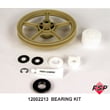
| Drive system | Pulley, thrust bearing components | Squealing, burning smell, weak spin |
| Major assemblies | Transmission, inner basket | Loud grinding, oil leaks, severe spin issues |
Why it matters
Knowing the expected lifespan helps you decide when a repair is a smart investment. If your MAV5758EWW is near or past the 10 to 13 year mark, replacing a small part (like a hose or clamp) often makes sense, while major drive or transmission repairs are usually a bigger decision.
Last updated: February 2026
Can I wash a king size comforter in a Maytag washer?
Yes, you can wash a king size comforter in a Maytag MAV5758EWW washer as long as it fits loosely enough to circulate and agitate. For best results, use a bulky or large-load setting, balance the load, and avoid packing the tub tight (check cycle guidance in the owner's manual).
How to tell if it will fit (without overloading)
A comforter is safe to wash when it can move freely during agitation and you can close the lid without forcing the load down.
- The comforter should sit below the top of the tub and not be tightly compressed
- You should be able to tuck the edges in without pushing hard
- The load should look evenly distributed around the agitator
- If the washer bangs, walks, or struggles to start spinning, the load is too bulky
- If water cannot saturate the comforter within the first few minutes, the load is too full
Recommended settings and wash approach
Use settings that protect the fill and spin system while still getting the comforter clean.
| Item | Best practice in MAV5758EWW | Why |
|---|---|---|
| Cycle | Bulky/large items (or the longest normal cycle available) | More soak and turnover |
| Water level | Highest level that still allows movement | Helps full saturation |
| Spin | Medium (if selectable) | Reduces out-of-balance risk |
| Detergent | HE detergent, measured | Limits oversudsing |
Tips to prevent out-of-balance and poor rinsing
- Wash the comforter by itself; do not add towels or jeans
- Pause after fill to push trapped air out and help it saturate evenly
- If it thumps in spin, stop and redistribute the comforter around the agitator
- Run an extra rinse if the comforter feels soapy or heavy
- Air-dry or low-heat dry; high heat can damage some fills and shells
Why it matters
Bulky bedding that is packed too tightly can prevent proper agitation and rinsing, and it can also trigger severe out-of-balance spinning. Keeping the comforter loose protects the drive system and helps the washer clean effectively.
Last updated: February 2026
How do I reset the lid lock on a Maytag washer?
On the Maytag MAV5758EWW washer, there is no separate “lid lock reset” button; the practical reset is a power cycle and a proper restart with the lid fully closed. If the washer will not agitate or spin, it is usually because the lid switch system is not being made, so focus on lid closure, actuator alignment, and restarting the cycle per the owner's manual.
Quick reset steps (safe and effective)
- Press the control dial in to the OFF position.
- Unplug the washer for 5 minutes.
- Plug it back in.
- Close the lid firmly (do not slam).
- Select a cycle, then press the cycle selector dial to start.
What to check if it still will not run
The MAV5758EWW is designed not to agitate or spin with the lid open, and it may stop if the lid is opened during spin. These checks restore normal operation in most cases:
- Make sure the lid is completely closed; the controls will not operate otherwise.
- If you opened the lid during spin, close the lid and restart; the cycle continues where it left off.
- Redistribute an uneven load (push dial in, open lid, redistribute, close lid, restart).
- Confirm power: outlet, house fuse, or breaker.
- If the washer fills but will not agitate or spin, inspect the lid switch actuator area for misalignment or damage.
Parts that commonly affect “lid won’t unlock” or “won’t spin” symptoms
If the lid is closing properly but the washer still acts like the lid is open, the lid switch actuator or hinge alignment is often involved.
| Symptom | Most likely area | What we do next |
|---|---|---|
| Won’t agitate or spin | Lid not fully closed or lid switch not made | Verify lid closure, restart cycle |
| Stops when lid is opened during spin | Normal safety behavior | Close lid, restart to resume |
| Lid does not engage consistently | Lid alignment (hinge) or actuator | Inspect/replace as needed |
Helpful model-matched parts to consider:
Why it matters
The lid switch system is a built-in safety feature. On the MAV5758EWW, the washer can fill with the lid open, but it will not agitate or spin unless the lid is closed and the washer is restarted correctly.
Last updated: February 2026
What is the most common problem with a Maytag washer?
The most common Maytag washer problem is a no-drain or no-spin condition. On the Maytag MAV5758EWW, this often ties to lid-safety operation (the washer stops spinning when the lid is opened), a drain restriction, or a pump and hose issue. See the owner's manual for cycle behavior and safety-spin details.
What to check first (fast, no tools)
- Make sure the lid is fully closed; this washer is designed not to agitate or spin with the lid open.
- If the load is off-balance, pause the cycle, redistribute items, then restart the final spin.
- Confirm the washer is not overloaded; an overload can trip the motor protector and stop operation until it cools.
- Look for a kinked or crushed drain hose; straighten it and verify the standpipe is not blocked.
- Listen during drain: a humming pump with little or no water flow points to a clog or failing pump.
Common causes and the parts that usually fix them
| Symptom | Most likely cause | What we typically do |
|---|---|---|
| Won’t spin | Lid safety not being satisfied | Inspect lid strike/actuator and switch mounting; verify lid closes firmly |
| Won’t drain | Clog in drain path | Check drain hose and pump inlet for debris |
| Drains slowly | Restricted hose or partial blockage | Clear restriction; confirm hose routing and height |
| Stops mid-cycle | Motor overload protector tripping | Reduce load size; check for binding in drive system |
Parts on this model page that can help
If you find a drain restriction or a damaged hose, these model-matched parts are common fixes:
- Washer drain hose WP21001872 (cracks, pinholes, or internal restriction)
- Pump clamp, pressure switch hose WP596669 (loose clamp can contribute to pressure-sensing issues)
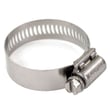
- Hose clamp WP285655 (secure drain or internal hoses after service)
Why it matters
No-drain and no-spin problems can leave clothes soaking wet and can also trigger repeated stops from unbalanced loads or motor protection. Fixing the root cause (lid safety, drain path, or pump/hose) restores normal cycle completion and protects the drive system.
Last updated: February 2026


