Owner’s manual
 Error Codes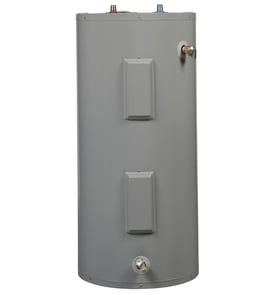



Do electric water heaters last long?
Yes. A Kenmore electric water heater like model 153321844 typically lasts 10 to 15 years. Lifespan depends most on water quality, temperature setting, and maintenance such as periodic tank draining and keeping the anode rod in good condition (details are in the 153321844 owner's manual).
Most electric water heaters reach the longer end of their lifespan when corrosion is controlled and sediment is managed.
- Anode rod condition (it sacrifices itself to protect the tank)
- Water temperature setting (hotter settings speed up wear)
- Water quality (softened or aggressive water can increase anode depletion)
- Sediment buildup (reduces efficiency and can overheat elements)
- Usage level (high demand increases heating cycles)
We recommend focusing on the items that directly protect the tank and heating system.
- Inspect the anode rod periodically and replace it when significantly depleted
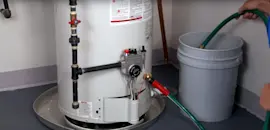
- Drain and flush the tank on a regular schedule to reduce sediment
- Keep thermostat settings reasonable for your household
- Watch for early signs of element issues (slow recovery, lukewarm water)
- Replace sealing parts when servicing elements to prevent leaks
| What you service | Why it matters | Example part for model 153321844 |
|---|---|---|
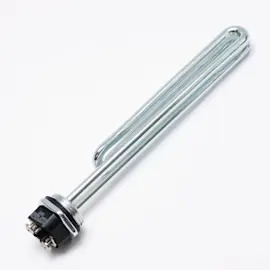
| Heating element | Restores heating performance when recovery is slow | Water heater heating element, 3,800-watt 100108346 |
| Element gasket | Helps prevent leaks after element service | Water heater heating element gasket 100108379 |
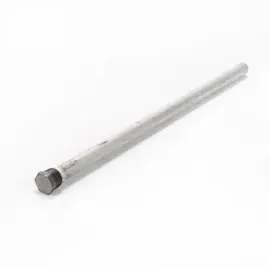
| Anode rod | Protects the tank from corrosion | Water heater anode rod 100108660 |
A water heater usually fails from tank corrosion or leaks, not just from “getting old.” The anode rod is designed to slow corrosion; once it is depleted, the tank can begin corroding and eventually leak. Staying ahead of anode and sediment issues is the most reliable way to extend service life.
You can order replacement parts for your Kenmore 153321844 from the parts list for this model, or search by model number on Sears PartsDirect.
Last updated: February 2026
Can you adjust the temperature on an electric water heater?
Yes. On the Kenmore 153321844 electric water heater, we adjust water temperature by turning the slotted thermostat adjustment with a screwdriver after shutting off power and removing the access panel; clockwise raises the setting and counterclockwise lowers it (see the owner's manual).
- Turn OFF power to the water heater at the junction box or breaker.
- Remove the upper and or lower access panel(s).
- Fold insulation back to expose the thermostat dial.
- Use a screwdriver in the slotted adjustment:
- Turn clockwise to increase temperature.
- Turn counterclockwise to decrease temperature.
- Reposition insulation, reinstall the access panel(s), then turn power ON.
Most households run 120°F to 125°F for a balance of comfort and safety. Temperatures above 125°F increase scald risk, especially for children, older adults, and anyone with reduced sensitivity.
| Setting goal | Typical thermostat target | What you may notice |
|---|---|---|
| Safer, everyday use | 120°F | Lower scald risk, good for most homes |
| More hot water capacity | 125°F | Hotter at fixtures; use caution |
| Not recommended for most homes | Above 125°F | Higher scald risk; consider a mixing valve |
- Confirm the water heater circuit breaker is on and not weak or tripping.
- Check for blown fuses (if applicable) and verify power is reaching the heater.
- Make sure the cold water supply valve is fully open.
- Verify the thermostat is set to the desired temperature.
- If you had very hot water and then none, the high-temperature shutoff may have tripped.
Correct temperature regulation helps prevent scalding, improves comfort, and can reduce unnecessary strain on components like the thermostat and heating elements.
Last updated: February 2026
How old is my water heater by the serial number?
For a Kenmore 153321844 electric water heater, the age is determined by decoding the serial number on the model rating plate (typically near the lower access panel). Use the serial number format shown in your owner's manual to translate the first characters into the manufacturing date.
- Look for the model rating plate on the tank (often beside the lower access panel)
- Record both the model number (153321844) and the serial number
- Take a clear photo before you start any repair or parts ordering
- If the label is worn, gently wipe dust off; do not scrape the print
Kenmore water heaters are commonly built by a major water heater manufacturer, so the serial number pattern can vary. The most reliable method is to match your serial number to the decoding guidance in the owner's manual.
| Serial number style | What the first characters often mean | Example of what you do |
|---|---|---|
| YYWW | Year, then week of year | “23 15” = 2023, week 15 |
| YYMM | Year, then month | “23 04” = April 2023 |
| Letter codes | Letters map to month and year | Use the letter chart for your unit |
Knowing the manufacturing date helps us confirm whether you have the correct parts and specs for your exact build, especially for maintenance items that affect performance and tank life (like the anode rod and heating elements).
If you are troubleshooting slow recovery, lukewarm water, or rumbling, these are common wear items for Kenmore electric water heaters:
- Water heater anode rod 100108660 (helps protect the tank from corrosion)
- Water heater heating element, 3,800-watt 100108346 (standard 3800-watt replacement)
- Element 5500 100093526 (only if your unit was converted to 5500 watts per the rating plate)
You can order replacement parts for Kenmore 153321844 from the parts list for this model, or search by model number on Sears PartsDirect.
Last updated: February 2026
What is usually the most common water heater problem?
For the Kenmore 153321844 electric water heater, the most common problem we see is mineral (sediment) buildup in the tank, which reduces heating efficiency and can contribute to noise and longer recovery times. The next most common issues are no hot water from a failed element or thermostat, and leaking at valves or fittings (or eventually the tank).
- Sediment buildup: popping or rumbling sounds, reduced hot water output, slower heating.
- No hot water: tripped breaker, blown fuse, high-temperature shutoff tripped, failed heating element.
- Water too hot: thermostat set too high.
- Small drips at the relief valve: often tied to thermal expansion or high water pressure.
- Leaks at the bottom or tank seam: can indicate tank failure (replacement is typically the fix).
Before any service, turn electrical power OFF at the breaker and confirm the tank is full of water before restoring power (running dry can damage elements). Use the owner's manual for the exact procedure and safety warnings.
- Verify the breaker/disconnect is ON and not tripped
- Check for loose/blown fuses (if applicable)
- Confirm the thermostat setting matches your target temperature
- Look for water leaks at the drain valve, relief valve, and piping connections
- Listen for sediment noise and plan a tank drain/flush if needed
| Symptom | Most likely cause | Parts commonly involved for model 153321844 |
|---|---|---|
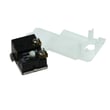
| No hot water | Failed element or control issue | Water heater heating element, 3,800-watt 100108346, thermostat 100108421 |
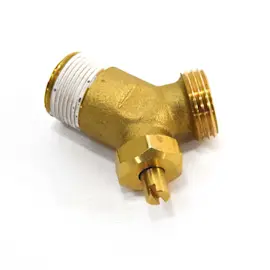
| Leaking at drain area | Worn or damaged drain valve | Water heater drain valve 100109106 |
| Reduced efficiency, noise | Sediment, worn anode rod | Water heater anode rod 100108660 |
Sediment and corrosion make an electric water heater work harder, which increases energy use and can shorten component life. Catching issues early often prevents repeat element failures and helps avoid water damage.
If you need to order parts for your Kenmore 153321844, use the parts list for this model or search by model number on Sears PartsDirect.
Last updated: February 2026
Can you replace parts on a hot water heater?
Yes. On Kenmore electric water heater model 153321844, we can replace many service parts (heating elements, thermostats, anode rods, dip tube, relief valve, drain valve) to restore hot water and extend heater life; always shut off power at the breaker before opening panels and follow the steps in the owner's manual.
- Heating element: restores heating when water is lukewarm or cold
- Thermostat: fixes temperature swings or no-heat conditions
- Anode rod: reduces tank corrosion; can help with odor issues
- Dip tube: improves hot water delivery and recovery
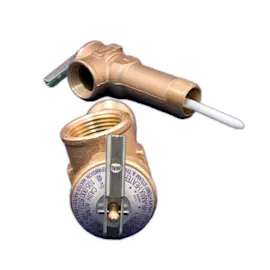
- Relief valve: addresses leaking or unsafe pressure relief operation
- Drain valve: helps with draining and maintenance; can stop seepage at the valve
This model uses 3,800-watt elements; the lower element may have been converted to 5,500 watts depending on how it was set up at installation. Match the replacement element to the rating plate information.
| What you need | When it applies | Part to use |
|---|---|---|
| 3,800-watt element | Standard configuration | Water heater heating element, 3,800-watt 100108346 |
| 5,500-watt element | Only if your unit was converted to 5,500 watts | Element 5500 100093526 |
| Element seal | Any time an element is removed | Water heater heating element gasket 100108379 |
- Turn OFF the water heater breaker (verify power is off)
- Let water cool if possible to reduce scald risk
- Shut off the cold water supply when required for the repair
- Drain the tank to a safe level before removing an element or valve
- Reinstall insulation, thermostat covers, and access panels before restoring power
Replacing the right service parts can solve most “no hot water” and “not enough hot water” complaints without replacing the entire tank. It also helps prevent leaks caused by disturbed seals, incorrect voltage, or loose electrical connections.
To order model-correct parts, use the parts list for 153321844 or search by model number on Sears PartsDirect.
Last updated: February 2026