

Is it worth it to repair a compressor?
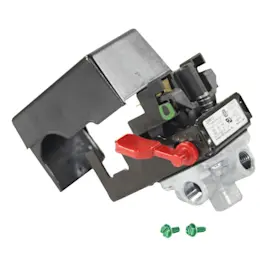
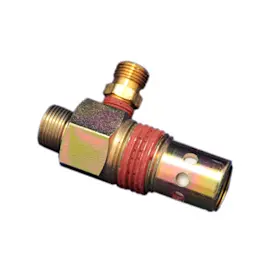
Repairing a Craftsman air compressor model 919164180 is worth it when the problem is a single, serviceable failure (like a pressure switch, check valve, or leaking fitting) and the tank and pump are in good condition. Replacement makes more sense when the pump is worn out or the tank has damage.
Quick decision checklist
- Repair if the compressor still builds pressure (even slowly) and the issue is electrical, a small air leak, or a control problem.
- Repair if the tank holds air and the unit shuts off normally once it reaches cut-out pressure.
- Replace if the pump has loud knocking, heavy blow-by, or won’t build pressure after basic leak checks.
- Replace if the tank shows severe rust, pitting, or any sign of structural weakness.
- Replace if you have repeated failures that keep returning after repairs.
What usually drives the cost (and the outcome)
Most “worth it” repairs are tied to common, external components; pump rebuilds and tank issues are the tipping point.
| Situation | Typical fix | Usually worth it? |
|---|---|---|
| Won’t start or trips breaker | Diagnose power, motor, pressure switch | Often yes |
| Runs but won’t build tank pressure | Find leaks, check valve, intake/reed valves | Sometimes |
| Can’t adjust output pressure | Regulator or gauge issue | Often yes |
| Tank won’t hold air | Leak at drain/fittings vs. tank corrosion | Leak: yes; corrosion: no |
Why it matters
A compressor can look “dead” when it’s really a control or leak problem. Making the right call prevents spending money on a pump rebuild when the real issue is a pressure switch, check valve, or a simple air leak.
Practical next steps before you decide
- Do a soap-and-water leak test on fittings, regulator, and drain valve.
- Note whether it reaches shutoff pressure, and how fast it recovers after using air.
- If it won’t start with pressure in the tank, focus on the unloader/check valve path.
- Use our DIY troubleshooting for the symptom you’re seeing: air compressor won't start, air compressor won't build tank pressure, or air compressor air leaks.
Last updated: February 2026
What is the most common cause of air compressor failure?
The most common cause of air compressor failure (including on Craftsman model 919164180) is poor preventive maintenance that leads to overheating and internal wear. Dirty intake filtration, restricted cooling airflow, and lubrication problems (on oil-lubricated units) accelerate bearing and pump damage.
What usually fails first (and why)
Most “sudden” compressor failures start as small issues that get ignored until the motor or pump cannot keep up.
- Overheating from blocked cooling fins, dirty shrouds, or running too long without cool-down time
- Restricted intake air from a clogged air filter, which makes the pump work harder
- Moisture and contamination in the tank and lines, which promotes corrosion and valve problems
- Air leaks at fittings, regulator, drain valve, or check valve, which forces longer run times
- Electrical stress (weak outlet, undersized extension cord, failing pressure switch), which overheats the motor and trips breakers
Quick checks that prevent most breakdowns
Use this short routine to catch the common causes early.
| What to check | What “good” looks like | What it prevents |
|---|---|---|
| Tank drain | Water drains out regularly | Rust, tank contamination, valve issues |
| Air leaks | No hissing after shutoff | Excess run time, overheating |
| Cooling airflow | Vents and fins clear | Thermal overload trips, motor damage |
| Cut-in/cut-out behavior | Starts and stops normally | Pressure switch and check valve stress |
Why it matters
When an air compressor runs hotter or longer than designed, the motor, pump seals, reed valves, and bearings wear faster. Fixing the root cause (airflow, leaks, drainage, electrical supply) usually prevents repeat failures and improves tank pressure recovery.
Related DIY help
- If it will not power up or keeps tripping, use air compressor won't start.
- If it runs but never reaches full pressure, use air compressor won't build tank pressure.
- If you suspect internal pump wear, use how to rebuild an air compressor pump.
Last updated: February 2026
What company makes Craftsman air compressors?
Craftsman air compressors are made by multiple manufacturers (OEMs) over time; the maker depends on the specific model and production era. For a Craftsman air compressor like model 919164180, the manufacturer is typically identified through the model number format and the unit’s data label, not the Craftsman brand name alone.
How to identify who made your Craftsman 919164180
Check these places on the compressor:
- Data plate/sticker on the tank or frame (often lists a manufacturer name, code, or serial)
- Model number and prefix (Craftsman used different numbering schemes tied to different OEMs)
- Pump/motor label (may show a separate motor manufacturer)
- Pressure switch label (sometimes shows a brand and rating information)
- Parts breakdown for the model (helps confirm the design family)
Common OEMs you may see for Craftsman compressors
Craftsman has sourced compressors from different OEMs, including well-known compressor manufacturers and private-label builders. The exact OEM varies by model series and year.
| What you see on the unit | What it usually means | What to do next |
|---|---|---|
| Only “Craftsman” branding | Brand name, not the OEM | Use the model number and data plate details |
| A separate manufacturer name on the data plate | That is the OEM/assembler | Match parts by the Craftsman model number |
| Different brand on motor or switch | Component supplier, not necessarily the OEM | Still match parts to the compressor model |
Why it matters
The OEM affects which pressure switch, check valve, regulator, gauges, and pump rebuild parts fit your compressor. Matching parts by the exact model number (and the unit’s label details) prevents ordering the wrong components.
Next best step if you’re troubleshooting or repairing
Use our DIY troubleshooting and repair content to narrow down the failing system before you shop for parts:
- Air compressor common questions
- Air compressor won't start
- Air compressor won't build tank pressure
- Air compressor air leaks
Last updated: February 2026
Are air compressor parts interchangeable?
Most air compressor parts are not interchangeable across brands or even across different models of the same brand. For the Craftsman 919164180 air compressor, match parts by model and by the exact performance and mounting requirements (PSI/CFM, voltage, port size, and bracket pattern) to avoid leaks, poor run performance, or unsafe operation.
What usually is not interchangeable
These parts are typically model-specific because of fit, electrical specs, and pressure ratings:
- Pump/compressor head and cylinder components
- Motor (HP, voltage, RPM, frame size, shaft diameter)
- Pressure switch (cut-in/cut-out range, unloader style, port layout)
- Regulator/manifold assemblies (port count, gauge range, mounting)
- Check valve and unloader tube connections (thread type and seat style)
What is sometimes interchangeable (if the specs match)
Some external connection items can cross over, but only when the thread type, size, and profile match exactly:
- Quick-connect couplers and plugs (industrial, automotive, ARO profiles vary)
- Hose fittings and adapters (commonly NPT sizes like 1/4-in or 3/8-in)
- Basic inline shutoff valves
- Drain valve replacements (thread size must match the tank bung)
Quick compatibility checklist (what to compare)
Use this checklist before swapping any part onto a Craftsman 919164180:
| What to match | Why it matters | What can go wrong if it doesn’t match |
|---|---|---|
| Thread type and size (NPT vs other) | Prevents leaks and stripped ports | Leaks, damaged manifold/tank port |
| Pressure rating (PSI) | Keeps components within safe limits | Safety valve popping, component failure |
| Electrical rating (volts/amps) | Prevents overheating and nuisance trips | Breaker trips, burned contacts/motor |
| Mounting pattern and port orientation | Ensures proper fit and tubing alignment | Vibration, cracked lines, poor sealing |
Why it matters
Air compressors rely on sealed air paths and correctly calibrated controls. A “close enough” pressure switch, check valve, or coupler can cause constant air leaks, hard starting, failure to build tank pressure, or unstable outlet pressure.
Best next step for your symptom
If you are trying to swap a part because the compressor is acting up, use a symptom-based path first:
- Won’t start: air compressor won't start
- Won’t build tank pressure: air compressor won't build tank pressure
- Air leaks: air compressor air leaks
- Can’t adjust outlet pressure: air compressor can't adjust the output air pressure
Last updated: February 2026
Will a 30 gallon air compressor run air tools?
Yes; a 30-gallon air compressor runs many common air tools, but performance depends on the tool’s SCFM requirement at the working PSI, not tank size alone. Your Craftsman 919164180 is not a 30-gallon unit, so use SCFM and duty cycle to judge what it will run.
How to tell if an air tool will run well
Check the tool label or manual for SCFM at 90 PSI (some tools list SCFM at 40 PSI). Then compare that to your compressor’s SCFM rating.
- Nailers, staplers, blow guns, and inflators are low-demand and run well on most shop compressors
- Impact wrenches and air ratchets are medium-demand; they work best in bursts
- Die grinders and cut-off tools are medium-to-high demand; expect faster pressure drop on long pulls
- DA sanders and many spray guns are high-demand; they need higher SCFM for continuous use
- Plan a 25% to 50% SCFM cushion for tools used continuously to avoid constant cycling and pressure sag
Quick sizing guide (typical real-world behavior)
| Tool type | Typical air demand | Typical compressor behavior |
|---|---|---|
| Nailers / inflators | Low | Steady performance, quick recovery |
| Impact wrench / ratchet | Medium | Strong bursts; cycles during use |
| Die grinder / cut-off tool | Medium to high | Short runs; noticeable pressure drop |
| DA sander / spray gun | High | Needs high SCFM; may not keep up continuously |
Why it matters
Tank gallons mainly affect how long you can work before pressure drops; SCFM output determines whether the compressor can keep up while you’re using the tool. Matching SCFM prevents weak impacts, slow grinders, and poor spray patterns.
Tips to get better air-tool performance
- Use a 3/8-inch (or larger) hose for higher-demand tools to reduce pressure loss
- Set the regulator so the tool sees its required PSI under load
- Fix leaks at fittings and quick-connects; small leaks cut usable run time
- Drain the tank regularly to reduce water in the air line
- If the compressor struggles to start or build pressure, use air compressor won't start and air compressor won't build tank pressure
Last updated: February 2026