 Owner’s manual


How do I tell what model LG washer I have?
Your LG washer’s model number is printed on the appliance ID label; on most LG top-load washers like the WT5170HV, you’ll find it under the lid opening (around the tub rim), on the back panel, or along the cabinet edge. Match that full model number to the format shown in the WT5170HV owner's manual.
Where to look on an LG top-load washer
Check these common label locations first:
- Under the lid, around the tub opening or lid frame
- Back of the washer near the power cord entry
- Along the side of the cabinet (near the rear edge)
- Behind or near the dispenser area (if your model has one)
- On the inside edge of the lid (less common)
What the label looks like and what to copy
The label typically includes several identifiers. For parts and diagrams, we use the model number.
| Label item | What it’s used for | Example format |
|---|---|---|
| Model number | Correct parts list and diagrams | WT5170HV |
| Serial number | Manufacturing info, service history | Letters and numbers |
| Electrical ratings | Installation and troubleshooting | Volts/amps/Hz |
Tips to avoid mix-ups when ordering parts
- Copy the model number exactly (letters and numbers, no spaces added)
- If there’s a dash or suffix on your label, include it
- Use the model number (not the serial number) when searching washer parts
- If the label is worn, take a clear photo and zoom in to read it
Why it matters
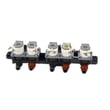
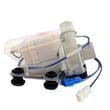
LG often uses similar-looking cabinets across multiple washer series; the correct model number ensures you get the right fit for items like the washer lid lock EBF61674802 or the LG washer water inlet valve assembly AJU73213301.
Last updated: February 2026
What is the capacity of the LG WT5170HV?
The LG WT5170HV top-load washer has a 4.5 cu. ft. capacity, which LG often describes as “ultra capacity.” This size handles bulky loads like towels and bedding while still working well for everyday mixed laundry; confirm cycle and load guidance in the WT5170HV owner's manual.
What 4.5 cu. ft. means for real-world loads
A 4.5 cu. ft. LG top-load washer typically supports these load types:
- King or queen bedding (1 comforter or duvet, depending on fill)
- Towel loads (multiple bath towels plus washcloths)
- Weekly mixed laundry for a small to medium household
- Jeans and heavy cottons (wash fewer items per load to reduce imbalance)
How to load for best cleaning and fewer balance issues
Proper loading matters as much as capacity, especially for high-spin cycles.
- Load items loosely; do not pack or compress
- Keep the load evenly distributed around the washplate
- Mix large and small items to help balance
- For bulky items, use bedding/bulky type cycles when available
- If the tub bangs or the washer stops to rebalance, reduce the load size
Quick guide: capacity vs. what to expect
| Capacity (cu. ft.) | Typical use | What you’ll notice |
|---|---|---|
| 3.5 to 4.0 | Standard family loads | More loads for bulky items |
| 4.5 (WT5170HV) | Bulky plus everyday loads | Fewer loads, better for bedding |
| 5.0+ | Extra-large households | Best for frequent bulky washing |
Why it matters
Capacity affects how many loads you run, how well items tumble and rinse, and how often you see out-of-balance behavior. If you routinely wash bulky items, correct loading and cycle choice help protect components like the suspension and lid lock.
Last updated: February 2026
What is the most common problem with LG washers?
For LG washers like model WT5170HV, the most common problems we see are drainage issues, out-of-balance (UE) shaking/spin problems, and filling or water-level sensing problems that stop a cycle or leave clothes too wet. Many of these come down to load size, hose/valve restrictions, or a failing sensor or pump.
Most common symptoms and what they usually point to
- Won’t drain or drains slowly: drain path restriction or a failing drain pump
- Bangs, walks, or won’t spin (UE): unbalanced load, leveling issue, or worn suspension
- Overfills, underfills, or stops mid-fill: water-level sensing or inlet flow problem
- Lid won’t lock or cycle won’t start: lid lock/switch issue
- Intermittent spin or motor-related errors: motor position sensing or drive components
Quick checks we recommend first (before replacing parts)
- Redistribute the load; avoid washing one heavy item by itself.
- Confirm the washer is level and all feet are firmly on the floor.
- Verify both hot and cold supply valves are fully open.
- Check inlet hoses for kinks; clean any inlet screen debris if accessible.
- Run a rinse and spin cycle with an empty tub to see if symptoms repeat.
Common parts involved on WT5170HV
These are model-matched parts that often relate to the issues above:
| Problem area | What fails | Example WT5170HV part |
|---|---|---|
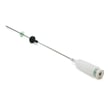
| Out-of-balance shaking | Suspension support weakens | Washer suspension rod and spring assembly 4902EA1002E |
| Won’t drain | Pump motor/impeller wears | LG washer drain pump 5859EA1004P |
| Fill or water level issues | Pressure sensing or hose leaks | LG washer water-level pressure switch 6501EA1001R |
| Won’t start/lock | Lid lock doesn’t engage | Washer lid lock EBF61674802 |
Why it matters
Drain, balance, and fill problems can look like “the washer is bad,” but they often cause secondary issues like long cycle times, repeated UE errors, or poor spin-out. Fixing the root cause protects the tub, drive system, and your laundry results.
For cycle behavior, error code meaning, and model-specific operating tips, use the WT5170HV owner’s manual.
Last updated: February 2026
What is the average lifespan of an LG washer?
Most LG washers, including the LG WT5170HV top-load washer, typically last 10 to 15 years with normal household use. Consistent cleaning, correct loading, and fixing small problems early (drain, fill, balance, lid lock) are what most often determine whether you land closer to 10 or 15.
What affects lifespan the most
- Load size and balance: frequent overloading and chronic out-of-balance spinning shortens tub, suspension, and drive life.
- Water quality and detergent use: too much detergent and hard water buildup can cause odor, poor rinsing, and extra wear.
- Drain health: slow draining strains the pump and can leave water behind.
- Fill accuracy: incorrect water level can lead to poor cleaning and longer cycle stress.
- Lid lock reliability: repeated lid lock faults can stop cycles and increase wear from restarts.
Quick maintenance plan (keeps a washer in the 10 to 15 year range)
- Run a monthly tub-clean cycle (or hottest cycle) and wipe the lid and rim dry.
- Use HE detergent and measure it; reduce for soft water.
- Keep loads evenly distributed; wash bulky items in smaller loads.
- Check inlet screens yearly and make sure hoses are not kinked.
- Level the washer and re-check if it starts vibrating more than normal.
Common wear items and what they usually cause
| Symptom | Often related to | Example part for WT5170HV |
|---|---|---|
| Won’t drain or drains slowly | Drain pump | LG washer drain pump 5859EA1004P |
| Won’t fill correctly or fills slowly | Water inlet valve | LG washer water inlet valve assembly AJU73213301 |
| Stops mid-cycle, lid won’t lock | Lid lock | Washer lid lock EBF61674802 |
| Shakes or bangs during spin | Suspension | Washer suspension rod and spring assembly 4902EA1002E |
Why it matters
A washer that is kept level, clean, and correctly loaded runs fewer “retries” (rebalancing, refilling, re-draining). That reduces stress on the motor system, suspension, and pump, which are the most expensive systems to repair.
For model-specific care steps and cycle guidance, follow the WT5170HV owner’s manual.
Last updated: February 2026


