Owner’s manual
 Error Codes


How to reset GE side-by-side refrigerator not cooling?
For a GE DSHS6VGBBCSS side-by-side refrigerator that is not cooling, we reset it by power-cycling and rechecking the temperature controls. If the controls were set to OFF (which stops cooling), set them back to a colder setting and allow time for temperatures to stabilize.
- Make sure both temperature controls are not set to OFF; on some models, turning a control to the warmest setting until the display flashes OFF stops cooling.
- Unplug the refrigerator for 1 full minute, then plug it back in.
- If the outlet is controlled by a switch, confirm it is ON.
- Check the breaker or fuse; reset if tripped.
- Wait 30 minutes in case the refrigerator is in a defrost cycle.
- After restoring power and settings, allow 24 hours for the system to fully stabilize.
The touch-panel controls can stop cooling without removing electrical power to the refrigerator. Use the DSHS6VGBBCSS owner’s manual to confirm the exact control behavior for your version.
| What you see | What it usually means | What to do |
|---|---|---|
| Display shows OFF or flashes OFF | Cooling is turned off by the controls | Set controls to a colder setting |
| Lights work but no cooling | Controls may be OFF or unit is in defrost | Reset controls; wait 30 minutes |
| Unit just plugged in | Temps not stabilized yet | Wait up to 24 hours |
These checks narrow down common causes before replacing parts:
- Confirm doors are closing fully and not held open by packages.
- Listen for the evaporator fan; no airflow can cause warm temps.
- Look for heavy frost on the freezer back wall (defrost issue).
- If the compressor is not running at all, testing components may be needed.
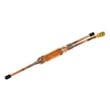
If you suspect a temperature-sensing problem, the GE profile refrigerator temperature sensor WR55X10025 is a common component involved in temperature feedback.
A “reset” only helps if cooling was stopped by control settings, a brief power issue, or a normal defrost cycle. If a fan, defrost component, or sensor is failing, the refrigerator can power on but still not maintain safe food temperatures.
Last updated: February 2026
What is the most common problem with a GE refrigerator?
For the GE DSHS6VGBBCSS side-by-side refrigerator, the most common customer-reported issues are cooling and water/ice dispensing problems, often tied to airflow restrictions, a clogged water filter, or a defrost-related failure. Start with simple checks (settings, doors, filter) before testing electrical parts.
- Confirm the controls are set correctly (freezer too cold can freeze the reservoir and stop water flow).
- Make sure doors close fully and gaskets seal; frequent door openings cause moisture and performance complaints.
- If the dispenser is not working, check whether the dispenser is locked (hold the lock pad for 3 seconds).
- If water spurts after a new filter, flush the dispenser for about 3 minutes (roughly 1.5 gallons).
- If water or ice production is weak, replace the filter or install the bypass plug if your model uses one.
| Symptom | Most common cause | What to do next |
|---|---|---|
| No water or ice | Clogged water filter or supply restriction | Replace the filter; verify house shutoff valve is fully open |
| Water not dispensed but icemaker works | Frozen reservoir from too-cold setting | Set to a warmer setting and allow time to thaw |
| Frost buildup, warm temps | Defrost system problem | Inspect defrost heater and defrost thermostat; check for heavy ice on evaporator |
| Unusual noises | Fan, compressor, or airflow issue | Identify whether noise is from freezer fan area or compressor area |
If your symptoms match, these are frequent repair parts for this model:
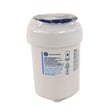
- GE refrigerator water filter MWFP (clogs can reduce water flow and ice production)
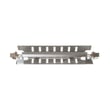
- Refrigerator defrost heater WR51X10055 (failed heater can cause frost buildup and warm temps)
- Refrigerator defrost bi-metal thermostat WR50X10065 (can prevent proper defrost cycling)
- GE profile refrigerator temperature sensor WR55X10025 (bad readings can cause poor temperature control)
- Refrigerator evaporator fan motor WR60X10318 (weak airflow can cause warm refrigerator section)
Most “GE refrigerator problems” trace back to a few systems: temperature control, airflow, and water supply. Fixing a clogged filter, correcting a too-cold setting, or addressing a defrost failure prevents warm food temps, ice clumps, and recurring dispenser issues.
For control locations, lock/unlock steps, and dispenser flushing guidance, use the DSHS6VGBBCSS owner’s manual.
Last updated: February 2026
What is the life expectancy of a GE Cafe refrigerator?
A GE Café refrigerator typically lasts about 15 years with normal household use and basic maintenance. For your GE DSHS6VGBBCSS side-by-side, keeping airflow clear, temperatures stable, and the water system maintained helps you reach that typical lifespan; see the DSHS6VGBBCSS owner's manual for model-specific care details.
Most full-size refrigerators fall into a 12 to 18 year range; GE Café models commonly land near the middle of that range when they are kept clean and properly leveled.
Key factors that shorten or extend life:
- Dirty condenser area and restricted airflow
- Door gaskets not sealing (warm air intrusion)
- Heavy ice buildup from defrost problems
- Frequent power interruptions or surges
- Water leaks at the filter head, reservoir, or valve
We recommend these habits to help a GE side-by-side run longer and more efficiently:
- Keep vents inside the fresh food and freezer sections unblocked
- Set stable temps (typical targets: 37°F fresh food, 0°F freezer)
- Clean dust from the condenser area periodically
- Replace the water filter on schedule; a clogged filter can reduce dispenser flow
- Watch for frost buildup or warm temps that suggest a defrost or airflow issue
When a refrigerator starts warming, icing up, or losing water/ice function, these parts are frequent suspects:
| Symptom | Common system | Example part for DSHS6VGBBCSS |
|---|---|---|
| Warm fridge/freezer, poor airflow | Evaporator fan | Refrigerator evaporator fan motor WR60X10318 |
| Heavy frost on freezer back wall | Defrost system | Refrigerator defrost heater WR51X10055 |
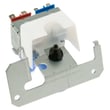
| No water or ice, weak fill | Water supply | Refrigerator water valve WR57X33326 |
| Bad taste/slow dispenser flow | Filtration | GE refrigerator water filter MWFP |
Knowing the expected lifespan helps you decide whether to maintain, repair, or plan a replacement. If your DSHS6VGBBCSS is near 15 years old and needs a major sealed-system repair (compressor, condenser, evaporator), comparing repair cost to replacement value is usually the smartest next step.
Last updated: February 2026