Owner’s manual
 Error Codes


Are all refrigerators 36 inches wide?
No. Refrigerators are not all 36 inches wide; 36 inches is common for full-size French door and many bottom-mount styles, but widths vary widely. For your KitchenAid KRFF305ESS00, confirm the exact cabinet width and clearance requirements in the KRFF305ESS00 owner's manual.
Common refrigerator width ranges
Most refrigerators fall into a few standard width groups:
- 24 inches: apartment/compact and some counter-depth models
- 28 to 33 inches: many top-freezer and smaller bottom-mount models
- 35 to 36 inches: many full-size French door and bottom-mount models
- 42 to 48 inches (or more): built-in and premium wide models
What to measure (so you buy the right size)
Measure the space and the refrigerator, not just the “listed width.”
- Cabinet opening width (wall to wall)
- Height to the lowest overhead cabinet/soffit
- Depth to the back wall (include baseboards)
- Door swing clearance (handles and hinge side)
- Ventilation clearance (top, sides, and rear)
Quick sizing checklist
| What you’re checking | Why it matters | Typical mistake |
|---|---|---|
| Width of opening | Determines if the cabinet fit is possible | Forgetting trim or uneven walls |
| Depth with doors | Prevents sticking out too far | Measuring without handles |
| Door swing | Ensures doors open fully | Not allowing hinge-side clearance |
| Clearance for airflow | Helps cooling performance | Pushing the fridge tight to the wall |
Why it matters
A refrigerator that is even 1 inch too wide (or too deep for door swing) can prevent proper installation, reduce airflow, and make doors or drawers bind. Getting the right measurements up front avoids returns and cooling issues.
Last updated: February 2026
What is a bottom mount fridge freezer?
A bottom-mount fridge freezer is a refrigerator design where the fresh-food compartment is on top and the freezer is a pull-out drawer on the bottom. On KitchenAid model KRFF305ESS00, this layout keeps everyday refrigerated items at eye level and puts frozen foods below.
How a bottom-mount refrigerator is laid out
- Top section: fresh-food compartment (main refrigerator area)
- Bottom section: freezer drawer (baskets or bins for frozen items)
- Cooling system: cold air is circulated through vents; airflow needs to stay unblocked
- Door sealing: gaskets help prevent warm air leaks that cause frost and temperature swings
Bottom-mount vs. top-mount: quick comparison
| Feature | Bottom-mount (like KRFF305ESS00) | Top-mount (freezer on top) |
|---|---|---|
| Fresh-food access | Easier (eye level) | Requires more bending |
| Freezer access | More bending | Easier |
| Freezer style | Usually a drawer | Usually a swing door |
| Best for | People who use fridge more than freezer | People who use freezer often |
Why it matters
This design is popular because it reduces bending for the items most households use most often (milk, produce, leftovers). It also makes it easier to organize frozen foods in a drawer, but it depends on good door sealing and proper airflow to keep temperatures stable.
Helpful related resources
- For model-specific features, storage layout, and temperature recommendations, use the KRFF305ESS00 owner's manual.
- If you are comparing designs because of filter access or water/ice performance, see how to replace the water filter in a KitchenAid refrigerator.
Last updated: February 2026
What is the most common problem with a KitchenAid refrigerator?
The most common KitchenAid refrigerator issues are ice maker problems and cooling complaints (warm refrigerator section or uneven temperatures). On the KitchenAid KRFF305ESS00, these symptoms most often trace back to airflow and water-supply components such as the evaporator fan system, ice maker assembly, or the water inlet valve; use the KRFF305ESS00 owner's manual to confirm the exact checks for your configuration.
Most common symptoms and what they usually point to
- Ice maker not making ice: water supply issue, ice maker failure, or a frozen fill tube
- Refrigerator warm but freezer cold: evaporator fan not moving air, frost buildup restricting airflow
- Water leaking inside or under the unit: clogged/iced defrost drain, loose water line, valve seepage
- Loud humming, buzzing, or clicking: fan blade hitting ice, failing fan motor, compressor start issues
- Temps swing up and down: control sensing/airflow problems, dirty condenser coils
Quick checks we recommend before replacing parts
- Verify settings: refrigerator about 37°F and freezer about 0°F.
- Make sure vents are not blocked by food packages.
- Clean condenser coils (dust buildup commonly causes warm temps).
- If the ice maker is slow or empty, confirm household water supply is on and the line is not kinked.
- Listen for the evaporator fan: it should run when the compressor is running (door switch may need to be pressed).
Common parts involved on KRFF305ESS00
| Problem area | What fails | Example model-matched part |
|---|---|---|
| Ice production | Ice maker assembly | Refrigerator ice maker W10884390 |
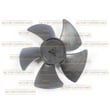
| Air circulation | Evaporator fan motor or blade | Refrigerator evaporator motor W11024089, refrigerator evaporator fan blade WP2169142 |
| Water supply to ice maker/dispenser | Water inlet valve | Refrigerator water inlet valve assembly WPW10420083 |
| Temperature control/operation | Main control board | Refrigerator electronic control board WPW10317076 |
Why it matters
Ice maker and cooling problems usually get worse over time: poor airflow can lead to frost buildup and warmer food temps, and water-supply issues can cause slow ice production or leaks. Catching the root cause early helps prevent repeat failures and wasted food.
Last updated: February 2026
What is the life expectancy of a KitchenAid refrigerator?
Most KitchenAid refrigerators, including the KitchenAid KRFF305ESS00 bottom-mount, typically last 14 to 17 years with normal household use and basic maintenance. Many units reach the 10 to 17 year range; keeping airflow clear and doors sealing tightly helps you get the full lifespan.
Typical lifespan and what affects it
A refrigerator’s life is mostly driven by compressor run time, airflow, and how hard it has to work to hold temperature.
- Maintenance level: clean coils and keep vents clear
- Door seal condition: worn gaskets cause long run times and moisture
- Room conditions: hot garages and tight cabinets shorten life
- Usage: frequent door openings and overpacking increase workload
- Water system care: timely filter changes help prevent valve and ice maker issues
Quick maintenance checklist (best ROI)
Use these habits to extend the life of your KRFF305ESS00:
- Vacuum condenser area and keep the toe-kick area clear of dust
- Keep food from blocking interior air vents
- Confirm doors close on their own and sit level
- Inspect gaskets for gaps, tears, or hardened sections
- Replace water filters on schedule and purge air after changes
Common wear items vs. major repairs
These are typical “wear” parts compared with higher-cost sealed-system repairs.
| Category | Examples | What you’ll notice |
|---|---|---|
| Wear/maintenance | Door gaskets, switches, ice maker components | Warm spots, sweating, lights not working, no ice |
| Airflow/cooling | Evaporator fan motor, fan blade | Warm fridge, noisy fan, uneven temps |
| Major system | Compressor, control board | Not cooling, constant running, repeated shutdowns |
If you’re troubleshooting ice production specifically, the refrigerator ice maker W10884390 is a common replacement for this model.
Why it matters
A refrigerator that runs longer to maintain temperature uses more energy and wears out key components faster. Simple steps like keeping seals tight and airflow open reduce compressor stress and help you reach the expected 14 to 17 year lifespan.
For model-specific care and cleaning guidance, follow the KRFF305ESS00 owner's manual.
Last updated: February 2026
How much does it cost to replace a compressor in a KitchenAid refrigerator?
For KitchenAid model KRFF305ESS00, compressor replacement typically runs about $450 to $1,200 total (parts plus labor). The compressor itself is often $300 to $600+, and labor commonly adds $200 to $600+ depending on sealed-system work and local rates; see the KRFF305ESS00 owner’s manual for model-specific service guidance.
What drives the total cost
- Sealed-system labor: Recovering refrigerant, brazing lines, evacuating, and recharging.
- Diagnosis time: Confirming the compressor is actually failed (not a control, relay, or fan issue).
- Additional parts: Filter drier, process tube, or other sealed-system components.
- Access and downtime: Built-in constraints, moving the unit, and food storage during repair.
- Service call and warranty status: Trip charges and any covered components.
Typical price breakdown (what you’re paying for)
| Cost item | Typical range | Notes |
|---|---|---|
| Compressor part | $300 to $600+ | Model-specific pricing varies; sealed-system part |
| Labor (sealed system) | $200 to $600+ | Often higher than standard appliance labor |
| Extra sealed-system parts | $20 to $150+ | Commonly includes a filter drier |
| Service call/diagnosis | $75 to $150+ | Sometimes applied toward repair |
Parts that are commonly replaced with a compressor
When a compressor is replaced, technicians often replace the filter drier to protect the new compressor from moisture and debris.
- Refrigerator compressor W10233960 (compressor assembly for this model)
- Drier tube WPW10143759 (filter drier used in the sealed system)
- Refrigerant (type and charge amount are technician-handled)
When replacement makes sense vs. replacing the refrigerator
Repair is usually worth it when
- The refrigerator is in good condition overall (doors seal well, no major rust or liner damage).
- Cooling problems are clearly traced to the compressor or sealed system.
- You want to keep the KitchenAid fit and finish and avoid a full reinstall.
Replacement is usually worth it when
- There are multiple major issues (cooling plus control board, ice maker, or door seal problems).
- The unit is older and has a history of sealed-system leaks.
- The repair quote approaches a large share of the cost of a comparable new refrigerator.
Why it matters
A compressor is the heart of the cooling system, but it is also a sealed-system repair. Getting an accurate diagnosis first helps avoid paying for a compressor when the real cause is airflow (evaporator fan), controls, or a defrost-related issue.
Last updated: February 2026
How to remove bottom grill from KitchenAid refrigerator?
On the KitchenAid KRFF305ESS00 bottom-mount refrigerator, the bottom grill (toe kick) snaps onto the lower frame with retaining clips. We remove it by gripping both ends and pulling straight forward to release the clips, then lifting the grill away.
Steps to remove the bottom grill (toe kick)
- Unplug the refrigerator or switch off power at the breaker.
- Open both fresh food doors for easier access.
- Grip the grill at the left and right ends (not the center).
- Pull straight forward with steady pressure to pop the clips loose.
- If it resists, release one end first, then the other.
- Set the grill aside on a flat surface to avoid bending tabs.
Reinstalling the grill
Align the grill with the lower frame, then press firmly along both ends until it snaps into place.
Quick do and do not list
- Do: pull straight out to protect the clips.
- Do: use a flashlight to spot clip locations before pulling.
- Do not: pry hard with a screwdriver; it can crack the grill or scratch the finish.
- Do not: pull from the middle; it can flex and break tabs.
What you might check while it is off
Removing the toe kick is useful for quick inspections and cleaning.
| What you are doing | What to look for | Why it helps |
|---|---|---|
| Cleaning the base area | Dust buildup, debris | Helps maintain airflow and efficiency |
| Checking for water at the front | Moisture, drips, wet floor | Points you toward a drain or condensation issue |
| Listening for unusual noises | Rattles, vibration | Helps identify loose panels or components |
Why it matters
A properly installed toe kick protects internal components and supports normal airflow at the base of the refrigerator.
For model-specific illustrations and clip locations, use the KRFF305ESS00 owner's manual.
Last updated: February 2026
Why are KitchenAid fridges so expensive?
KitchenAid refrigerators, including model KRFF305ESS00, typically cost more because they are built and equipped like premium appliances: stronger fit-and-finish, more advanced temperature management, and higher-end components (such as electronic controls, door gaskets, and ice maker systems) that raise manufacturing and service costs. See the KRFF305ESS00 owner's manual for the feature set your unit was designed to support.
What you are paying for
- Premium materials and tighter door sealing to help maintain stable temperatures
- More sensors and electronics (user interface and control boards) for precise operation
- Added convenience features (ice maker, filtration, lighting, adjustable storage)
- Higher-cost replacement components when service is needed
- Design and noise-control engineering that often adds insulation and complexity
Parts that commonly drive cost in premium fridges
Even when you are not replacing parts, higher-end designs often include more expensive assemblies.
| Component type | Example part for KRFF305ESS00 | Why it affects price |
|---|---|---|
| Ice system | Refrigerator ice maker W10884390 | Dedicated motorized assembly and controls |
| Controls | Refrigerator electronic control board WPW10317076 | Higher-cost electronics and diagnostics |
| Door sealing | Whirlpool refrigerator door gasket (gray) W10443320 | Precision sealing materials and fit |
| Cooling system | Refrigerator compressor W10233960 | Major sealed-system component |
How to decide if the price is worth it
Use these checks to connect the price to real value in your kitchen:
- Compare usable capacity and shelf layout, not just cubic feet
- Check noise level and temperature consistency in daily use
- Factor in expected ownership life: most refrigerators last 12 to 15 years
- Consider parts availability and serviceability for your exact model
- If you use ice and filtered water daily, prioritize those features
Why it matters
A refrigerator’s price is heavily tied to how well it holds temperature and seals air. Better sealing and more precise controls can reduce food spoilage and help the unit recover faster after door openings, but they also increase build complexity and component cost.
Last updated: February 2026
How do you reset the icemaker on a KitchenAid refrigerator?
On KitchenAid model KRFF305ESS00, the most reliable ice maker reset is a power reset: turn the refrigerator off at the breaker (or unplug it) for 1 minute, then restore power and wait for the ice maker to run a harvest cycle. For model-specific reset steps and control locations, use the KRFF305ESS00 owner's manual.
Quick reset steps (safe and effective)
- Confirm the ice maker is turned ON (switch or wire shutoff arm in the down/on position, if equipped).
- Power reset: unplug for 60 seconds (or switch the breaker off), then power back on.
- Wait 10 to 30 minutes for the ice maker to reinitialize; full ice production can take up to 24 hours.
- If the bin is jammed, remove the ice bin and clear clumped ice, then reinstall it fully.
- Verify the freezer is cold enough (target 0°F); warm freezers will not make ice.
- If you recently changed the filter or had the water off, purge air from the water system.
If it still will not cycle
These checks fix most “no ice” complaints after a reset:
| What to check | What you’re looking for | Common fix |
|---|---|---|
| Water supply | Shutoff valve fully open | Open valve; straighten kinked line |
| Fill issues | No water entering ice maker | Test/replace refrigerator water inlet valve assembly WPW10420083 |
| Ice maker module | No harvest or partial harvest | Inspect/replace refrigerator ice maker W10884390 |
| Door sealing | Frost, warm temps, moisture | Inspect gaskets; adjust doors |
Why it matters
Resetting clears minor control glitches and forces the ice maker to reinitialize. If water flow is restricted (filter, air in line, inlet valve) or the freezer is above temperature, the ice maker can appear “dead” even after a reset.
Last updated: February 2026