Owner’s manual
 Error Codes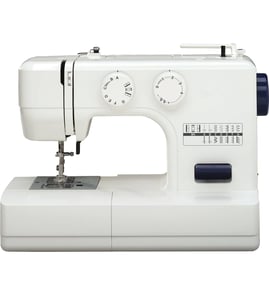

Are Kenmore sewing machines made anymore?
Kenmore sewing machines are no longer being produced as new, current-model machines. The Kenmore 38518221800 is an older mechanical sewing machine, so most “new” Kenmore machines you see today are typically old stock or pre-owned units, not newly manufactured models.
What this means for parts and service
Even when a model is discontinued, we can still help you keep it running by using the model number (38518221800) to match diagrams, maintenance guidance, and compatible replacement parts.
- Use the model number to identify the correct components before ordering.
- Follow the safety steps in the manual before cleaning or servicing (unplug first).
- Replace the sewing light bulb only with the same type rated 15 watts.
- Keep lint and dust cleared from ventilation openings and the foot controller.
- If the cord or plug is damaged, stop using the machine until it’s repaired.
Quick checks before buying a used Kenmore machine
When you’re evaluating a used Kenmore 385-series sewing machine, these checks help avoid common “it won’t sew” surprises.
| What to check | What you want to see | Why it matters |
|---|---|---|
| Power and foot control | Motor runs smoothly, speed changes normally | Points to a healthy motor, wiring, and speed control |
| Handwheel movement | Turns freely without binding | Helps confirm it is not seized or jammed |
| Stitch formation | Balanced stitches on scrap fabric | Indicates tension and timing are close |
| Feed system | Fabric advances consistently | Prevents bunching and “fabric not moving” issues |
Why it matters
Because Kenmore machines like the 38518221800 are legacy models, long-term reliability depends on correct setup, routine cleaning, and replacing wear items as needed. The best model-specific reference for threading, adjustments, and safe maintenance is the 38518221800 owner's manual.
Last updated: February 2026
How do I know what model my Kenmore sewing machine is?
Your Kenmore sewing machine’s model number is printed on its identification plate; for this machine, the owner’s manual shows the model as 385.18221 (often written without the dot as 38518221). Match the number on your machine’s plate to the manual so you can get the right parts and instructions.
Where to find the model number on the machine
On most Kenmore sewing machines, the model/serial plate is in one of these spots:
- On the back of the machine body
- On the underside of the base (tip the machine back carefully to look)
- Near the front base area close to the bed/arm
- Inside a side cover or near the power connection area (on some versions)
If you see a number that starts with 385, that is the Kenmore model prefix used on many machines in this family.
How to match what you find to the manual
Use this quick check so you know you are reading the correct instructions.
| What you see | What it usually means | What to do next |
|---|---|---|
| 385.18221 | Manual-style model format | Use the same number when searching parts and instructions |
| 38518221 | Same model, written without the dot | Treat it as the same model as 385.18221 |
| 385.XXXXX | Same Kenmore 385 family, different exact model | Confirm the full digits before ordering parts |
For model 38518221800, use the exact full model number when you look up diagrams and part lists.
Why it matters
Kenmore sewing machines can look similar across the 385 series, but small differences (stitch set, bobbin area, motor and foot controller compatibility) can change which parts and settings apply. Using the exact model number helps prevent ordering the wrong component and speeds up troubleshooting.
Helpful next steps
- Compare the plate on your machine to the model shown in the 38518221800 owner's manual
- Write down the full model number exactly as shown (including all digits)
- If you are troubleshooting, use the model family resources like Kenmore 385 error codes
Last updated: February 2026
Is it worth repairing an old sewing machine?
Yes, repairing an older Kenmore sewing machine like model 38518221800 is often worth it when the machine is mechanically sound, the cost stays reasonable, and you want the durability of a metal-frame machine. It is especially worthwhile when the issue is maintenance, adjustment, or a common wear item.
Quick way to decide
Use this checklist before you invest time or money:
- Does it run smoothly by hand? Turn the handwheel with the machine unplugged; it should rotate without binding.
- Is the problem likely simple? Threading, needle choice, lint buildup, and tension settings cause many “machine problems.”
- Are you seeing electrical warning signs? A damaged cord/plug or intermittent power points to a repair that should be handled carefully.
- Is the repair cost under the value you get from it? If you love the stitch quality and feel, repairs usually pay off.
- Is it a heavy-duty frame machine? This model line is known for long service life when maintained.
What the 38518221800 manual tells us (and why it matters)
The owner's manual emphasizes basic safety and maintenance habits that directly affect whether repair is worthwhile, including unplugging before cleaning or adjustments and keeping lint and dust out of ventilation areas.
Warranty context (helpful for older machines)
If your machine is still within its original coverage, the manual lists these warranty categories:
| Item category | Coverage length (from purchase date) | Examples mentioned |
|---|---|---|
| Die-cast metal frame | 25 years | Frame defects in materials/workmanship |
| Internal mechanical components | 10 years | Internal mechanical parts (belts excluded) |
| Electrical equipment | 2 years | Motor, wiring, switch, speed control |
| Mechanical adjustments and specified parts | 90 days | Adjustments; belts, light bulbs, needle plates, accessory parts |
When repair is usually a good idea
Repair makes sense when the machine has good fundamentals and the symptoms match common fixes:
- Fabric not feeding (often feed dogs, presser foot pressure, lint)
- Machine locks up (often thread jam, debris, dried lubricant)
- Motor will not run (often power switch, foot control, wiring)
For step-by-step troubleshooting paths, use our DIY symptom guides like sewing machine locks up or sewing machine motor won't run.
Why it matters
A well-maintained mechanical sewing machine can deliver consistent stitch quality for decades; small fixes (cleaning, correct needle, proper threading, basic adjustments) often restore performance without replacing the machine.
Last updated: February 2026
What year is the Kenmore sewing machine model 38518221800?
The Kenmore sewing machine model 385.18221 (model number 38518221800) was sold during the era when Kenmore 385-series machines were commonly produced and marketed from the late 1980s into the early 2000s. For the most accurate date range tied to your exact unit, use the identification details and documentation in the 38518221800 owner's manual.
How to narrow down the year for your exact machine
We use a few practical clues to pin down the production window for a specific Kenmore 385 machine:
- Check the model format shown in the documentation (your manual lists 385.18221).
- Look for a serial number or ID plate on the machine body (often near the power inlet or underside).
- Match included components listed in the manual (for example, the manual references foot controller models YC-482J-1 or TJC-150).
- Compare your machine’s features (stitch selector style, light type, and external controls) to the manual diagrams.
- Use the warranty language as a time marker (the manual describes multi-year coverage on frame, mechanical components, and electrical equipment).
What we can confirm from the documentation
Your documentation identifies the machine as Model 385.18221 and ties it to specific electrical/control components.
| Item in documentation | What it tells us | Why it helps |
|---|---|---|
| Model shown: 385.18221 | Confirms the exact model family | Prevents mixing it up with other 385 variants |
| Foot controller models listed | Confirms the control style used | Helps match to the correct production era |
| Warranty section included | Indicates it was sold as a consumer retail model with defined coverage | Helps distinguish later retail documentation from earlier “vintage-only” formats |
Why it matters
Kenmore 385 machines share a broad family name, but parts compatibility and service procedures can vary by sub-model. Getting the closest production window helps you choose the right maintenance steps (threading, tension settings, lubrication points) and avoid ordering mismatched components.
Related help for Kenmore 385 machines
If you are trying to date the machine because it is acting up (stopping, beeping, or showing a code), we use the same model-family info to troubleshoot:
Last updated: February 2026
When did Kenmore stop making sewing machines?
Kenmore-branded sewing machines are discontinued; there is no single, published “stop date” that applies to every Kenmore model line. For your Kenmore model 38518221800, the best way to pin down when your specific unit was sold is to use the purchase date and identification information referenced in the 38518221800 owner's manual.
What we can say with confidence
Kenmore sewing machines like model 38518221800 are no longer produced as new Kenmore products; owners typically maintain and repair existing machines.
Key takeaways:
- Kenmore sewing machines are sold as existing units, not newly manufactured Kenmore models.
- A model number (like 38518221800) identifies the design family, not a single build year.
- The same model can be sold across multiple years depending on inventory.
- The most accurate “when” is your purchase date, not the model number.
How to date your specific Kenmore 38518221800
Use documentation and labels that tie directly to your machine.
Check these items:
- Original receipt or order confirmation (exact sale date)
- Warranty paperwork (often references purchase date)
- Model and serial label on the machine (used for service and parts matching)
- Service stickers or maintenance records (gives a timeline of ownership)
Quick reference
| Item you have | What it tells you | Why it helps |
|---|---|---|
| Receipt | Exact purchase date | Best way to date your machine |
| Serial label | Unit identifier | Helps match parts and service |
| Manual | Operation and specs | Confirms correct setup and adjustments |
Why it matters
Knowing Kenmore sewing machines are discontinued sets the right expectation: focus on correct threading, cleaning, lubrication, and replacing wear items as needed. For troubleshooting on 385-series machines, use Kenmore 385 error codes.
Last updated: February 2026