Owner’s manual
 View engine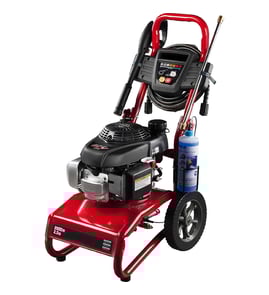



Does Craftsman have a lifetime warranty on pressure washers?
No. For the Craftsman pressure washer model 580752330, the owner’s manual lists a limited 1-year warranty from the date of purchase for defects in materials and workmanship when the unit is maintained and operated as instructed in the 580752330 owner's manual.
What the 580752330 warranty covers (and what it does not)
The limited warranty is focused on defects, not normal wear.
Not covered (examples from the manual):
- Expendable items such as spark plugs and air filters that wear out in normal use
- Damage caused by operator abuse or negligence
- Pump damage caused by running the washer with no water supply
- Problems caused by skipping required maintenance or improper storage
Commercial or rental use changes the warranty period
If you use a gas pressure washer for work or rentals, the coverage period is shorter.
| Use type | Warranty period (580752330) |
|---|---|
| Household (personal) use | 1 year |
| Commercial use | 90 days |
| Rental use | 30 days |
How to protect your warranty coverage
The manual is clear that maintenance and storage affect warranty value. We recommend:
- Follow the maintenance schedule (oil changes, air filter service, spark plug checks)
- Always connect and turn on the water supply before starting the engine
- Store the unit properly if it will sit longer than 30 days
- Keep your proof of purchase and model information together
Why it matters
Warranty terms vary by model and usage type. Checking the model-specific warranty for Craftsman 580752330 helps you avoid surprises, especially if the pressure washer is used commercially or stored seasonally.
Last updated: February 2026
What kind of gas goes in a Craftsman 3000 PSI pressure washer?
For the Craftsman 580752330 gas pressure washer, we use clean, fresh unleaded gasoline (regular pump gas) with a minimum 87 octane (87 AKI) rating. Use fresh fuel and store it safely because gasoline vapors are flammable.
Fuel type and what to avoid
Use this checklist when fueling your pressure washer:
- Use unleaded gasoline, 87 octane (AKI) or higher
- Use fresh fuel (old gas is a top cause of hard starting and surging)
- Do not mix oil into the gasoline (this is a 4-cycle engine)
- Avoid fuel contaminated with water or dirt
- Wipe up spills immediately and move the unit away from the fueling area before starting
For model-specific operating and safety steps, follow the 580752330 owner's manual.
Safe fueling and operating basics
Gas pressure washers produce hot surfaces and exhaust; we fuel and run them with these habits:
- Shut the engine off and let it cool before refueling
- Fuel outdoors only and keep away from ignition sources
- Keep the unit in a well-ventilated area and operate outdoors only
- Maintain clearance around the machine for cooling and safety
Quick reference table
| Item | What we recommend |
|---|---|
| Gas type | Unleaded gasoline |
| Minimum octane | 87 AKI |
| Fuel freshness | Fresh, clean fuel |
| Oil in gas | No (separate crankcase oil) |
Why it matters
Correct fuel helps the engine start easier, run smoother under load, and reduces common issues like power loss, surging, and stalling during spraying.
Last updated: February 2026
Where is the model number on a Craftsman pressure washer?
On the Craftsman pressure washer model 580752330, the model number is printed on the model data decal attached to the unit’s frame. On this model, the decal is typically located on the main unit near the pump and hose connection area; confirm the exact spot using the 580752330 owner's manual.
What to look for on the label
The model data decal includes the information we use to match the correct Craftsman pressure washer parts and diagrams.
- The model number (example: 580752330)
- The serial number
- Sometimes the PSI rating and other identification details
- A note to have the numbers ready when calling for assistance
Quick steps to find it fast
Use these checks to locate the decal without disassembling anything.
- Set the unit on a flat surface and let the engine cool completely
- Stand behind the pressure washer and inspect the upper and lower frame rails
- Look near the pump area and the high pressure outlet where the hose connects
- Wipe dust and oil film off the frame with a rag so the print is readable
- Use a flashlight and look for a rectangular sticker or metal tag labeled Model Data Decal
Common locations (typical for Craftsman frames)
| Location on the unit | What you’ll see | Why it’s there |
|---|---|---|
| Upper frame (rear/top area) | Sticker or tag with model and serial | Easy to read while standing |
| Lower frame rail (rear area) | Sticker on tubing near base | Protected from spray and impact |
| Near pump and hose connections | Decal close to service points | Helps identify parts during service |
Why it matters
We use the exact model number to match the correct pump, hose, nozzle, and hardware for your Craftsman pressure washer. Even small model-number differences can change the parts list and fittings.
Last updated: February 2026
Is it worth repairing a pressure washer?
Yes, repairing a Craftsman pressure washer model 580752330 is worth it when the problem is a normal wear item (hose, nozzle, o-rings, routine maintenance) and the engine and pump are still in good shape; major pump damage from running without water or severe engine issues usually pushes the decision toward replacement. See the 580752330 owner's manual for maintenance and safety rules that directly affect repair value.
Quick decision checklist
- Repair it if the issue is a clog, leak at a fitting, worn nozzle, or a damaged hose
- Repair it if you can restore performance with routine maintenance (oil changes, air filter, spark plug)
- Replace it if the pump was run with no water and now has internal damage (a common non-warranty failure)
- Replace it if the engine has persistent power loss, heavy smoke, or repeated no-start problems after basic tune-up steps
- Replace it if repair cost is approaching half the price of a comparable new gas pressure washer
What the manual says that affects “worth it”
The manual calls out two big value drivers:
- Maintenance extends life: regular service and seasonal adjustments improve performance and longevity.
- Certain damage is avoidable: pump damage from operating with no water supplied is considered operator-related, so preventing it protects your investment.
Common repairs that are usually cost-effective
| Symptom | Most common cause | Typical fix |
|---|---|---|
| Low pressure or pulsing | Clogged spray tip or in-line filter | Clean and back-flush the nozzle extension; test with each quick-connect nozzle |
| Leaks at connections | Worn o-ring or seal | Replace the o-ring or seal (do not use sealant) |
| Hose damage | Cut, blister, or leak | Replace the hose, do not repair it |
| Poor performance over time | Skipped maintenance | Follow the maintenance schedule (oil, air filter, spark plug) |
Why it matters
A pressure washer that is maintained and used correctly delivers full cleaning power and avoids expensive pump and engine failures. Small fixes (nozzles, seals, hose) restore performance fast and keep the machine safe to operate.
Related help: solving pressure washer problems
Last updated: February 2026
What PSI should my pressure washer be?
For the Craftsman 580752330 gas pressure washer, the maximum outlet pressure is 2,550 PSI. For typical home cleaning, you usually run at a lower effective pressure by choosing the right spray nozzle and keeping a safe distance from the surface; see the 580752330 owner's manual for nozzle PSI guidance.
What to use for common jobs
Your actual cleaning PSI depends heavily on the nozzle (spray pattern and flow) and how close you hold the wand.
- Yellow (40°): delicate cleaning; around 1,750 PSI
- Orange (15°): general cleaning; around 2,200 PSI
- Red (0°): maximum pressure; up to 2,550 PSI
- Black (low pressure): detergent application (not for high-pressure rinsing)
Quick PSI guide (model 580752330)
| Task | Recommended nozzle | Typical approach |
|---|---|---|
| Cars, outdoor furniture | Yellow 40° | Start farther back, move closer only as needed |
| Siding, decks, patios | Orange 15° | Most common “everyday” cleaning setup |
| Stains, paint prep, tough spots | Red 0° | Use carefully; test a small area first |
| Applying soap | Black low pressure | Apply detergent, then switch to a rinse nozzle |
Why it matters
Using more PSI than you need can damage wood, strip paint, etch concrete, and force water behind siding. Using the correct nozzle gives you the cleaning power you want while protecting surfaces and reducing wear on the pump.
Safety and setup tips that affect pressure
- Supply water that meets the unit’s needs (adequate flow and at least 20 PSI at the washer end of the garden hose)
- Purge air from the pump by squeezing the trigger before starting heavy cleaning
- Inspect the high-pressure hose for cuts, bulges, or leaks; replace if damaged (do not repair)
- Keep the inlet screen clean so the pump is not starved for water
- Use eye protection when spraying; consider goggles 87815GS
Last updated: February 2026
What is the most common problem with pressure washers?
Low or no spray pressure is the most common pressure washer problem, and on the Craftsman 580752330 it is usually caused by a clogged spray nozzle, restricted water supply, air trapped in the pump, or a kinked or leaking high-pressure hose. Start with the quick checks in the 580752330 owner's manual.
Quick checks that fix most low-pressure complaints
- Confirm the garden hose is fully on and supplying steady water; the manual notes water supply should not exceed 100°F.
- Inspect the high-pressure hose for kinks, cuts, or damage; do not move the unit by pulling the hose.
- Remove and clean the spray tip; debris in the nozzle is a top cause of low pressure.
- Purge air: with water connected, squeeze the spray gun trigger until flow is steady before expecting full pressure.
- Tighten hose connections at the pump and spray gun.
When it is not the nozzle: common underlying causes
If the nozzle and hose look good, low pressure typically points to a pump-side issue such as worn seals, a sticking unloader valve, or a leaking check valve.
| Symptom | Most likely cause | Best next step |
|---|---|---|
| Pressure pulses or surges | Air in system, partially clogged nozzle | Purge air; clean/replace nozzle |
| Pressure is low and steady | Water supply restriction, worn pump seals | Verify supply; inspect pump for leaks |
| Pressure drops after a few minutes | Pump overheating from trigger not being used | Avoid long bypass; see thermal relief notes in manual |
| No pressure but engine runs | Unloader valve stuck open, major internal leak | Inspect unloader; service pump |
Why it matters
Running with poor flow or letting the unit idle without spraying can overheat the pump. The manual explains that circulating water can exceed about 125°F after several minutes without pressing the trigger, which can trigger a thermal relief discharge and contribute to performance problems.
Parts that are often involved
- If your hose is kinked, leaking, or damaged, replace it with the correct high-pressure hose for this model, such as the hose 84006753.
- If spray pattern or pressure is inconsistent, confirm you are using the correct tip; a worn tip may need replacement (for example, the nozzle 195983XGS).
For deeper pump diagnostics, follow the steps in solving pressure washer problems and focus on water supply, nozzle condition, and pump/unloader behavior.
Last updated: February 2026