 Installation guide
 Owner’s manual
 Error Codes



How do I fix error 22 on my Bosch dishwasher?
Error 22 on a Bosch dishwasher like model SHE3AR72UC is most often caused by restricted draining, usually from debris in the filter area or sump. We fix it by cleaning the filters and checking the drain path; if it still won’t clear, we inspect the drain pump and drain hose.
What to do first (quick reset and cleaning)
- Turn the dishwasher off, then back on; try a Cancel/Drain to see if it will pump out.
- Remove the lower rack.
- Take out the filter assembly and clean it thoroughly with hot water and a soft brush.
- Wipe sludge, soap residue, and food debris from the sump area under the filter.
- Reinstall the filter correctly and run a short cycle to test.
For filter removal and correct reassembly steps specific to your unit, use the SHE3AR72UC manual.
Check the drain path (common causes)
A clean filter is step one, but Error 22 can return if the drain path is still restricted.
- Make sure the sink drain/disposer connection is not clogged.
- Verify the drain hose has a high loop (or air gap if used) and is not kinked.
- Check for a blockage where the hose connects under the sink.
- Listen during drain: a steady pump sound with little or no water flow points to a restriction.
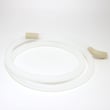
If the hose is damaged, split, or permanently kinked, replacement is often the most reliable fix; see dishwasher drain hose 00668108.
When to suspect a part problem
If the filter and hose are clear but the dishwasher still won’t drain, the drain pump area is the next place we check.
| Symptom | Most likely issue | What we do next |
|---|---|---|
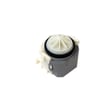
| Hums but won’t drain | Pump jammed or failing | Inspect/replace dishwasher drain pump 00631200 |
| Drains slowly | Partial blockage | Recheck hose, check valve, sump |
| Intermittent draining | Debris moving around | Clean sump again; verify filter seats fully |
Why it matters
Error 22 is a protection response; when water can’t move out as expected, wash performance drops and standing water can lead to odors and redepositing soil on dishes.
Helpful reference
For a broader list of Bosch fault codes and what they mean, use Bosch dishwasher error codes.
Last updated: January 2026
Are Bosch dishwashers a standard size?
Most Bosch built-in dishwashers, including the Bosch SHE3AR72UC, are designed to fit a standard 24-inch-wide kitchen opening; however, the exact cutout and clearance requirements for your specific installation should be confirmed in the SHE3AR72UC installation guide.
What “standard size” usually means for built-in dishwashers
In most U.S. kitchens, “standard” refers to the cabinet opening and how the dishwasher mounts, not just the door width.
- Standard built-in width is typically 24 inches
- Compact built-in width is typically 18 inches
- Height and depth can vary by model and by how the unit is leveled
- Mounting method (top-mount vs side-mount) can affect fit
- Door panel style (pocket handle vs bar handle) can affect clearance
What to verify for Bosch SHE3AR72UC before you buy or replace
We recommend checking these items in the installation instructions so you do not run into fit issues with the countertop, toe-kick, or cabinet frame.
| Fit check | What to measure/confirm | Why it matters |
|---|---|---|
| Opening width | Cabinet opening side-to-side | Ensures the tub slides in without binding |
| Opening height | Floor to underside of countertop | Prevents rubbing and allows leveling |
| Depth/door clearance | Front of cabinets to back wall | Helps the door open fully without hitting trim |
| Utility routing | Water line, drain hose, power | Avoids kinks, pinches, and leaks |
Why it matters
A dishwasher that is “standard size” can still be a poor fit if the opening height is tight, the floor is uneven, or the plumbing and wiring are routed where the unit needs to sit. Confirming the cutout specs helps prevent installation delays and return trips.
Related help for Bosch dishwashers
If you are troubleshooting after installation (for example, the unit will not start or shows a fault), use our Bosch dishwasher error codes reference to narrow down the cause.
Last updated: January 2026
What is the most common problem with a Bosch dishwasher?
For the Bosch SHE3AR72UC dishwasher, the most common service issue we see is a drain-related problem: water left in the tub because the filter area is clogged, the drain hose is restricted, or the drain pump cannot move water out. Start with cleaning and inspection steps in the SHE3AR72UC manual.
Quick checks we recommend first
These steps solve many “won’t drain” and “poor cleaning” complaints without replacing parts:
- Cancel the cycle and let the unit attempt a drain; listen for the drain pump running
- Remove and rinse the filter area; clear food debris and labels
- Check the sink drain and garbage disposal inlet (a common blockage point)
- Inspect the drain hose for kinks, crushing, or a low loop problem
- Make sure spray arms spin freely and holes are not plugged
- Run hot water at the sink before starting a cycle to improve wash performance
When it points to a part (common culprits)
If the tub is clean but symptoms persist, these model-compatible parts are often involved:
- Dishwasher drain pump 00631200 if you hear humming but little or no draining
- Dishwasher drain hose 00668108 if draining is slow or intermittent due to restriction
- Dishwasher check valve 00611320 if water drains out then flows back into the tub
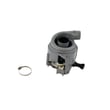
- Dishwasher circulation pump with heater 12008381 if the unit fills and drains but cleaning is consistently weak
Symptom-to-likely-cause guide
| Symptom | Most likely cause | What to do first |
|---|---|---|
| Water left in bottom | Clogged filter, restricted hose, weak drain pump | Clean filter area; inspect hose routing |
| Dishes not clean | Blocked spray arms, low water temp, circulation issue | Clean spray arms; run hot water before cycle |
| Random filling or overfilling | Inlet/float system issue | Check float movement; review install setup |
Why it matters
Drain and circulation problems can cause odor, standing water, and poor cleaning. Catching a clog early can prevent strain on the drain pump and reduce repeat cycle failures.
Last updated: January 2026
How to reset a Bosch dishwasher after an error code?
To reset a Bosch dishwasher like model SHE3AR72UC, cancel the current cycle at the control panel (often by pressing and holding Start/Reset for about 3 to 5 seconds) until the unit drains and the display clears, then restart a new cycle. For model-specific button behavior, use the SHE3AR72UC manual.
Quick reset steps (most common)
- Press and hold Start/Reset for 3 to 5 seconds.
- Wait for the dishwasher to drain and stop running.
- Turn the dishwasher off, then back on.
- Select a new cycle and press Start.
- If the error returns immediately, note the exact code and symptoms.
If the dishwasher will not clear the error
Some error codes are “hard faults” that come back because the dishwasher is still detecting the problem.
- Drain-related codes or standing water: check for a clog, kinked hose, or a failing pump; the dishwasher drain pump 00631200 is a common fix when the unit hums but will not drain.
- Won’t start or stops right away: confirm the door is latching fully; a faulty dishwasher door lock 00630783 can prevent a cycle from running.
- Fill-related issues: verify the water supply is on and the inlet screen is not blocked; a sticking inlet valve can be involved.
What to check before you reset (prevents repeat errors)
| Check | What you are looking for | Why it matters |
|---|---|---|
| Drain path | Food/debris in filter area, sump, or hose | Prevents drain errors and standing water |
| Door closure | Door closes firmly, no rack interference | Prevents start and safety lockouts |
| Power | Breaker not tripped, unit powers on normally | Prevents false resets and repeated shutdowns |
Why it matters
A proper cancel/reset clears the control’s current cycle logic and lets the dishwasher re-check sensors (drain, fill, door). If the underlying issue remains, the same error code will usually return, which helps narrow the repair.
For decoding the specific code you see, use our Bosch dishwasher error codes guide.
Last updated: January 2026





