Owner’s manual
 View engine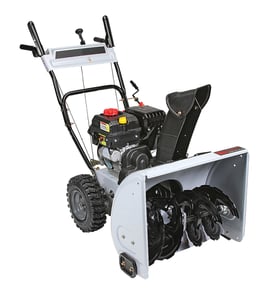



How to read Craftsman snowblower serial number?
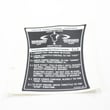
On Craftsman snow thrower model 247883951, we use the product identification label to read the model and serial information. The label is typically on the rear of the unit near the wheel area; once you find it, copy the characters exactly as printed for parts lookup and service.
Where to find the identification label
Check these common spots on a Craftsman snowblower frame:
- Backside of the metal base between the left and right rear wheels
- Rear frame near the axle area
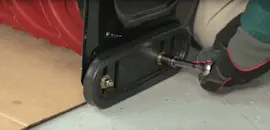
- Lower handle support area (near where the handles bolt to the frame)
- Side of the housing close to the wheels
For the exact label location and what each field means, use the 247883951 owner's manual.
How to read the numbers correctly
When you write down the information, accuracy matters because one wrong character can lead to the wrong parts.
- Clean the label first (snow, salt, and grime can hide characters)
- Copy everything in order, including dashes and periods if shown
- Watch for look-alikes: 0 vs O, 1 vs I, 5 vs S, 8 vs B
- Take a photo and zoom in to confirm each character
Model number vs. serial number (quick guide)
| Item | What it tells us | How it’s used |
|---|---|---|
| Model number | The exact snowblower design and parts list | Matching diagrams and ordering parts |
| Serial number | Production run details | Service history and manufacturing info |
Why it matters
Craftsman snowblowers often have multiple versions that look similar. Using the correct model and serial information helps us match the right auger, drive, and chute-control parts for your exact build.
Last updated: January 2026
How long does a gas-powered snow blower last?
For the Craftsman snow thrower model 247883951, the operator’s manual lists an average useful life of 7 years or about 60 hours of operation. With consistent maintenance and proper off-season storage, many gas snowblowers continue to run reliably beyond that baseline; annual inspections become more important as hours add up (see the 247883951 owner's manual).
What “useful life” means for this model
The manual’s useful-life figure is a planning benchmark for wear and safety checks, not a hard stop date.
- 7 years / 60 hours is the stated average useful life for this product
- After that point, we recommend annual inspection of mechanical and safety systems
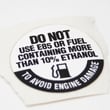
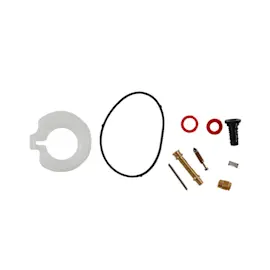
- Storage and fuel care strongly affect carburetor and fuel-system condition
- Wear items (belts, cables, friction wheel, shear pins) often determine real-world longevity
Maintenance habits that extend lifespan
These steps directly match the storage and care guidance in the manual.
- Run the machine a few minutes after use to clear snow and help prevent freeze-up
- For storage over 30 days, run the engine until it stops to empty the fuel system
- Change engine oil at the end of the season
- Remove the spark plug and add about 1 oz (30 ml) of clean engine oil to the cylinder before storage
- Keep the unit clean and dry; lightly oil or silicone-coat chains, springs, bearings, and cables
Quick lifespan expectations (typical)
| Snowblower type | Typical lifespan |
|---|---|
| Gas snowblower | 10 to 15 years |
| Electric snowblower | 5 to 10 years |
Why it matters
A snowblower that starts and throws snow well can still have worn drive or auger components that reduce safety and performance. Following the manual’s storage steps helps prevent fuel deterioration, carburetor gumming, rust, and freeze-up that shorten the machine’s service life.
Last updated: January 2026
What is the most common problem with snow blowers?
The most common problem we see on the Craftsman snow thrower model 247883951 is a no-start or hard-start condition caused by fuel and ignition basics (old gas, fouled spark plug), followed closely by snow not discharging due to a clogged chute or a sheared auger pin. For model-specific operating and safety steps, use the 247883951 owner's manual.
Most common issues (and what they look like)
- Won’t start or starts then dies: stale fuel, dirty carburetor, fouled spark plug, or incorrect choke/throttle use
- Clogged discharge chute: engine runs but snow stops throwing; chute packs with wet snow
- Auger not turning: one side of the auger stops after hitting ice or debris; shear pin breaks to protect the gearbox
- Poor drive or slipping: friction wheel wear, drive cable out of adjustment, or belt wear
- Chute won’t rotate smoothly: chute assembly binding or misassembled components
Quick checks we recommend first
- Shut the engine off and wait for all moving parts to stop before inspecting anything.
- Clear a clogged chute with a clean-out tool, not your hands (hand contact with the impeller is a leading injury cause).
- If the auger does not turn, inspect the shear pins and replace only with the correct type for this model, such as shear pin 738-04124A.
- Verify the auger control engages properly; cable adjustment is a common fix.
Symptom-to-cause cheat sheet
| Symptom | Most likely cause | Typical fix |
|---|---|---|
| Won’t start | Old fuel or spark plug issue | Drain/replace fuel; check plug |
| Runs but won’t throw snow | Chute clogged | Clear chute with tool |
| One auger won’t spin | Shear pin sheared | Replace shear pin |
| Drive feels weak | Friction wheel or belt wear | Service friction wheel/belt |
Why it matters
These problems are common because snowblowers operate in wet, freezing conditions and are designed with protective parts (like shear pins) that fail first to prevent expensive gearbox damage.
Last updated: January 2026