Installation guide
 Owner’s manual



Can I replace dishwasher parts myself?
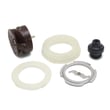
Yes, for GE model PDWF880R10SS we see many customers successfully replace common wear parts themselves (like seals, filters, and some rack parts) by shutting off power and water, then following the step-by-step procedures in the PDWF880R10SS owner’s manual. For electrical or leak-related repairs, careful diagnosis and safe shutoff steps matter most.
These repairs are typically straightforward with basic hand tools and careful reassembly:
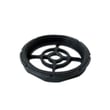
- Replace a leaking door seal such as the dishwasher door seal WD08X10055
- Replace a tub gasket such as the dishwasher tub gasket WD08X10032
- Clean or replace a filter (common cause of poor cleaning and drainage issues)
- Replace a silverware basket or rack components
- Clear a drain path and inspect the drain tube for kinks or clogs
These can still be DIY, but they require more comfort with wiring, testing, or water connections:
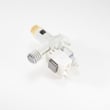
- Drain pump replacement (leaks, no-drain symptoms) such as the dishwasher drain pump WD26X10048
- Control and heating circuit troubleshooting (requires safe electrical checks)
- Leveling and securing the dishwasher in the cabinet (affects door fit and rack movement)
Before any repair, we recommend these basics:
- Turn off power at the breaker (do not rely only on the control panel)
- Shut off the dishwasher water supply valve
- Protect the floor with towels; keep a shallow pan ready for residual water
- Take photos of wire and hose routing before disconnecting anything
- Confirm the dishwasher is level and the door closes without rubbing the tub opening
| Task | Typical difficulty | Common symptom |
|---|---|---|
| Door seal or tub gasket | Easy | Water at the front or corners |
| Filter cleaning/replacement | Easy | Grit on dishes, slow drain |
| Drain pump | Medium | Standing water, humming, no drain |
| Control module diagnostics | Advanced | Dead unit, erratic operation |
On PDWF880R10SS, correct leveling and secure mounting help prevent poor wash performance, rack roll-out, and door alignment issues. Following the documented steps reduces repeat leaks and avoids damaging wiring, hoses, or the stainless tub.
Last updated: February 2026
What is the thing at the bottom of my dishwasher?
In a GE PDWF880R10SS dishwasher, the “thing” at the bottom is usually the heating element (a metal loop) and the sump and filter area. The heater warms water for better cleaning and helps drying; the sump and filters manage wash water flow.
Common bottom-of-tub parts include:
- Heating element: a metal loop or bar across the base; plastics can melt if they fall onto it.
- Filter area: screens or a filter cover that catches food soil.
- Sump cover: a protective cover over the pump inlet area.
- Spray arm hub: the lower spray arm mounts near the center.
If you want the exact component names and diagrams for your model, use the PDWF880R10SS owner’s manual.
Turn off power at the breaker before reaching into the tub.
- Look for a metal loop (heater) versus a plastic cover/screen (filter or sump cover).
- Make sure nothing (labels, twist ties, utensils) is touching the heater.
- Confirm the lower spray arm spins freely and is not blocked by tall pans.
- If you see standing water, check for food debris around the filter area.
If the bottom area is loose, damaged, or leaking, these model-matched parts are often involved:
| What you notice | Likely area | Example model-matched part |
|---|---|---|
| Food debris collecting, poor cleaning | Filter system | Dishwasher filter WD22X10077 or dishwasher filter WD12X10109 |
| Cover cracked/warped near pump inlet | Sump area | Dishwasher sump cover WD01X10219 |
The heater, sump, and filters directly affect wash temperature, circulation, and drainage. Keeping the bottom area clear helps prevent poor cleaning, melting plastics, and drain problems.
Last updated: February 2026
What are the commonly replaced parts in a dishwasher?
In a GE PDWF880R10SS dishwasher, the most commonly replaced parts are the ones that seal water in, move water through the wash system, or control filling and draining. We typically see door seals and gaskets, filters, spray components, and drain parts replaced first because they wear, clog, or leak over time.
- Seals and gaskets: stop leaks around the door and tub opening
- Filters: prevent food debris from recirculating and clogging the pump
- Spray system parts: keep water pressure and coverage strong for cleaning
- Drain components: remove dirty water at the end of each phase
- Dispensers and small hardware: help detergent release correctly and keep assemblies secure
These are examples of parts we commonly see replaced on this model family:
| Symptom | Common part category | Example part for this model |
|---|---|---|
| Water on floor at the front | Door sealing | Dishwasher door seal WD08X10055 |
| Leaks around the tub opening | Tub sealing | Dishwasher tub gasket WD08X10032 |
| Grit, redeposit, poor cleaning | Filtration | Dishwasher filter WD22X10077 |
| Standing water in bottom | Draining | Dishwasher drain pump WD26X10048 |
| Detergent not dispensing well | Dispensing | Dishwasher detergent dispenser assembly WD12X10163 |
Use these quick checks before ordering parts:
- Leak location matters: front edge often points to a door seal; perimeter seepage can point to a tub gasket.
- Cleaning issues: check filter condition and spray arm holes for blockage.
- Drain problems: confirm the sink drain path is clear and the drain hose is routed correctly.
- Detergent issues: look for a sticky dispenser door or broken latch.
Replacing the right part first saves time and prevents repeat failures. For example, a clogged filter can strain the circulation and drain system, while a worn door seal can cause intermittent leaks that look like a plumbing problem.
For part locations, access panels, and safety notes, follow the steps in the PDWF880R10SS owner’s manual.
Last updated: February 2026
What are dishwasher arms called?
Dishwasher arms are called spray arms (also called wash arms). In your GE PDWF880R10SS dishwasher, these rotating arms spin and spray water to clean dishes; keeping them unobstructed is essential for good wash performance (see the PDWF880R10SS owner's manual).
Most dishwashers use at least two spray arms:
- Lower spray arm: sprays the lower rack and helps circulate wash water
- Middle spray arm (under the upper rack): sprays the upper rack
- Some models also use an upper/ceiling spray arm for extra coverage
The key is that dishes, utensils, and handles should not block spray-arm rotation.
If a spray arm is clogged, blocked, or not spinning, you will usually notice:
- Food soil left on the top rack or bottom rack
- Grit or debris redeposited on dishes
- Poor cleaning in one area of the tub
- Rattling as the arm hits a tall item
- Detergent not fully rinsing away
We recommend these simple checks before replacing parts:
- Re-load so nothing protrudes through the rack and into the spray path
- Spin the spray arm by hand; it should rotate freely
- Clear clogged spray holes (often caused by hard-water scale or debris)
- Confirm the filter area is clean (a restricted filter can reduce spray pressure)
- Run hot water at the sink before starting to improve wash performance
If you find damage or persistent poor spray, these parts are often involved:
| Symptom | Most likely area | Example part for this model |
|---|---|---|
| Weak spray, debris on dishes | Filtration | Dishwasher filter WD22X10077 or dishwasher filter WD12X10109 |
| Poor circulation, inconsistent cleaning | Pump/flow path | Circulation components (inspect for blockage) |
Spray arms are the dishwasher’s “pressure washer.” When rotation is blocked or spray holes are clogged, water cannot reach dishes evenly, so cleaning and rinsing performance drops quickly.
Last updated: February 2026