 Installation guide
 Owner’s manual
 Error Codes


Can you replace the rubber seal on the dishwasher door?
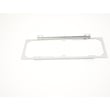
Yes. On Kenmore dishwasher model 66517022402, the rubber door seal (door gasket) is a replaceable part. We recommend removing the racks for access, pulling the old gasket straight out, cleaning the channel, then pressing the new seal in evenly so the door closes without gaps (see the 66517022402 owner's manual for safe loading and door-seal care).
What you’ll need
- New door seal (gasket) for Kenmore 66517022402
- Mild cleaner and a rag (to remove soap film and debris)
- Scissors (only if your replacement seal is supplied long and requires trimming)
- A flashlight (to check the full perimeter)
Step-by-step: replacing the door seal
- Turn off power to the dishwasher at the breaker.
- Remove both racks so you can reach the tub opening comfortably.
- Pull out the old seal: start at a corner and gently work around the tub opening.
- Clean the seal channel: wipe out grit, detergent residue, and mineral buildup.
- Install the new seal: press it into the channel a few inches at a time, keeping it fully seated.
- Close the door and check for resistance or buckling; re-seat any high spots.
- Run a short cycle and inspect for leaks.
Quick checks if it still leaks after replacement
- Seal is twisted or not fully seated in the channel.
- Food debris is preventing a tight seal at the corners.
- The door is not aligning evenly with the tub opening.
- The dishwasher is not level in the cabinet (leveling and mounting details are in the 66517022402 installation guide).
What to inspect while you’re there
| Area | What to look for | What it can cause |
|---|---|---|
| Door seal channel | Cracks, warping, heavy buildup | Seal won’t sit flat |
| Door closing action | Door needs extra force to latch | Pinched gasket, misalignment |
| Lower front area | Moisture near toe panel | Leak path can look like a door leak |
Why it matters
A properly seated door gasket keeps wash water inside the tub, protects surrounding cabinets, and helps your dishwasher maintain correct wash pressure for better cleaning.
Last updated: February 2026
Is it worth repairing a Kenmore dishwasher?
Yes, repairing a Kenmore dishwasher like model 66517022402 is usually worth it when the problem is a normal wear item (leak, drain issue, heating/drying problem, door seal) and the repair cost is reasonable compared with replacement. This model’s documentation also reflects that dishwashers are designed for years of dependable operation with periodic maintenance or repair.
Quick way to decide (cost, age, and what failed)
Use these checkpoints before buying parts or scheduling service:
- Age: If your dishwasher is under 10 years old, repairs are typically the better value.
- Repair cost: If the total repair is under ~50% of replacement cost, repair usually makes sense.
- Failure type: Leaks, poor draining, and weak drying are often fixable with common parts.
- Multiple symptoms: If it has several issues at once (leaking + not washing + not draining), replacement can be the smarter spend.
- DIY comfort: If you can safely do basic checks and part swaps, you can save a lot on labor.
For model-specific maintenance and troubleshooting steps, follow the 66517022402 owner’s manual.
Common repairs that are often “worth it”
These are frequent, cost-effective fixes on Kenmore dishwashers:
- Not drying or water not heating: check the dishwasher heater W10518394
- Water leaking at the door: inspect/replace the dishwasher door seal W10542314
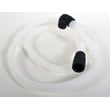
- Not draining well: inspect the dishwasher drain hose 8269144A for kinks, clogs, or a bad connection
- Grinding or poor wash performance: inspect the dishwasher chopper assembly W10083957V
Repair value snapshot
| Symptom | Likely area | Typical “worth it” rating |
|---|---|---|
| Dishes cold, poor drying | Heater, controls | High (especially heater) |
| Water on floor at front | Door seal, vent gasket | High |
| Standing water | Drain hose, air gap, pump | Medium to high |
| Loud grinding | Chopper, pump area | Medium |
Why it matters
A targeted repair restores cleaning performance, prevents cabinet or flooring damage from leaks, and can extend the usable life of your 66517022402 without the cost and hassle of replacing the entire dishwasher.
Last updated: February 2026
How do I tell what model Kenmore dishwasher I have?
Your Kenmore dishwasher’s model number is printed on the model and serial number label inside the door area. On Kenmore model 66517022402, that label is typically on the inner door frame or along the tub opening; it’s the number you’ll use to match the correct parts and troubleshooting steps.
Where to look first (fastest checks)
- Open the dishwasher door and look around the inner door frame.
- Check the top edge of the door (near the latch area).
- Look on the tub wall near the door opening.
- If the label is hard to see, wipe the area with a damp cloth and use a flashlight.
- Confirm you’re reading the model number (not just the serial number).
What the label looks like and why it matters
In the Kenmore dishwasher documentation, the model and serial number label is listed as a built-in feature location. Use the model number to ensure the right fit for items like a heater, door seal, drain hose, or pump motor.
Common label details
| Label field | What it’s used for | Example (what you’ll see) |
|---|---|---|
| Model number | Parts compatibility and diagrams | 66517022402 |
| Serial number | Manufacturing info and service history | A longer letter/number code |
If you can’t find the label inside the door
- Check the side of the door (hinge side and latch side).
- Look behind the toe panel area at the bottom front (power off first).
- If the unit was recently installed, confirm the installer did not cover the label with insulation or trim.
- Use the documentation diagrams to identify label placement: 66517022402 owner’s manual.
Why it matters
Kenmore dishwashers share many similar-looking parts across series, but small differences (rack style, venting, wash system, control type) change which part fits. Using the exact model number prevents ordering the wrong dishrack, seal, or wash components.
Last updated: February 2026
Can you still get parts for a Kenmore dishwasher?
Yes. We still support parts for Kenmore dishwashers, including model 66517022402, by matching the exact model number to the correct replacement parts (such as a heater, drain hose, door seal, or pump motor). Using the model number prevents ordering look-alike parts that do not fit.
How to make sure you get the right part
Use these steps before you buy:
- Confirm the full model number from the dishwasher’s rating label (use 66517022402 exactly).
- Look up the part by symptom (leaking, not draining, not drying) and then verify fit by model.
- Compare the part name and ID, not just a photo.
- If you are installing a new drain hose or moving the unit, follow the clearances and routing guidance in the installation guide.
- For maintenance intervals and operating tips that reduce repeat failures, check the owner's manual.
Common Kenmore 66517022402 parts we can supply
These are examples of frequently replaced items for this model:
- Dishwasher heater W10518394 (heating and drying performance)
- Dishwasher drain hose 8269144A (drain leaks, poor draining)
- Dishwasher door seal W10542314 (door-edge leaks)
- Pump motor W10782773 (no wash action, loud grinding)
- Dishwasher chopper assembly W10083957V (poor cleaning from food debris recirculation)
Quick symptom-to-part starting points
| Symptom | Most common checks | Parts that often resolve it |
|---|---|---|
| Not drying | Rinse aid setting, heated dry option | Heater, vent components |
| Water on floor | Door alignment, tub lip, gasket condition | Door seal, drain hose |
| Not draining | Sink/disposer connection, kinked hose | Drain hose, clamps |
| Poor cleaning | Spray arm blockage, filter/chopper area | Chopper assembly, pump/motor |
Why it matters
Kenmore dishwashers are built with model-specific variations (wash system, seals, and mounting details). Matching parts to 66517022402 helps ensure proper fit, safe installation, and reliable performance.
Last updated: February 2026
How do I tell if my dishwasher pump is bad?
On Kenmore dishwasher model 66517022402, a bad pump shows up as poor wash circulation, weak or no draining, or loud grinding from the sump area. We confirm it by verifying the unit fills, checking for drain restrictions, then testing the pump motor electrically.
Fast symptoms that point to a pump problem
- Water remains in the tub after the cycle completes
- Dishes stay dirty because spray pressure is weak
- Grinding, rattling, or buzzing from the bottom center (sump)
- Drain cycle is silent or sounds strained
- Performance changes from load to load with no detergent or loading changes
Checks to do before replacing the pump
Use these quick checks first; they solve many “bad pump” complaints.
- Confirm it filled: start a short cycle, wait about 2 minutes, unlatch the door, wait 5 seconds, then open and verify water is in the bottom of the tub (procedure in the 66517022402 installation guide).
- Check the drain path: look for kinks and clogs in the hose and at the disposer inlet.
- Listen during drain: a healthy drain-out has a steady motor sound and strong water flow.
- Inspect for debris: broken glass and food can jam the chopper and impeller.
Electrical test (best confirmation)
After shutting off power, disconnect the pump motor and check winding resistance and continuity with a multimeter. Many dishwasher pump motors read about 10 to 100 ohms; an open circuit or dead short supports replacement.
| What you notice | Most likely cause | Next step |
|---|---|---|
| Standing water, drain sound normal | Drain restriction | Inspect hose and disposer inlet; consider dishwasher drain hose 8269144A if damaged/clogged |
| Standing water, pump silent | Pump not running | Check wiring and pump motor; consider pump motor W10782773 |
| Grinding during wash | Debris or damaged chopper/impeller | Inspect sump; consider dishwasher chopper assembly W10083957V |
Why it matters
A kinked drain hose or a fill problem can leave water in the tub even when the pump is good. Verifying fill and clearing restrictions first prevents unnecessary pump replacement.
Last updated: February 2026







