



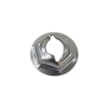
Where to find part number on GE dryer?
On a GE gas dryer like model DWXR473GT5WW, the part number is printed on the part itself (not on the model tag). Start by finding the dryer’s model and serial tag inside the door opening; then match the part you need to the correct replacement.
- Open the dryer door and check the door opening and door frame area for the model and serial tag.
- If the tag is not on the frame, check just inside the front panel area near the door opening.
- Once you know the model is DWXR473GT5WW, identify the failed part by location and function (belt, igniter, door switch, etc.).
- Look for a stamped, printed, or stickered number on the part itself.
- If the number is worn off, match by part type and where it mounts.
| Part type | Where the number is usually found | What it may look like |
|---|---|---|
| Drive belt | Ink stamp on the belt’s outer surface | Short alphanumeric code |
| Igniter | Printed on the ceramic base or label | Model-style code |
| Door switch | Molded into the plastic housing | Raised letters/numbers |
| Timer/knob parts | Label on the body or stamped on metal | Longer part code |
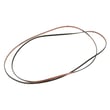
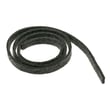
If the drum will not turn or you hear the motor running but the drum is still, the belt is a top suspect. For DWXR473GT5WW, a common replacement is the drive belt WE03X29897.
GE uses the model number to determine the exact part design used in your dryer. Using the correct model (DWXR473GT5WW) helps avoid ordering a look-alike part that does not fit, especially for wear items like belts, idler pulleys, and igniters.
Last updated: February 2026
What is the life expectancy of a GE dryer?
A GE dryer like model DWXR473GT5WW typically lasts 10 to 13 years with normal household use. Regular lint and vent cleaning, avoiding overloads, and fixing early symptoms (squealing, thumping, no-heat) can push real-world life closer to the high end.
Most dryer lifespan differences come down to airflow, heat stress, and wear on drum support and drive parts.
- Usage volume: multiple loads daily shortens life faster than a few loads weekly
- Vent restriction: long or clogged vents overheat the burner area and controls
- Overloading: strains the motor, belt, and idler pulley
- Maintenance: lint screen, blower housing, and vent cleaning reduce heat and run time
- Early repairs: replacing wear parts before they fail prevents secondary damage
- Clean the lint screen every load
- Inspect and clean the vent path every 6 to 12 months
- Keep the outside vent hood opening freely
- Level the dryer to reduce vibration and drum wear
- Stop using the dryer if you smell gas; have a qualified technician check the gas supply and burner system
If the dryer still heats and runs but is noisy or stops tumbling, these are common, fixable wear items:
| Symptom | Common cause | Example part for DWXR473GT5WW |
|---|---|---|
| Squealing or chirping | Idler pulley wear | Idler pulley WE03X31620 |
| Drum not turning | Belt worn or broken | Drive belt WE03X29897 |
| Thumping or scraping | Drum slides or felt worn | Slide drum WE03X37317 |
A gas dryer that runs longer than necessary (from poor airflow or worn drum support) uses more fuel, dries unevenly, and runs hotter; that extra heat accelerates failure of thermostats, igniter, and other components.
Last updated: February 2026
How do I know if my GE dryer heating element is bad?
On the GE DWXR473GT5WW gas dryer, a “bad heating element” usually is not the issue because gas dryers heat with an igniter and gas valve, not an electric heater coil. You’ll know the heat system has a problem when the drum tumbles but there’s no heat, or heat starts then stops; testing the igniter and related safety circuits is the fastest way to confirm.
- Drum tumbles normally but clothes stay cold and damp
- You smell no warm exhaust at the vent hood outside
- Heat comes on briefly, then shuts off mid-cycle
- Dryer runs longer than normal to dry a small load
- You hear the motor running but never hear the burner ignite
Before any testing, unplug the dryer and shut off the gas supply.
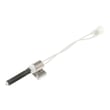
- Igniter: If it’s cracked or never glows, it’s a common no-heat cause. Consider testing or replacing the igniter WE04X25996.
- Door switch: If the switch is intermittent, the dryer can stop heating or stop running. Check the door switch WE4M415.
- Airflow: A clogged lint screen or vent can cause overheating and cycling off on safety limits.
Use continuity (or low ohms if your meter supports it):
| Part to check | What you’re looking for | What it means if it fails |
|---|---|---|
| Igniter | Continuity through the igniter | Igniter is open and will not glow |
| Door switch | Continuity when door is closed | Dryer may not run or may act erratic |
| Venting/airflow | Strong airflow at exhaust | Poor drying and heat cycling issues |
Misdiagnosing a gas dryer as having a “bad heating element” can send you to the wrong part. On DWXR473GT5WW, confirming ignition and airflow issues first saves time and helps restore safe, consistent heat.
Last updated: February 2026
Why does my GE front load dryer squeak?
A squeak in your GE DWXR473GT5WW gas dryer almost always comes from friction in the drum support system or belt drive. The most common causes are a worn drum slide, a dry or failing idler pulley, or a belt rubbing due to misalignment or lint buildup.
- Worn drum glides that let the drum metal rub (often a rhythmic squeak once per revolution)
- Idler pulley bearing drying out or wobbling (often a sharper chirp)
- Belt glazing, stretching, or tracking off-center
- Lint packed around the drum edge or blower area creating drag
- Loose cabinet screws or a slightly shifted front panel causing rubbing
- Unplug the dryer (and shut off the gas supply if you will open the cabinet).
- Spin the drum by hand; listen for a repeating squeak or scrape.
- Remove lint from the lint screen housing and visible duct entry.
- If the squeak changes when you press lightly on the front of the drum, suspect drum support parts.
| Sound pattern | Most likely cause | Typical fix |
|---|---|---|
| Squeak once per drum turn | Drum support wear | Replace drum slides, inspect felt |
| Fast chirp near motor area | Idler pulley | Replace idler pulley |
| Thump plus squeak | Belt or drum out of true | Replace belt, check drum supports |
For this model, these are frequent wear items we replace together during a noise repair:
- Slide drum WE03X37317 (drum glide support)
- Slide drum WE03X37318 (drum glide support)
- Idler pulley WE03X31620 (keeps proper belt tension)
- Drive belt WE03X29897 (drives the drum)
- Felt WE09X27634 (reduces drum-to-front seal friction)
A squeak is an early warning that a glide, pulley, or belt is wearing out. Fixing it early helps prevent belt breakage, drum damage, and longer dry times caused by extra drag.
Last updated: February 2026





