Owner’s manual
 Error Codes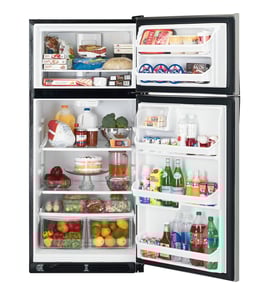


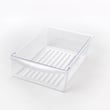
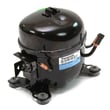
What is the upper part of a fridge called?
On the Kenmore 25371832104 top-mount refrigerator, the upper section is the freezer compartment. It’s the area designed to keep foods frozen, and on some setups it also supports an automatic ice maker and freezer door storage.
What you’ll find in the upper (freezer) compartment
In a top-mount refrigerator, the freezer is built to hold frozen foods while allowing cold air to circulate properly.
- Freezer shelves or racks for frozen items
- Freezer door bins (best for items that tolerate temperature swings)
- Cold air circulation paths (vents) that help cool both freezer and fresh-food sections
- Optional automatic ice maker components (on equipped models)
Best practices for using the freezer
The freezer works best when air can move freely and the door seals tightly.
- Leave space between packages so cold air can circulate
- Avoid overloading with warm food all at once (it slows freezing)
- Store ice cream and juice in the freezer interior, not the door
- Keep vents clear so airflow is not blocked
- Use the temperature settings recommended in the 25371832104 owner's manual
Quick reference: freezer vs. refrigerator section
| Section | Typical purpose | Common items |
|---|---|---|
| Freezer (upper) | Long-term frozen storage | Meat, frozen meals, ice cream |
| Fresh-food (lower) | Chilled storage above freezing | Produce, dairy, leftovers |
Why it matters
Knowing the freezer compartment is the “upper part” helps when you’re troubleshooting cooling, organizing food for better airflow, or diagnosing ice maker issues (many ice maker and airflow symptoms start in the freezer).
Last updated: January 2026
How big is the Kenmore refrigerator model 25371832104?
The Kenmore top-mount refrigerator model 25371832104 is a full-size household refrigerator; most top-mount units in this class are about 18 to 21 cu. ft. overall. For the exact capacity and cabinet dimensions for your specific unit, use the specifications section in the 25371832104 use & care guide.
What “big” can mean (and what to check)
Refrigerator size is usually described in a few different ways. Here is what we recommend confirming for model 25371832104:
- Total capacity (cu. ft.): overall storage volume
- Refrigerator vs. freezer capacity: how the space is split
- Overall dimensions: height, width, depth (often with and without handles)
- Clearances: space needed for airflow and door swing
- Door reversal: whether the door can be changed to open the other way
Typical size ranges for a Kenmore top-mount refrigerator
These ranges help when you are planning a move, measuring a cutout, or comparing models.
| Measurement | Typical range for top-mount refrigerators |
|---|---|
| Total capacity | 18 to 21 cu. ft. |
| Width | 29 to 33 in. |
| Height | 65 to 69 in. |
| Depth | 30 to 34 in. |
How to get the exact dimensions for 25371832104
Use these steps so you get the right numbers for delivery planning and kitchen fit:
- Check the specifications pages in the 25371832104 use & care guide
- Measure height, width, and depth at the widest points (include hinges and handles)
- Measure the door swing area so drawers and bins can open fully
- Confirm you have space for rear and side airflow clearances
Why it matters
Accurate dimensions prevent delivery issues, ensure proper ventilation for the sealed system, and help avoid door interference with cabinets or walls.
Last updated: January 2026
What are the common problems with Kenmore Elite refrigerators?
Common Kenmore Elite refrigerator problems include no cooling or intermittent cooling, temperature swings, noisy operation, odors, interior light failures, and ice maker issues (on equipped models). For Kenmore model 25371832104, we recommend starting with the troubleshooting steps in the 25371832104 owner's manual.
Most common symptoms
- Refrigerator does not run (no lights or no cooling)
- Freezer too cold or refrigerator section too warm
- Noisy or vibrating cabinet
- Odors inside the refrigerator
- Cabinet light not working
- Automatic ice maker not working (some models)
Quick checks that fix many “not working” complaints
- Confirm the plug is fully seated in a grounded outlet (no extension cord or adapter plug)
- Check the house fuse or reset the circuit breaker (15-amp time-delay fuse where applicable)
- Make sure the temperature control is not set to “0” (off)
- Wait about 20 minutes if it may be in a defrost cycle
- After changing settings, allow about 24 hours for temperatures to stabilize
Ice maker problems (if equipped)
Ice maker failures are often caused by a closed water supply valve, a kinked water line, low water pressure, or a failed ice maker assembly.
- Verify the water supply valve is open
- Check the water line behind the refrigerator for kinks
- Keep the freezer near 0°F so the ice maker can cycle normally
- If the ice maker assembly is damaged or not cycling, replacement is typically the most direct fix
For this model, a commonly used replacement is the refrigerator ice maker 5303918277 (part ID 5303918277).
Symptom-to-cause guide
| Symptom | Common cause | What to do first |
|---|---|---|
| Not running | Power supply issue, control set to off | Check outlet, breaker/fuse, control setting |
| Temps unstable | Control setting, airflow restriction | Reset temps, avoid overpacking, wait 24 hours |
| No ice | Water supply issue, ice maker failure | Check valve/line, then replace ice maker if needed |
Why it matters
Catching power and temperature-control issues early helps prevent compressor strain. The manual also notes that low voltage (about 10% or more) can affect performance and can damage the compressor.
Last updated: January 2026