Owner’s manual

What company makes Craftsman air compressors?
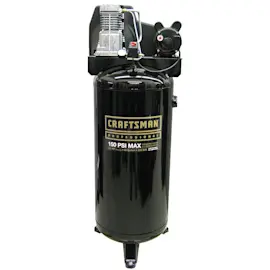
Craftsman air compressors are made by different manufacturers (OEMs) depending on the model and production era. For the Craftsman air compressor model 92116475, the “921” model series is commonly associated with DeVilbiss Air Power as the original manufacturer for many units in this family; your owner's manual also shows this model line under Sears branding.
How to tell who made your specific Craftsman compressor
The most reliable way is to match the model number and the parts list used for service.
- Use the full model number on the data plate: 92116475
- Check the parts drawings and parts list in the owner's manual
- Look for a series prefix (for example, 921) that groups models built by the same OEM
- Confirm whether your unit is belt-drive and electric (this model family is)
- Use the manual’s specification and troubleshooting sections to match features to your unit
What we know for model 92116475 from the manual
The manual identifies this unit as a Craftsman belt-drive, electric air compressor in the 25 to 27 gallon class (the manual covers model 92116475 and a closely related model). That places it in a common Craftsman lineup that was produced for Sears under Sears branding. See the owner's manual for the exact parts list and service references tied to your unit.
| Item | What you’ll see | Why it helps |
|---|---|---|
| Model number | 92116475 | Ties your compressor to the correct OEM family and parts list |
| Drive type | Belt drive | Narrows the design and service parts used |
| Power type | Electric | Helps match motor/pressure switch wiring and controls |
| Tank size class | 25 to 27 gallon | Confirms the product family covered by the manual |
Why it matters
Craftsman is a brand name, not a single factory. Knowing the OEM behind your model helps you match the correct pressure switch, check valve, pump components, and troubleshooting steps for issues like no-start, low pressure, or air leaks.
Related DIY help
- Use air compressor common questions to understand OEM differences, typical maintenance, and what to check first.
Last updated: February 2026
What is the most common cause of air compressor failure?
For the Craftsman 92116475 air compressor, the most common cause of failure is preventable maintenance and cooling issues: a dirty or restricted air intake (air filter), air leaks, and poor ventilation that leads to overheating. These problems reduce performance first, then damage internal pump and motor components over time.
What fails first (most common, most preventable)
- Dirty air filter: Restricts intake air, reduces output, and shortens pump life.
- Overheating from poor ventilation: Running too close to a wall or in a hot, dusty area overheats the unit.
- Air leaks at fittings/hoses: Small leaks can significantly reduce performance and increase run time.
- Restricted air passages or a bad check valve: Can cause stalling, hard starting, and poor pressure build.
- Electrical supply issues: Low voltage, overloaded circuit, or extension cord use can trip protection and stress the motor.
Quick checks we recommend (in order)
- Confirm ventilation: Keep the compressor at least 12 inches from the nearest wall for cooling.
- Inspect and clean the air filter: Clean felt filters; replace paper filters when dirty.
- Test for leaks: Spray soapy water on fittings, transfer tubes, and hose connections; bubbles indicate a leak.
- Drain tank moisture daily: A clean, dry tank helps prevent corrosion.
- Check the relief valve daily: Pull the ring to confirm it moves freely and clears debris.
Symptoms and the most likely cause
| Symptom | Most likely cause | What to do next |
|---|---|---|
| Won’t build tank pressure | Air leak or restricted intake | Leak test; clean/replace filter |
| Overheats or shuts off | Poor ventilation or dirty cooling surfaces | Improve airflow; clean cooling surfaces |
| Won’t start or stalls | Low voltage or bad check valve | Use dedicated circuit; inspect check valve |
| Low discharge pressure | Leaks or restricted intake | Tighten fittings; service filter |
Why it matters
Most “failures” start as longer run times, low PSI, or frequent tripping. Fixing airflow, leaks, and cooling early prevents overheating and internal wear that can turn a simple maintenance issue into a pump or motor repair.
Helpful DIY resources
Last updated: February 2026
Is it worth it to repair a compressor?
Repairing a Craftsman air compressor model 92116475 is worth it when the problem is a single, serviceable part (like a pressure switch, regulator, gauge, or check valve) and the tank and pump are in good condition. It is not worth repairing when the tank is corroded or the pump has repeated failures.
Quick way to decide (repair vs. replace)
Use these checks first; they match the most common failure points and maintenance items called out in the owner's manual.
- Repair makes sense when: the unit won’t start due to a control issue (pressure switch), it leaks at a fitting, or it won’t build pressure due to a check valve or intake restriction.
- Replace makes sense when: the tank won’t hold air, the tank shows heavy rust/corrosion, or the pump has major internal wear and you have already repaired it once.
- Safety first: always release tank pressure before transporting or servicing, and drain moisture daily to reduce corrosion.
Cost and effort comparison
| Situation | Typical fix | Skill/time | Best choice |
|---|---|---|---|
| Won’t start or starts only with tank drained | Diagnose back pressure, pressure switch, check valve | Low to medium | Repair |
| Won’t build tank pressure | Leak check, air filter, check valve | Low to medium | Repair |
| Pressure gauge or regulator issues | Replace gauge/regulator | Low | Repair |
| Tank leaks or won’t hold air | Tank replacement not practical | High | Replace |
| Pump worn (low output, overheating, repeated issues) | Pump rebuild | High | Replace or rebuild (only if otherwise excellent condition) |
What to check before spending money
- Drain the tank daily; moisture causes internal corrosion that shortens tank life.
- Test for leaks with soapy water on hoses, transfer tubes, and fittings; bubbles pinpoint the leak.
- Confirm ventilation: keep the compressor at least 12 inches from the nearest wall for cooling.
- Check the relief valve daily by pulling the ring to confirm it moves freely.
- Inspect the power cord and plug; never operate if damaged.
Why it matters
Air compressor repairs are usually economical when they restore normal PSI and CFM performance with a targeted fix. Tank corrosion and chronic pump problems are different; they reduce reliability and can turn into repeat repair costs.
Helpful DIY troubleshooting: air compressor won't start, air compressor won't build tank pressure.
Last updated: February 2026
Are air compressor parts interchangeable?
Most air compressor parts are not interchangeable across brands or even across different models of the same brand. For the Craftsman 92116475 air compressor, major components (motor, pump, pressure switch, tank, transfer tube) must match the unit’s design and pressure settings; only some external fittings may interchange if the thread type and size match.
What usually is not interchangeable
These parts are model-specific because they affect safety, performance (PSI/CFM), and how the compressor starts and stops:
- Pump and pump head components (mounting, airflow, compression design)
- Electric motor (voltage, amperage, overload protection)
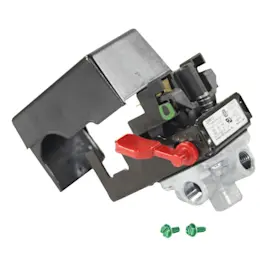
- Pressure switch (kick-in and kick-out settings; unloading/bleeder function)
- Tank and tank-mounted ports (threading, orientation, safety valve compatibility)
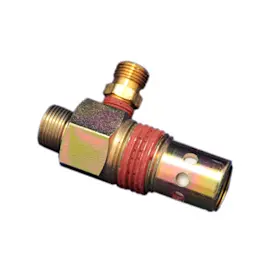
- Check valve and transfer tube (tube size, compression fittings, flow direction)
For model-specific diagrams, part naming, and service notes, use the owner's manual.
What can be interchangeable (if the specs match)
Some common external items can cross over between brands when you match the exact thread and style:
- Quick-connect couplers and plugs (industrial, automotive, ARO styles vary)
- NPT threaded fittings (only when the size and taper match)
- Air hose fittings and adapters
- Some pressure gauges (only if the pressure range and mounting thread match)
Quick compatibility checklist
| Item you want to swap | Must match | What happens if it doesn’t |
|---|---|---|
| Pressure switch | Kick-in/kick-out range, port layout, unloader/bleeder setup | Won’t start/stop correctly; may leak or short-cycle |
| Check valve | Thread size, orientation, flow rating | Hard starting; air leaks back to pump |
| Fittings/couplers | Thread type/size and coupler profile | Leaks; tools will not connect |
| Motor | Voltage/amperage, shaft size, mounting | Overheating; won’t run; unsafe wiring |
Why it matters
Your compressor starts automatically and relies on correct pressure control and leak-free connections. A mismatched part can cause hard starting, poor tank pressure, frequent cycling, or air leaks that reduce performance.
If you are trying to solve a specific symptom
Use these DIY guides to narrow the correct part and fix:
Last updated: February 2026