Installation guide
 Owner’s manual
 Error Codes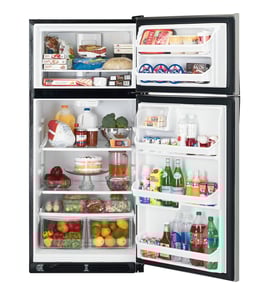


How many cubic feet is a Kenmore upright freezer model 25364532600?
Kenmore model 25364532600 is a top-mount refrigerator, not an upright freezer. The cubic-foot capacity for this specific model is listed in the product specifications section of the 25364532600 owner's manual, which is the best place to confirm the exact total and compartment capacities.
How to find the cubic feet (fast)
We recommend checking the capacity label in the manual first, then confirming on the appliance data plate.
- Open the 25364532600 owner's manual and look for “Specifications”, “Capacity”, or “Product dimensions and capacity”.
- Check the serial/model plate inside the fresh food compartment (the manual notes it is located inside the refrigerator compartment).
- If the manual lists separate capacities, add fresh food + freezer for total cubic feet.
- If you only see “usable” capacity, use that number for storage planning.
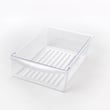
- If you are shopping for bins/shelves, match parts by model number (25364532600) rather than by estimated cubic feet.
Refrigerator vs. upright freezer: what changes
Because 25364532600 is a refrigerator, capacity is typically split between two sections.
| Appliance type | Typical capacity format | What it includes |
|---|---|---|
| Top-mount refrigerator | Total cu. ft. plus freezer cu. ft. | Fresh food + top freezer |
| Upright freezer | Single total cu. ft. | Freezer-only storage |
Why it matters
Capacity affects how much food you can store, but it also impacts fit and airflow. Using the correct appliance type (top-mount refrigerator vs. upright freezer) helps you choose the right shelves, door bins, and temperature settings.
Last updated: January 2026
What are the most common issues with 25364532600?
The most common problems we see on the Kenmore 25364532600 top-mount refrigerator are warm temperatures (especially in the fresh-food section), frost buildup in the freezer, water leaking or puddles, and door sealing issues. These symptoms usually trace back to airflow, defrost, or drainage problems.
Most common symptoms and what they usually mean
- Fridge warm, freezer cold: restricted airflow or a stuck air damper
- Frost or ice on freezer back wall: defrost system problem
- Water under crisper or on floor: clogged/iced defrost drain
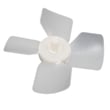
- Noisy humming or rattling: evaporator fan blade hitting ice or a failing fan
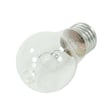
- Interior light out: bulb or socket issue
Quick checks we recommend first
- Set temps to typical targets: 0°F freezer, 37°F fresh food.
- Make sure vents are not blocked by food packages.
- Check door closing and gasket contact all the way around.
- Look for heavy frost on the freezer rear panel (points to defrost trouble).
- Inspect for water in the bottom of the refrigerator compartment (drain issue).
Parts commonly involved (when symptoms match)
| Symptom | Likely system | Example part for this model |
|---|---|---|
| Warm fridge, freezer OK | Airflow control | Refrigerator air damper 241542001 |
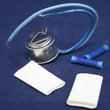
| Frost buildup, warm temps | Defrost system | Refrigerator defrost bi-metal thermostat 5303918202 or refrigerator defrost heater 240356220 |
| Rattling in freezer, poor cooling | Evaporator fan | Refrigerator evaporator fan blade 5308000010 |
| Water puddles | Defrost drain path | Refrigerator drain trough 241801302 |
| Light not working | Lighting | Refrigerator light bulb 316538904 |
Why it matters
On a top-mount refrigerator like the Kenmore 25364532600, the freezer section creates the cold air and the refrigerator section depends on controlled airflow and a working defrost drain. When airflow, defrost, or drainage is off, temperatures rise, frost builds, and leaks start.
Where to find model-specific procedures
Use the owner's manual for control settings, airflow locations, and access guidance; use the installation guide for leveling and door alignment basics that help prevent sealing and sweating issues.
Last updated: March 2026
What is the average lifespan of a Kenmore refrigerator?
Most Kenmore refrigerators average 12 to 15 years of service life. For your Kenmore 25364532600 top-mount refrigerator, consistent maintenance (especially cleaning and airflow) is what most often determines whether it lands near 12 years or keeps running well beyond that; see the 25364532600 owner's manual for model-specific care and cleaning guidance.
Typical lifespan and what affects it
A refrigerator’s lifespan is mainly driven by heat management, door sealing, and how hard the sealed system has to work.
- Condenser coil cleanliness (dirty coils raise compressor run time)
- Door gasket condition (air leaks cause temperature swings and frost)
- Room temperature and ventilation around the cabinet
- How often doors are opened and how full the compartments stay
- Defrost performance (ice buildup restricts airflow)
Maintenance checklist to help reach the high end of the range
Use these habits to reduce wear on the compressor and improve cooling consistency.
- Vacuum dust from the condenser area regularly
- Keep food from blocking interior air vents
- Confirm doors close fully and don’t bounce open
- Wipe and inspect gaskets; replace if torn or deformed
- Set stable temperatures and avoid frequent dial changes
Quick reference: lifespan expectations
| Item | Typical expectation | What shortens it fastest |
|---|---|---|
| Refrigerator overall | 12 to 15 years | Dirty coils, poor airflow, bad door seal |
| Light bulb | 1 to 5 years | Frequent door openings, power surges |
| Door gasket | 5 to 10 years | Tears, gaps, heat exposure, heavy use |
Why it matters
A refrigerator that runs hotter than it should (from restricted airflow or air leaks) cycles longer, which increases compressor wear and can lead to temperature problems, frost buildup, and higher energy use.
Last updated: January 2026