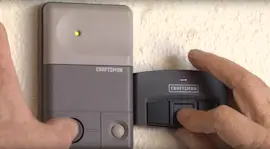
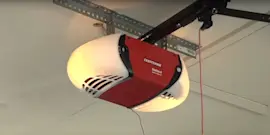
Owner’s manual
 Error Codes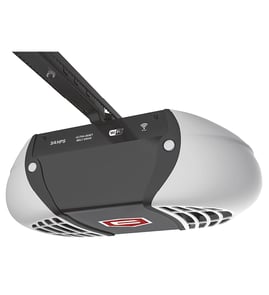



Is it worth repairing a 20 year old garage door opener?
For a 20-year-old garage door opener, replacement is usually the better long-term choice because most openers are built for about 10 to 15 years of service, and newer units add meaningful safety and security upgrades. If your Craftsman 13953674SRT1 only needs a small, low-cost fix (like a sensor alignment or force/limit adjustment), repairing can still make sense.
- Repair if the door is balanced, the opener runs smoothly, and the issue is minor (adjustment, loose wiring, misaligned safety sensors).
- Replace if the opener has repeated failures, loud grinding, intermittent operation, or major drive/motor problems.
- Replace if you cannot consistently pass the safety reverse test after adjustments.
- Repair first if the door itself is the problem (binding, dragging, damaged sections, spring issues).
- Replace if you want modern features (rolling-code security, quieter operation, smart controls).
Your opener is only as safe as the door system it’s attached to. The manual stresses installing and operating the opener on a properly balanced, lubricated door, and re-testing safety reversal after any force/limit changes.
- Confirm the door moves smoothly by hand (with the opener disconnected).
- Check that the door closes fully against the floor across the entire width.
- Verify the safety reversing sensors are aligned and unobstructed.
- Re-run the safety reverse test after any adjustment (limits or force).
For model-specific procedures and test steps, use the owner's manual.
| Situation | Usually best choice | Why |
|---|---|---|
| Minor adjustment or sensor alignment | Repair | Fast, low cost, restores safe operation |
| Door won’t reverse reliably | Replace (after door is corrected) | Safety risk if reversal cannot be set correctly |
| Grinding, slipping, or stripped drive components | Replace | Major repair often approaches replacement value |
| You want quieter, more secure operation | Replace | Newer designs and rolling-code security |
A garage door is heavy, and the opener’s force and limit settings directly affect whether the door stops and reverses when it should. When an older opener becomes difficult to adjust or unreliable, replacement is the most dependable way to restore safe, consistent operation.
Last updated: February 2026
How do I know what model Craftsman garage door opener I have?
Your Craftsman garage door opener’s model number is printed on an ID label on the powerhead (the motor unit mounted to the ceiling). On model 13953674SRT1, you’ll typically find it on an end panel label or under the light/cover area; match that label to the model number shown in the 13953674SRT1 owner's manual.
Check these common spots on the opener powerhead:
- End panel label (often near the logic board cover area)
- Under the light lens (remove the light cover to view labels underneath)
- On the side of the motor housing near the wiring/terminal area
- Near the learn/program button area (label may be adjacent)
- On the back or underside of the unit if side labels are obscured
Record the information exactly as printed on the label.
| What to capture | Example | Why it matters |
|---|---|---|
| Model number | 13953674SRT1 | Identifies the correct parts list and manual |
| Serial number | Varies | Helps distinguish production runs |
| Motor/drive type notes | Chain/belt, DC/AC (varies) | Helps match troubleshooting steps and accessories |
- Wipe dust off the label with a dry cloth; avoid solvents that can erase printing.
- Use your phone camera zoom and flash to read faded text.
- If the label is missing, use the opener’s features (remote style, wall control type, sensor style) to narrow it down, then confirm using the manual diagrams and parts breakdown.
Craftsman openers can look similar across multiple series, but parts like the wall control, safety reversing sensors, and rail/drive components vary by model. Using the exact model number prevents ordering the wrong replacement parts and speeds up troubleshooting.
Last updated: February 2026
Where can I buy Craftsman garage door opener parts?
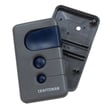
You can buy replacement parts for your Craftsman garage door opener model 13953674SRT1 through Sears PartsDirect by using the model-based parts list to match the exact component you need (logic board, safety reversing sensors, remote controls, rail parts, and hardware). Use your model and part details for the best match.
- Confirm the opener model number on the unit label (commonly under the light lens on the front end panel).
- Identify the failed system: remote control, wall control, safety sensors, drive system, or logic board.
- Use the parts list for model 13953674SRT1 to locate the correct part description.
- When ordering, use: product type, model number, part number, and part description.
- Keep the documentation handy for diagrams and part naming conventions in the exploded views.
Many “parts” problems are setup or safety issues. Check these first:
- Safety reversing sensors aligned and unobstructed
- Door moves smoothly by hand (no binding)
- Remote battery and programming
- Wall control wiring connections
- Force and travel settings not misadjusted
The owner’s manual for this Craftsman opener family lists common accessories that owners often add or replace.
| Item type | What it does | When you need it |
|---|---|---|
| Remote control | Operates the opener from your vehicle | Remote lost, damaged, or intermittent |
| Safety reversing sensor | Prevents closing on an obstruction | Door will not close, lights blink, sensor damaged |
| Rail extension kit | Allows taller doors to open fully | 8 ft or 10 ft door height |
| Outdoor key switch | Opens/closes from outside | No remote available outside |
Garage door openers are safety devices; ordering by model number 13953674SRT1 helps ensure the replacement part matches the correct wiring, mounting style, and safety system so the door operates and reverses properly.
For diagrams, part identification, and ordering details, use the 13953674SRT1 owner's manual. For troubleshooting that helps you confirm the failed component before buying, use Craftsman error codes.
Last updated: February 2026
How to find a compatible garage door opener?
For a Craftsman garage door opener like model 13953674SRT1, compatibility comes from matching the accessory (remote, keypad, wall control, or smart controller) to the opener’s radio/learn system and accessory type. Start by identifying what your opener supports in the owner's manual, then choose an accessory designed for that same system.
Use these checks before you buy or program anything:
- Opener model number: 13953674SRT1 (best match point for parts and accessories)
- Accessory type: remote control, wireless keypad, wall control console, safety sensors
- Programming method: “learn” style programming versus older dip-switch style
- Door height/rail needs: standard rail versus extension rail for 8 ft or 10 ft doors
- Power requirements: this opener is designed for 120V, 60 Hz operation (other power causes malfunction/damage)
| What you want to add | What must match | What to check first |
|---|---|---|
| Remote control | Learn system and remote family | Owner's manual programming steps and opener labels |
| Wireless keypad | Learn system and keypad type | Owner's manual keypad programming section |
| Wall control console | Correct wall control style for the opener | Existing wall control wiring and manual diagrams |
| Rail extension | Door height (8 ft or 10 ft) | Door height and rail type listed in the manual |
Your 13953674SRT1 manual shows this opener was packaged with Security+ remote control(s) and a control console (standard or premium, depending on the kit). That points you toward Security+ compatible remotes/keypads and the correct style wall control for this opener family. See the accessory and programming sections in the owner's manual.
Using the wrong remote or keypad usually fails at programming (it will not “learn”), while using the wrong wall control can cause erratic operation. Matching the correct accessory type also helps keep safety features working as designed.
If the door binds, sticks, or is out of balance, fix that first; the manual warns that springs, cables, and hardware are under extreme tension and can cause severe injury. Also disable door locks and remove any ropes connected to the door before operating the opener.
For opener diagnostic flashes or error patterns that look like a compatibility issue, use Craftsman error codes.
Last updated: February 2026
How to find your garage door opener type?
To identify your Craftsman 13953674SRT1 garage door opener type, start by identifying your garage door type (sectional vs. one-piece) and door height, then confirm the opener’s drive style (chain, belt, or screw) by looking at the rail and trolley assembly shown in the owner's manual.
- Check the rail above the door: a visible chain or belt running along the rail points to a chain-drive or belt-drive opener.
- Look at the trolley: the trolley rides on the rail and connects to the door arm; its layout helps confirm the drive system.
- Confirm door type and height: the manual calls out identifying door type and height before setup because it affects installation and required accessories.
- Look for safety reversing sensors: photo eyes near the floor indicate a modern safety system and help confirm the opener system family.
- Check for special conditions: torsion spring setups, extension springs, or obstructions can affect where the opener must be mounted.
| What you’re identifying | Common options | Where to look |
|---|---|---|
| Garage door type | Sectional, one-piece | Door panels and track layout |
| Door height | Typically 7 ft, sometimes taller | Measure floor to top of door when open |
| Opener drive type | Chain drive, belt drive, screw drive | Rail above door and moving drive element |
Your door type and height determine key setup details such as opener positioning, center mounting requirements (especially with extension springs), and whether you need an extension kit for taller doors. Correct identification also helps prevent binding, sticking, and unsafe operation.
- Disconnect the opener and manually lift the door halfway; it should stay in place.
- Raise and lower the door to check for binding or sticking.
- Make sure the door closes fully to the floor across the opening.
- Remove any ropes attached to the door.
- Do not adjust springs, cables, pulleys, or brackets; those parts are under extreme tension.
For diagrams and the door identification checklist, use the owner's manual.
Last updated: February 2026