Owner’s manual
 Error Codes


What's the average lifespan of a Kenmore refrigerator?
Kenmore refrigerators typically last 10 to 15 years. With consistent care (good airflow, clean condenser area, tight door seals, and quick fixes when problems start), many units reach the upper end of that range or longer; check your 79579299900 owner's manual for model-specific care and maintenance guidance.
Typical lifespan and what affects it
A refrigerator’s life is mostly determined by heat management, door sealing, and how hard the sealed system has to work.
- Condenser cleanliness: dust buildup makes the compressor run hotter and longer
- Door gasket condition: air leaks force longer run times and can cause frost or moisture
- Room temperature and ventilation: hot rooms and tight clearances increase run time
- Usage habits: frequent door openings and warm food loads add stress
- Timely repairs: fixing small issues early prevents compressor overwork
What “normal” operation looks like
Your Kenmore 79579299900 may run more often than an older refrigerator. The manual notes that modern refrigerators can run a significant portion of the time, especially in warm conditions or after loading groceries.
| Situation | What you’ll notice | What it means for lifespan |
|---|---|---|
| Hot kitchen or poor airflow | Longer compressor run time | More wear over time if constant |
| Door opened often | Longer cooling cycles | Normal, but adds workload |
| Door seal leaking | Moisture, frost, temp swings | Shortens life if not corrected |
| Dirty condenser area | Warm cabinet sides, long run time | Increases compressor stress |
Maintenance that extends life (high impact)
- Keep vents inside the refrigerator and freezer unblocked for proper air circulation
- Maintain steady temps (typical targets: 37°F fresh food, 0°F freezer)
- Clean and inspect door seals; replace if torn or not sealing evenly
- Avoid overpacking; airflow helps the evaporator fan and damper do their job
- Address water leaks promptly; a clogged drain can lead to puddles and icing
Why it matters
Most “early failures” come from the refrigerator running too hot or too long. Reducing run time and keeping airflow and seals in good shape protects major components like the compressor and control board.
Last updated: February 2026
How to tell if a Kenmore refrigerator compressor is bad?
On Kenmore refrigerator model 79579299900, a bad compressor usually shows up as poor or no cooling even though the unit has power, along with repeated clicking (start attempts) or unusual heat at the compressor area. Confirm the basics first because normal operating sounds and long run times can mimic compressor trouble; see the 79579299900 owner's manual.
Quick checks before blaming the compressor
We recommend ruling out common “looks like a compressor” issues first:
- Give the refrigerator up to 24 hours to cool completely after plugging in or major temperature changes.
- Make sure the temperature controls are set correctly for your kitchen conditions.
- Check that doors close fully and the gasket seals all the way around.
- Clean dirty condenser coils; dirty coils make the compressor run longer and cool poorly.
- Listen for normal sounds (clicks from controls, gurgling refrigerant, fan airflow); these can be normal.
Signs that point more strongly to a compressor or start circuit problem
These symptoms are more consistent with a compressor that is failing to start or run correctly:
- Clicking every few minutes from the compressor area with little or no cooling
- Compressor is very hot to the touch after repeated start attempts (use caution)
- Refrigerator runs “all the time” but temperatures stay warm
- You hear the condenser fan running but cooling performance does not improve
What you can observe safely (no meters)
| What you notice | What it often means | What to do next |
|---|---|---|
| Runs a lot but still warm | Heat not being rejected well or sealed-system issue | Clean coils; verify airflow; check door seal |
| Repeated clicking | Start device/relay or compressor struggling to start | Inspect start components; consider service |
| Normal fan sounds but no cooling | Possible sealed-system/compressor issue | Move to professional diagnosis |
Parts that are commonly involved
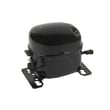
If the compressor is not starting, the start components are often part of the diagnosis. For this model, we list a refrigerator compressor TCA35931726 as a replacement option.
Why it matters
A compressor diagnosis affects cost and repair approach. Many cooling complaints are caused by airflow, dirty coils, or door sealing problems; those fixes are faster and cheaper than sealed-system work.
Last updated: February 2026
What are the common problems with Kenmore Elite refrigerators?
Common problems we see in Kenmore Elite refrigerators (including Kenmore model 79579299900) are weak or uneven cooling, water leaks, ice maker or dispenser trouble, and doors that do not seal or close correctly. Many issues trace back to airflow restrictions, dirty condenser coils, a clogged defrost drain, or worn door gaskets; the owner's manual also highlights basic checks like temperature settings and door closure.
Most common symptoms and what usually causes them
- Refrigerator or freezer too warm: blocked air vents, frequent door openings, controls set too warm, or a fan/air damper problem
- Ice not made fast enough: freezer too warm, heavy ice use, vents blocked, or water supply/valve issue
- Water under the refrigerator: defrost drain restriction or drain tube issue
- Door not closing or sealing: unit not level, bins/shelves out of position, food packages blocking, or gasket sticking/worn
- Compressor seems to run a lot: warm room, frequent openings, dirty condenser coils, or recent startup (up to 24 hours to cool)
Quick checks we recommend first (safe, no parts swapping)
- Confirm doors close fully and nothing is holding them open.
- Set temperatures, then wait 24 hours between adjustments before judging results.
- Make sure interior air vents are not blocked by food packages.
- Clean condenser coils (dirty coils make the compressor work harder).
- If you have puddles, inspect the drain path and drain tube for blockage.
Parts that commonly solve these problems on model 79579299900
| Symptom | Common part to inspect/replace | Example from this model’s parts |
|---|---|---|
| Water leaking/puddles | Drain tube | Refrigerator drain tube 5251JA3003D |
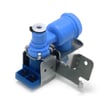
| Water dispenser or ice maker not filling | Water inlet valve | Refrigerator water valve AJU55759303 |
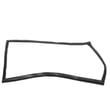
| Door not sealing well | Door gasket | Refrigerator gasket assembly ADX52752653 |
Why it matters
Cooling and leak complaints are often “system” problems: airflow, door sealing, and drainage all affect temperatures, frost buildup, and compressor run time. Fixing the root cause protects food quality and helps the refrigerator run more efficiently.
Last updated: February 2026
How do I tell what model Kenmore fridge I have?
Your Kenmore refrigerator’s model number is printed on the identification label inside the fresh food (refrigerator) compartment. On Kenmore model 79579299900, that label is located on the right-hand side of the refrigerator compartment; match the full model number exactly when ordering parts or using the 79579299900 owner's manual.
Where to look first (fastest checks)
- Open the refrigerator door and look along the right interior wall of the fresh food section.
- Check near the upper side wall where labels are easiest to see.
- Look for a label that lists both Model No. and Serial No.
- Write the model number down exactly as shown (all digits matter).
- Take a clear photo of the label for reference when searching parts.
What the label typically includes
| Label item | What it’s used for | Example for this page |
|---|---|---|
| Model number | Correct parts list and diagrams | 79579299900 |
| Serial number | Production-specific identification | Varies by unit |
| Electrical ratings | Outlet and power requirements | Varies by unit |
Why the exact model number matters
Kenmore refrigerators can look similar across multiple series, but parts like a door gasket, control board, or water inlet valve can differ by model. Using the exact model number helps us match the correct replacement part the first time.
If you cannot find the label
- Remove food items that block the side wall and re-check the right interior wall.
- Wipe condensation or residue off the wall so the print is readable.
- Check for a second label location inside the cabinet opening near the door frame.
- If the label is damaged, use the clearest remaining digits and compare to the model format shown in the 79579299900 owner's manual.
Last updated: February 2026
How many cubic feet is my Kenmore refrigerator model 79579299900?
The exact cubic-foot capacity for Kenmore model 79579299900 is listed on the product identification label and in the specifications section of the 79579299900 owner's manual. This model is a top-freezer (top-mount) refrigerator; most Kenmore top-freezer units in this family are commonly in the 18 to 22 cu. ft. range.
Where to find the exact capacity (fastest options)
Use these checks in order; they take only a few minutes:
- Check the model and serial label inside the fresh food compartment (typically on the right-hand side wall).
- Look in the specifications section of the 79579299900 owner's manual.
- If your unit has a product record page filled out, confirm the model number matches 79579299900 exactly.
- If you are measuring for fit, confirm width, height, and depth too; capacity alone does not guarantee the cabinet size.
Why “795” does not equal cubic feet
On Kenmore refrigerators, the leading digits (like 795) identify the manufacturing source and model family, not the storage volume. Capacity varies across models that share the same prefix.
Typical capacity guidance for this style
Most top-freezer refrigerators similar to Kenmore 79579299900 fall into these practical ranges:
| Refrigerator style | Typical capacity range | Best for |
|---|---|---|
| Top-freezer (top-mount) | 18 to 22 cu. ft. | Balanced freezer space and efficiency |
| Bottom-freezer | 20 to 25 cu. ft. | More fresh-food access at eye level |
| Side-by-side | 22 to 28 cu. ft. | Narrow doors, tall compartments |
Why it matters
Knowing the exact cubic feet helps us match the right shelves, drawers, and airflow parts, and it also helps when planning food storage and confirming the refrigerator will fit your kitchen opening.
Last updated: February 2026