Installation guide
 Owner’s manual
 Error Codes



What is the life expectancy of a GE washing machine?
A GE washing machine typically lasts 10 to 14 years with normal household use. For your GE GHWN8350D0WS washer, consistent maintenance (especially preventing leaks and hose failures) and avoiding chronic overloading are the biggest factors in reaching the high end of that range.
Most washer lifespan differences come down to usage and care, not just brand.
- Loads per week: more cycles equals faster wear on bearings, suspension, and drive parts
- Overloading: increases strain on the tub, dampers, and motor system
- Water quality: hard water can speed up valve and hose screen clogging
- Leveling and vibration: constant shaking shortens damper and tub component life
- Leak prevention: catching small drips early prevents corrosion and electrical damage
We recommend following the routine below and using your documentation for model-specific guidance.
- Check for leaks after installation, again one month later, then every 3 to 6 months
- Replace water supply hoses every 5 years to reduce the risk of hose failure and water damage
- Keep the washer level to reduce out-of-balance wear
- Use the right detergent amount to limit residue buildup
- Leave the lid open between loads when possible to reduce odor and moisture
| Washer age | What’s common | What to do |
|---|---|---|
| 0 to 5 years | Minor adjustments, occasional hose or clamp issues | Inspect hoses and connections; keep unit level |
| 5 to 10 years | Higher chance of leaks, fill/drain issues | Replace hoses; watch for slow fill or poor draining |
| 10 to 14 years | Wear-related repairs become more likely | Compare repair cost vs. remaining life |
Knowing the expected lifespan helps you decide when a repair is a smart investment. Preventive steps like hose replacement and routine leak checks often avoid the most expensive type of failure: water damage that affects multiple components.
For operating and care details specific to the GHWN8350D0WS, use the owner's manual.
Last updated: February 2026
What is the common problem of an automatic washing machine?
A very common problem with an automatic washer like the GE GHWN8350D0WS is failure to drain or spin, which often traces back to a kinked or clogged drain path, an installation issue (standpipe height), or a component problem that prevents the washer from entering the drain and spin portion of the cycle. See the installation guide for correct drain setup.
- Not draining or not spinning (water left in the tub)
- Not filling or filling too slowly (hot or cold)
- Excessive vibration or walking during spin
- Lid will not lock or cycle will not start
- Leaks at the hoses or drain connection
- Confirm the drain height is correct: the discharge point must be at least 30 inches high and no more than 8 feet above the base of the washer.
- Inspect the drain hose routing: look for kinks, crushing behind the washer, or a hose shoved too far into the standpipe.
- Check for clogs: lint, small socks, and residue can restrict the hose.
- Verify power and grounding: the washer needs a properly grounded 120V, 15 or 20 amp circuit.
- Level the washer: adjust all four leveling legs so the cabinet is level front-to-back and side-to-side.
If the basics check out, these model-compatible parts are often involved in drain or fill complaints:
- Washer drain hose WH41X10319 (cracks, internal restriction, poor fit)
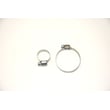
- Univ clamp WH1X2036 (loose clamp can cause leaks or poor hose connection)
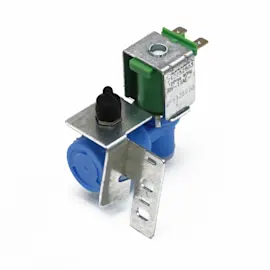
- Washer water inlet valve WH13X10058 (slow fill, no fill, or temperature-related fill issues)
| Item | What to look for | Why it matters |
|---|---|---|
| Drain discharge height | 30 in. minimum; 8 ft maximum | Prevents siphoning and drain errors |
| Water pressure | 10 to 125 psi | Low pressure can cause slow fill or no fill |
| Hot water temp at washer | 120 to 150°F on hot wash | Helps cleaning performance and cycle operation |
| Electrical | Grounded 3-prong outlet; 15 or 20 amp | Prevents no-start and safety issues |
Drain, fill, and vibration problems are often caused by setup issues (hose height, leveling, power) rather than a failed part. Getting the installation basics right helps the washer complete the drain and spin cycle reliably and reduces wear on components.
Last updated: February 2026
Is GE GHWN8350D0WS considered high end?
GE GHWN8350D0WS is a standard GE washer model, not a “high-end” or luxury line. In practical terms, it’s built for reliable everyday washing performance; “high end” in washers usually refers to premium feature sets, quieter operation, and more advanced controls than typical models.
When customers ask this, we look at features and build elements that typically separate premium washers from standard models:
- Larger or more specialized cycle selection and options
- Advanced vibration control and quieter spin performance
- More sophisticated electronic controls and diagnostics
- Premium fit and finish (lid, hinges, trim, lighting)
- Higher-cost drive components and control systems
From the installation requirements for this GE washer, we can confirm it uses standard home hookups and electrical requirements, which is typical for mainstream washers.
- Requires a properly grounded 3-prong outlet on a 15 or 20 amp circuit
- Water pressure requirement is 10 to 125 psi
- Drain standpipe height range is 30 inches to 8 feet
- Needs firm flooring (concrete preferred) to minimize vibration
For the exact feature set and cycle/options list, use the installation guide.
Premium models often have more complex assemblies and higher-cost electronics. This model’s parts list includes both everyday hardware and higher-value drive/control components.
| Example part type | What it affects | Example from this model |
|---|---|---|
| Water fill components | Filling, temperature control | Washer water inlet valve WH13X10058 |
| Drain components | Draining, siphoning, leak prevention | Washer drain hose WH41X10319 |
| Drive/control components | Agitation/spin control, motor feedback | Inverter, stator, rotor, sensors |
Knowing whether a washer is “high end” helps set expectations for noise level, cycle flexibility, and repair cost. Even on standard models like GHWN8350D0WS, replacing key parts such as the inlet valve or drain hose can restore performance without replacing the washer.
Last updated: February 2026
What is the difference between 4.5 cu ft and 5.0 cu ft washer?
The difference is tub volume: a 5.0 cu. ft. washer holds about 0.5 cu. ft. more than a 4.5 cu. ft. washer (roughly 11% more space), so it handles bulkier loads with less crowding. For your GE GHWN8350D0WS, use this comparison as a capacity guide, then confirm your exact rated capacity in the GHWN8350D0WS owner's manual.
In day-to-day laundry, the bigger tub mainly helps with bulky items and load flexibility.
- Fits bulky items more easily (comforters, blankets, winter coats)
- Reduces the chance of overfilling, which improves agitation and rinsing
- Lets you wash more towels or jeans per load
- Can reduce total weekly loads for larger households
- May require a deeper reach to grab small items at the bottom (common on larger-capacity top loads)
| Feature | 4.5 cu. ft. | 5.0 cu. ft. |
|---|---|---|
| Capacity difference | Baseline | About 11% more tub volume |
| Best for | Everyday mixed loads | Bulky items and fewer loads |
| Overloading risk | Higher if you pack it | Lower for the same items |
| Ergonomics | Often easier reach | Often deeper reach |
Even when capacity changes, the installation requirements still control whether a washer fits and performs well. The GHWN8350D0WS installation guide calls out these key basics:
- Install on firm flooring; avoid rugs to minimize vibration
- Water pressure: 10 to 125 psi
- Drain discharge height: at least 30 inches and no more than 8 feet above the washer base
- Closet clearances (minimum): 0 inches sides, 2 inches front, 3 inches rear, 24 inches top
Choosing the right capacity prevents chronic overloading, which increases vibration, reduces cleaning performance, and accelerates wear on drive and suspension components.
Last updated: February 2026