Owner’s manual




Is it worth repairing a Samsung washing machine?
Yes, it’s usually worth repairing a Samsung washer when the fix is straightforward and the total repair cost is under about 50% of the price of a comparable new washer. For the Samsung WA54R7200AW, repairs are most worthwhile when the machine is otherwise in good condition and not showing multiple recurring problems (drain, fill, or spin issues).
Quick decision checklist (WA54R7200AW)
- Repair it if it’s a single, clear failure (won’t drain, won’t fill, won’t spin) and the tub, cabinet, and controls are in good shape.
- Repair it if the washer is relatively newer and you have not had repeated service calls.
- Consider replacing if you’re stacking multiple major repairs (for example: control issue plus motor issue plus leak).
- Consider replacing if the washer is 8+ years old and the repair is expensive.
- Consider replacing if you’re seeing frequent error codes and performance problems across different cycles.
Common “worth repairing” problems vs. “bigger ticket” problems
| Situation | Typical direction | Why |
|---|---|---|
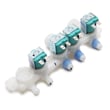
| Won’t fill, slow fill, 4C-type symptoms | Repair | Often related to water supply, inlet screens, or valve issues |
| Won’t drain, 5C/LC-type symptoms | Repair | Frequently a drain restriction or pump-related issue |
| Excessive vibration/Ub unbalance | Repair/adjust | Often leveling, load size, or suspension related |
| Control board or multiple electronic faults | Replace more often | Higher parts and labor cost, harder to justify |
What we recommend checking first
Start with the model-specific troubleshooting and maintenance steps in the WA54R7200AW user manual. Then check these basics before pricing parts or service:
- Confirm the washer is on a solid, level floor and all leveling feet are firmly planted.
- Verify water pressure and hoses are correct; clean inlet mesh filters if fill is weak.
- Look for drain hose kinks and confirm the standpipe height is within the recommended range.
- Run Self Clean monthly (or every 20 cycles) to reduce residue and odor-related issues.
- Use HE detergent only to prevent oversudsing that can trigger poor draining and performance.
Why it matters
A well-targeted repair can restore normal washing performance and extend the life of your WA54R7200AW for years. But when repair costs climb near replacement pricing, you’re often paying for downtime and repeat visits instead of long-term reliability.
Last updated: January 2026
What is the life expectancy of a Samsung washing machine?
A Samsung washing machine typically lasts 10 to 15 years. For your Samsung WA54R7200AW top-load washer, consistent maintenance (especially cleaning cycles and inlet screens) and avoiding overloads are the biggest factors that help it reach that normal lifespan; see the WA54R7200AW user manual.
What affects washer lifespan the most
These habits usually make the biggest difference in how long a Samsung washer runs reliably:
- Use HE detergent and avoid oversudsing (suds can leave residue and contribute to odors).
- Do not overload; keep laundry below the tub’s top ring so the load can balance and spin correctly.
- Run SELF CLEAN regularly (Samsung recommends about every 20 cycles).
- Keep the washer level to reduce vibration and wear on suspension and drive components.
- Clean the mesh filters at the water inlets once or twice a year to prevent fill problems.
Maintenance schedule we recommend (simple and realistic)
The WA54R7200AW manual includes maintenance steps that directly support long service life.
| Task | How often | Why it helps |
|---|---|---|
| SELF CLEAN cycle | Monthly or every 20 cycles | Reduces residue, odor, and bacteria buildup |
| Clean inlet mesh filters | 1 to 2 times per year | Prevents slow fill and water valve strain |
| Wipe spills, leave lid open to dry | Weekly | Helps prevent mildew and corrosion |
| Check hoses for kinks/leaks | Monthly | Prevents flooding risk and fill/drain issues |
Signs your washer is nearing end-of-life
If you see these repeatedly, repairs may become more frequent as the washer ages:
- Loud banging or persistent out-of-balance (Ub) even after redistributing loads
- Repeated drain or fill errors (such as 5C or 4C) after basic cleaning checks
- Water leaks from the tub area or recurring hose connection leaks
- Burning smell, smoke, or repeated electrical shutdowns
Why it matters
A washer that is kept clean, level, and properly loaded usually runs quieter, spins better, and avoids common wear issues (drain problems, vibration damage, and residue buildup) that shorten lifespan.
Last updated: January 2026
What is the most common problem with Samsung washing machines?
For Samsung washers like model WA54R7200AW, the most common customer complaints are spin-related issues (out-of-balance shaking, poor spin, or not spinning) and drain problems (won’t drain, stops with water left). Many cases are caused by load size, leveling, or a clogged inlet/drain path rather than a major failure.
Most common issues we see (and what usually causes them)
- Excessive vibration or shaking during spin: unbalanced load, washer not level, weak flooring
- Won’t drain or drains slowly: kinked drain hose, drain height/standpipe setup issue, internal restriction
- Won’t fill or fills slowly: clogged inlet mesh filters, closed water taps, low water pressure
- Stops mid-cycle or pauses: lid not fully closed, temporary power/voltage issue, control sensing an out-of-balance condition
- Error codes on the display: the washer is detecting a specific condition (water supply, drain, lid, voltage, etc.)
Quick checks for WA54R7200AW before assuming a bad part
These steps match the troubleshooting approach in the WA54R7200AW user manual.
- Redistribute the load; avoid washing a single heavy item by itself
- Confirm the washer is level and all 4 leveling feet are firmly on the floor
- Verify the drain hose is not kinked and the standpipe height is within the recommended range
- Turn off water taps, remove hoses, and clean the inlet mesh filters if fill is slow
- Power reset: unplug for 1 minute, then restart a cycle
Common symptoms and the best next step
| Symptom | Most likely category | Best first action |
|---|---|---|
| Loud shaking or “walking” | Balance/leveling | Level the washer; rebalance load |
| Water left in tub | Drain | Check hose routing and clogs |
| Long fill time | Water supply | Clean inlet mesh filters |
| Code appears | Diagnostic | Look up the code and follow steps |
Why it matters
Spin and drain complaints often look like “the washer is broken,” but they are frequently caused by installation setup (leveling, drain height) or maintenance items (filters, hoses). Fixing those first can prevent repeat stoppages and reduce wear on the drive system.
For code-based troubleshooting, we recommend using our Samsung top load washer error codes reference alongside the manual.
Last updated: January 2026