Error Codes


Can I search for Whirlpool parts by model?
Yes. For Whirlpool electric dryer model GEC9858HQ0, searching by the full model number is the most accurate way to get compatible replacement parts because it filters results to the exact diagrams and parts list for your dryer.
How to search by model number (best practice)
- Use the complete model number exactly as shown: GEC9858HQ0
- Match every character (letters and numbers); one wrong digit can pull the wrong parts
- Use the model results to narrow by section (drum, heating, door, controls, venting)
- Compare the part name and part ID before ordering
- If your dryer has a symptom (no heat, won’t start, noisy), identify the likely system first, then pick the part
Common parts people look up by model (examples for GEC9858HQ0)
If you already know the failing area, these are common lookups for this model:
| Symptom | Common part to check | Example part anchor |
|---|---|---|
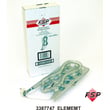
| No heat or weak heat | Heating circuit | Dryer heating element WP3387747 |
| Dryer won’t start or stops mid-cycle | Safety cutoff | Dryer thermal fuse WP3390719 |
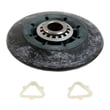
| Loud rumbling or thumping | Drum support | Support kit WPW10314173 |
Why searching by model matters
Whirlpool dryers often use similar-looking parts across many models, but mounting points, wire terminals, and kit contents can differ. Searching by GEC9858HQ0 helps ensure the part you choose is designed to fit and function correctly in your specific dryer.
Helpful DIY reference
If your dryer is showing a code or you suspect an electronic control issue, use Whirlpool electronic control model dryer error codes to narrow the problem before ordering parts.
Last updated: February 2026
What's the average lifespan of a Whirlpool dryer?
A Whirlpool electric dryer like model GEC9858HQ0 typically lasts 10 to 13 years with normal household use. With consistent airflow maintenance and prompt repair of wear items (rollers, idler pulley, thermal fuse), many dryers reach the upper end of that range.
Typical lifespan and what changes it
Dryer life is mostly driven by heat stress and airflow restriction. When the venting is clear and the drum turns smoothly, the motor and heater run cooler and last longer.
- 10 to 13 years: typical for most Whirlpool electric dryers
- Shorter life: frequent overloading, long or crushed vent runs, heavy lint buildup
- Longer life: short, smooth venting, regular cleaning, replacing worn drum support parts early
Maintenance that adds years (high impact)
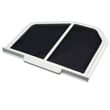
- Clean the lint screen after every load; replace a damaged screen such as screen W10120998.
- Keep the exhaust vent run short and unobstructed; clean the vent duct at least yearly.
- Avoid overloading; heavy loads strain the belt, idler, and drum rollers.
- If drying times increase, fix airflow issues before the heater and thermostats overheat.
- Address squealing or thumping early; worn rollers and idlers can damage the drum and motor.
Common “life-limiting” parts and what they affect
| Symptom | Most likely area | Why it matters |
|---|---|---|
| Long dry times, very hot cabinet | Venting, blower, heat duct | Overheats heater and safety fuses |
| No heat | Heater circuit, safety devices | Can be a heater or a blown safety fuse |
| Squeal, rumble, thump | Drum support, idler | Extra drag shortens motor life |
| Runs then stops | Overheat condition | Often airflow related |
When replacement parts make sense
If the dryer is otherwise in good shape, replacing common wear parts is often the difference between “end of life” and several more years of service.
- Drum support roller kit: support kit WPW10314173
- No-heat repair path often includes: dryer heating element WP3387747 and safety checks
- Overheat protection component: dryer thermal fuse WP3390719
Why it matters
A dryer that is starved for airflow can burn through heating and safety components repeatedly. Keeping lint, ducts, and drum support parts in good condition protects the heater, motor, and wiring, which are the most expensive systems to replace.
Last updated: February 2026
What are the common problems with Whirlpool dryers?
Common problems on a Whirlpool electric dryer like model GEC9858HQ0 are no-start, no-heat, not tumbling, long dry times, and unusual noises. Most issues trace back to power supply, airflow restrictions, or a few high-wear parts such as the thermal fuse, heating element, and drum support components.
Most common symptoms and what they usually mean
- Dryer will not start: door switch, start switch, timer/control, or motor circuit issue
- Runs but no heat: heating circuit problem (element, thermal cut-off, thermal fuse) or power supply issue
- Drum will not spin (motor runs or hums): belt/idler/roller drag or motor problem
- Takes too long to dry: restricted venting, lint buildup, weak airflow, or blower wheel issue
- Squealing, thumping, or rumbling: worn rollers, idler pulley, drum seal, or drum support wear
Quick checks we recommend first (fast, high-impact)
- Confirm full 240V power: an electric dryer can run on 120V but not heat if one breaker leg is tripped.
- Check airflow: clean the lint screen and verify strong airflow at the outside vent hood.
- Listen and observe: note whether the motor runs, whether the drum turns, and whether heat is present.
- Inspect for overheating signs: repeated no-heat or shutdowns often point to vent restriction and a blown fuse.
Parts that commonly fix these problems on GEC9858HQ0
| Symptom | Common suspect part | What it does |
|---|---|---|
| Won’t heat | Dryer heating element WP3387747 | Produces heat for drying |
| Won’t run or stops due to overheating | Dryer thermal fuse WP3390719 | Cuts power if the dryer overheats |
| Squeals or drum won’t turn smoothly | Support kit WPW10314173 | Restores drum support rollers and hardware |
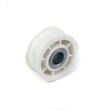
| Belt feels loose, squeals, or drum won’t tumble | Dryer idler pulley 279640 | Maintains belt tension |
| Long dry times, weak airflow, rattling | Dryer blower wheel WP697772 | Moves air through the drum and vent |
Why it matters
A dryer that overheats or dries slowly is usually an airflow problem first; fixing venting and lint buildup helps protect the heating circuit and prevents repeat failures of safety parts like the thermal fuse.
Last updated: February 2026