Owner’s manual
 Error Codes


Does my Kenmore top load washer have a filter?
Yes. Your Kenmore top load washer model 11020712990 uses a self-cleaning lint filter that traps lint during wash and deep rinse, then automatically flushes it down the drain. There is no removable filter to pull out and clean; routine maintenance focuses on hoses, pump flow, and proper loading (see the 11020712990 owner's manual).
What “self-cleaning filter” means on this washer
This design filters lint internally as water circulates and drains.
- Lint is captured during agitation and rinse water movement
- The washer flushes trapped lint out through the drain automatically
- You do not remove a screen or cartridge for cleaning
- If draining slows, the restriction is usually in the drain path, not a “filter”
If you are trying to fix poor draining or water left in the tub
On a direct-drive Kenmore/Whirlpool-style top load washer like 11020712990, the most common causes are a clogged drain hose, a blocked pump inlet, or a failing pump.
- Check the standpipe and household drain for slow flow
- Inspect the drain hose for kinks or clogs
- Look for coins, socks, or debris at the pump inlet
- If the pump is noisy, leaking, or not moving water, replace it
| Symptom | Most likely area to check | Common next step |
|---|---|---|
| Won’t drain at all | Pump or blockage at pump inlet | Inspect pump, replace if seized |
| Drains slowly | Drain hose or household drain | Clear restriction, verify hose routing |
| Drains but leaves water | Partial blockage or weak pump | Clean inlet, consider pump replacement |
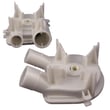
Helpful part for this issue: washer drain pump WP3363394.
Why it matters
Knowing this washer has a self-cleaning lint filter prevents unnecessary disassembly. When you see draining or spinning problems, you get faster results by checking the drain hose, pump, and lid switch circuit instead of searching for a removable filter.
Last updated: February 2026
How many cubic feet is a Kenmore model 11020712990 washer?
The Kenmore washer model 11020712990 is typically about 3.2 cu. ft. of capacity for this style of Kenmore 110-series top-load washer. For the exact rated capacity for your specific unit, we recommend confirming it in the 11020712990 owner's manual.
How to confirm capacity on your exact washer
Capacity is sometimes listed in the specifications section, or it can be inferred from the basket size and series.
- Check the specifications section in the 11020712990 owner's manual
- Look for the model and serial number plate (the manual explains where it is located)
- If you are comparing to a replacement washer, compare basket diameter and depth, not just “cu. ft.”
- Use the capacity to choose proper load size and cycle settings
Typical capacity range for similar Kenmore top-load washers
Most Kenmore direct-drive, agitator top-load washers from this era fall into a fairly narrow capacity range.
| Washer type (top load) | Typical capacity range |
|---|---|
| Standard agitator (Kenmore 110-series style) | 3.0 to 3.3 cu. ft. |
| Larger-capacity top load (later designs) | 3.5 to 4.5+ cu. ft. |
Why it matters
Knowing the cubic feet helps us match your laundry habits to the right load size. Overloading can reduce cleaning performance and increase wear on drive components such as the clutch and coupling.
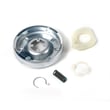
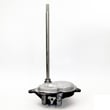
If your washer struggles to agitate or spin when loaded correctly, common wear items to check include the coupling 285753A and the clutch 285785.
Last updated: February 2026
How to identify a Kenmore washer model?
To identify your Kenmore washer model, we look for the model and serial number plate on the washer cabinet. On Kenmore model 11020712990, it’s typically on or near the top/back of the control panel area or on the main cabinet; the exact location is shown in the 11020712990 owner's manual.
Where to check on the washer
Check these common spots first (power off is fine, but not required just to read the label):
- On the back of the control panel
- Under the lid opening along the top rim of the cabinet
- On the side of the main cabinet near the bottom front
- On the rear panel of the washer cabinet
- If your washer is front-load style, behind the door or in the door jamb (common on other Kenmore designs)
What you need to write down
Record both numbers exactly as shown so we can match the right washer parts (like a lid switch, drain pump, or timer).
| Item on the label | What it’s used for | Example format |
|---|---|---|
| Model number | Identifies the exact washer design | 11020712990 |
| Serial number | Identifies production run details | Letters and numbers |
Why it matters
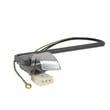
Kenmore washers can look similar across multiple series, but parts can differ by model. Using the correct model number helps us match the right replacement parts the first time, such as the washer lid switch WP3949238 or washer drain pump WP3363394.
Quick tips if the label is hard to read
- Wipe the plate gently with a damp cloth and mild soap; dry it fully
- Use a flashlight at an angle to make faint printing easier to see
- Take a close-up photo and zoom in to confirm each digit
Last updated: February 2026
How to reset a Kenmore model 11020712990 washer?
To reset a Kenmore model 11020712990 washer, we recommend doing a simple power reset: stop the cycle, unplug the washer for 1 minute, then plug it back in and restart the cycle using the timer knob. This clears many “stuck” control conditions.
Quick reset steps (most common)
- Push the cycle selector (timer) knob in to stop the washer.
- Unplug the power cord from the outlet.
- Wait 60 seconds.
- Plug the washer back in.
- Re-select your cycle and pull the timer knob out to start.
If the washer still will not start or resume
These checks fix the most common “no start” complaints on this style of Kenmore top-load washer.
- Confirm the outlet has power (try a lamp or small appliance).
- Make sure the lid is fully closed; a failed lid switch can prevent agitation or spin.
- Turn the timer knob slightly forward to a new position, then pull it out again.
- If the tub is full of water and it will not drain, check for a drain restriction or a failing pump.
Parts that commonly affect “won’t run” symptoms
| Symptom | What to check first | Common related part |
|---|---|---|
| Won’t agitate or spin | Lid closure and lid switch | Washer lid switch WP3949238 |
| Hums but won’t drain | Pump and drain path | Washer drain pump WP3363394 |
| Motor runs but washer won’t move | Drive coupling | Coupling 285753A |
Why it matters
A reset is a safe first step because it stops the washer using the control knob (as designed) and clears minor timer or cycle interruptions without replacing parts. If the problem repeats, the symptom pattern usually points to the lid switch, drain pump, or drive coupling.
Where to confirm the correct stop/restart method
The stop and restart procedure for this washer is described in the 11020712990 owner's manual.
Last updated: February 2026
What does F33 mean on a washer?
On Kenmore washer model 11020712990, an F33 code points to a drain system communication or drive issue: the control is not reliably sensing the drain pump circuit or pump operation. Start by checking the drain path and pump wiring, then test the pump if draining is weak or intermittent; see the 11020712990 owner's manual.
What to check first (fast, no parts)
- Unplug the washer for 1 minute, then restore power and try Drain/Spin.
- Confirm the drain hose is secured and not kinked or shoved too far into the standpipe.
- Make sure the standpipe is not clogged and the washer can push water out freely.
- Check for a loose plug connection at the drain pump and any pinched wiring.
- If the tub is full of water, bail out water first to prevent spills before inspecting components.
Likely causes and the most common fixes
| Symptom you see | Most likely cause | Typical fix |
|---|---|---|
| Hums but drains slowly or not at all | Pump jammed or failing | Clear obstruction; replace pump if needed |
| Drains sometimes, then errors | Loose wiring at pump or control | Reseat connectors; repair damaged harness |
| Won’t drain and won’t spin | Lid switch not proving lid closed | Test/replace lid switch |
| Drains fine but code returns | Intermittent electrical issue | Inspect wiring, connectors, and control inputs |
Parts that commonly solve drain-related fault codes
If your checks point to a failed component, these are the most common related parts for this model:
- Washer drain pump WP3363394 (moves water out during drain and spin)
- Washer lid switch WP3949238 (prevents spin and sometimes drain if the lid signal is missing)
Why it matters
When the washer cannot confirm proper draining, it may stop mid-cycle to prevent overflow, protect the drive system, and avoid spinning with excess water. Fixing the drain path and pump circuit usually restores normal wash and spin performance.
Last updated: February 2026
What is the average lifespan of a Kenmore washer?
A Kenmore washer typically lasts 10 to 15 years with normal household use and basic maintenance. For Kenmore model 11020712990, good loading habits, correct leveling, and prompt repair of wear items (like the lid switch or drain pump) help you reach the upper end of that range; see the 11020712990 owner's manual for care and operating guidance.
Typical lifespan and what affects it
Most washers land in the same general window, but these factors make the biggest difference:
- Loads per week (more cycles equals faster wear)
- Overloading (stresses the drive system, clutch, and gear case)
- Out-of-level installation (increases vibration and component fatigue)
- Water quality (sediment can shorten inlet valve and pump life)
- Maintenance and quick fixes (small issues left alone become major repairs)
What usually fails first on this style of Kenmore top-load washer
On many Kenmore 110-series top-load designs, these are common wear points over time:
- Lid switch: washer will not spin or drain with the lid “open” signal; consider the washer lid switch WP3949238
- Drain pump: slow or no drain, humming, or leaks; consider the washer drain pump WP3363394
- Motor coupling: agitation/spin stops but motor runs; consider the coupling 285753A
- Agitator dogs/cam: weak or one-direction agitation; consider the agitator dog 80040
Repair vs replace: a quick rule of thumb
Use age plus repair scope to decide.
| Washer age | Typical recommendation | Why it matters |
|---|---|---|
| 0 to 7 years | Repair is usually worthwhile | Most fixes are smaller, lower-cost parts |
| 8 to 12 years | Case-by-case | Balance repair cost vs. overall condition |
| 13 to 15+ years | Replace if major drive/tub work is needed | Big repairs can exceed the washer’s remaining value |
Why it matters
Knowing the expected lifespan helps you plan: if your 11020712990 is near 10 to 15 years old, budgeting for a drain, spin, or agitation repair (or replacement) prevents surprise downtime and water-leak risk.
Last updated: February 2026