 Installation guide
 Owner’s manual



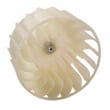

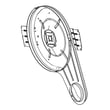
How much does it cost to replace a heating element in a Frigidaire dryer?
For a Frigidaire FFRE4120SW1 dryer, the heating-element repair cost is usually the price of the heater part plus labor. If you’re doing the repair yourself, you typically pay for the heater assembly only; professional service adds a trip charge and installation time.
Replacement cost varies most by whether you hire service and whether you replace related safety parts at the same time.
- DIY (parts only): commonly $150 to $350 for an electric dryer heater assembly
- Service labor: commonly $150 to $300 (varies by region and access)
- Total installed: commonly $300 to $650
- If the dryer “runs but won’t heat”: check power and airflow first; a restriction can overheat and damage heating components
| Scenario | What you pay for | Typical total |
|---|---|---|
| DIY replacement | Heater assembly only | $150 to $350 |
| Pro repair | Heater assembly + labor | $300 to $650 |
| Heat issue not caused by heater | Diagnosis + minor fix (venting, power) | $0 to $250 |
On the FFRE4120SW1, the heater is sold as an assembly. If you’re already opening the cabinet, we often see customers also address heat-control or airflow parts that can contribute to overheating.
- Dryer heater assembly 5304511375
- Dryer blower thermostat 5304511424
- Inspect and clean the lint path (lint screen housing and ducting) to prevent repeat failures
These checks match common “runs but won’t heat” causes for electric dryers.
- Confirm the dryer has full 240V power (a tripped breaker or blown fuse can let the motor run but stop heat)
- Clean the lint filter and verify strong airflow at the outside vent
- Make sure the exhaust duct is 4-inch rigid or semi-rigid metal and not crushed or excessively long
- If the dryer overheated, a safety limiter can trip and require replacement by a technician
For model-specific access steps and safety notes, follow the FFRE4120SW1 owner’s manual.
A clogged vent or weak airflow can make drying times longer and can overheat the heater circuit. Fixing airflow issues first helps the new heater last longer and keeps cycles efficient.
Last updated: February 2026
Can I look up Frigidaire parts by model number?
Yes. For your Frigidaire dryer model FFRE4120SW1, looking up parts by the full model number is the most reliable way to match the correct replacement part because it filters results to the exact version of your dryer.
The model and serial tag for this dryer is located inside the door opening. We recommend copying the model number exactly as shown (including all letters and numbers). See the FFRE4120SW1 owner’s manual for the product record and identification details.
- Open the dryer door and look around the door opening for the serial plate
- Write down the model number and serial number
- Use the model number to search parts diagrams and parts lists
- Match the part by name and number before ordering
When you search by model number, you can confirm compatibility and avoid ordering a similar-looking part that does not fit your configuration.
| What you have | What to search | What you get |
|---|---|---|
| Dryer model tag | FFRE4120SW1 | Parts specific to your dryer |
| Symptom (example: no heat) | Heater, thermostat, airflow parts | A focused list of likely matches |
| Broken physical part | Part name from diagram | Exact replacement options |
If you already know what failed, model-number lookup lets you go straight to the correct component.
- Heating problem: dryer heater assembly 5304511375
- Overheating or cycling heat issues: dryer blower thermostat 5304511424
- Door not latching: dryer door catch 5304511402
Dryers often have multiple revisions within a model family. Using FFRE4120SW1 ensures you are selecting parts designed for your Frigidaire dryer’s wiring, mounting points, and airflow path.
Last updated: February 2026
What does code e64 mean on a Frigidaire dryer?
On the Frigidaire FFRE4120SW1 dryer, error code E64 points to a heating circuit problem, most commonly the heating element not heating correctly. We focus first on airflow and power supply checks, then test the heater and related thermostats.
- Reset the dryer by unplugging it for 2 minutes, then restore power.
- Confirm the dryer is on a dedicated 30-amp circuit and the correct 240V supply (electric dryer requirement).
- Clean the lint screen and check the exhaust vent for restrictions.
- Avoid overloading; heavy loads can overheat the heater housing and trip safety devices.
- Run a timed dry cycle on high heat to see if heat returns consistently.
If airflow and power are good, the next step is checking the heating components used on FFRE4120SW1.
| What to check | What it does | When it fails, you may notice |
|---|---|---|
| Dryer heater assembly 5304511375 | Produces heat for drying | No heat, long dry times, E64 |
| Dryer blower thermostat 5304511424 | Helps regulate temperature and protect against overheating | Heat cuts in and out, overheating symptoms |
A dryer that cannot heat correctly often runs longer, wastes energy, and can overheat if airflow is restricted. The manual also warns to stop using the dryer if you hear unusual noises (squeaking, grinding, rubbing) because mechanical issues can lead to unsafe operation.
For model-specific diagnostics, wiring references, and safety guidance, use the FFRE4120SW1 owner’s manual. For electrical supply and installation requirements (cord type, receptacle, circuit), use the FFRE4120SW1 installation guide.
If your display shows other codes along with E64, use our Frigidaire dryer error codes reference to narrow the diagnosis.
Last updated: February 2026
Why is my Frigidaire dryer not drying clothes?
When a Frigidaire FFRE4120SW1 dryer runs but clothes stay damp, the most common cause is restricted airflow (lint screen, lint duct, or venting). We fix most “not drying” complaints by cleaning the entire exhaust path and correcting the vent material and length per the FFRE4120SW1 installation guide.
- Clean the lint screen before every load; a blocked or damaged screen can cause overheating and poor drying.
- Inspect the vent hose behind the dryer for kinks, crushing, or sagging.
- Confirm the dryer exhausts outdoors through an approved vent hood (not into a wall, ceiling, chimney, or concealed space).
- Make sure the vent is rigid or semi-rigid metal (not flexible plastic or foil).
- Check the outside hood flap for sticking, lint buildup, or a damper stuck open.
Your installation setup can create long dry times even when the heater works. The FFRE4120SW1 venting guidance includes key limits and safety rules such as keeping the vent clear, avoiding crushed flexible ducting, and not exceeding duct length and elbow limits. Use the vent length charts and requirements in the FFRE4120SW1 installation guide to match your duct diameter, run length, and number of elbows.
| Symptom | Most likely area | What to do |
|---|---|---|
| Takes 2+ cycles to dry | Exhaust duct or outside hood restricted | Clear lint, verify hood opens freely |
| Clothes feel hot but still damp | Poor airflow, high humidity | Improve venting, consider dehumidifying laundry area |
| Dryer shuts off early or seems inconsistent | Overheating from restriction | Clean lint path, correct vent material and routing |
If venting is correct and drying is still weak, we move to airflow and heat control components.
- Dryer lint duct 5304511409 can clog internally and restrict airflow.
- Dryer blower thermostat 5304511424 can trip or read incorrectly and affect heat cycling.
- Dryer heater assembly 5304511375 can fail and reduce or eliminate heat output.
Restricted venting does more than slow drying; it can overheat the dryer and create a lint accumulation hazard. Correct airflow protects the heater, thermostats, and fabrics while restoring normal cycle times.
Last updated: February 2026





