Owner’s manual
 View engine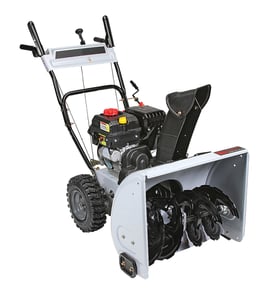




What is the typical lifespan of a gas snowblower?
A gas snowblower typically lasts 10 to 20 years with normal residential use and consistent maintenance. For your Craftsman 536886520 snow blower, routine oil changes, correct fuel handling, and proper off-season storage (as outlined in the owner's manual) are the biggest factors in reaching the high end of that range.
A snowblower’s service life is mostly driven by engine care, drive system wear (belts, friction disc), and corrosion control.
- 10 to 20 years is the normal lifespan range for a gas snowblower
- Shorter life usually comes from stale fuel, low/dirty oil, or storage with fuel left in the carburetor
- Longer life comes from seasonal maintenance, lubrication, and replacing wear items before they damage other parts
From the manual specs and maintenance guidance, these habits matter most:
- Use the correct oil type for temperature (SAE 5W30 is commonly used; synthetic 0W30 is recommended for 0°F and below)
- Keep oil at the correct capacity (this model lists 26 oz. / 0.77 L)
- Keep fresh fuel and store fuel safely; do not overfill the tank
- For storage over 30 days, run the engine until the tank is empty and drain the carburetor bowl as directed
- Keep the ignition key secure; the engine will not run without it
| Item | What’s typical | Why it matters |
|---|---|---|
| Lifespan | 10 to 20 years | Most units fail early from fuel and oil neglect, not “age” alone |
| Storage prep | Drain or treat fuel; empty carburetor for 30+ days | Prevents varnish that plugs jets and causes hard starting |
| Cold-weather oil | 5W30; synthetic 0W30 at 0°F and below | Easier starting and better lubrication in extreme cold |
These are the most common “end of life” signals we see on gas snowblowers:
- Repeated hard-starting even after fresh fuel and a tune-up
- Drive system slipping (belt or friction drive wear) plus other major wear
- Severe rust in the auger housing or frame
- Engine smoking, knocking, or losing power under load
A snowblower that is maintained to spec clears snow faster, starts more reliably in cold weather, and avoids expensive secondary damage (for example, running with insufficient oil can shorten engine life quickly). Following the maintenance and storage steps in the owner's manual is the simplest way to get the full expected lifespan.
Last updated: February 2026
How do I tell what year my snowblower is?
For your Craftsman snow blower model 536886520, the most reliable way to determine the year is to use the unit serial number from the identification label on the machine and decode it using the format shown in the 536886520 owner's manual. The model number identifies the product family; the serial number is what ties to a build date.
Most Craftsman snow blowers place the identification label on the frame where it stays readable during use.
Check these common spots:
- On the rear frame between the handles
- On the side of the frame near the engine
- Near the belt cover area
- On the auger housing frame rail
Your snow blower has two identifying numbers (model and serial). Use the serial number to determine the manufacturing year.
Use this quick guide:
- Write down the full serial number exactly as shown
- Look for a letter or digit that represents the year (many Craftsman formats use a single character for year)
- Use the manual’s identification section to match the serial format to a year
- If the unit label is damaged, use the engine model/type/code (often stamped on the engine shroud) to estimate the engine’s build date, which is usually close to the snow blower’s build year
Engine date codes vary by engine maker, but they are still useful when the snow blower label is missing.
| What you have | What it tells you | Best use |
|---|---|---|
| Unit model number (536886520) | Which parts diagram and manual apply | Parts lookup and documentation |
| Unit serial number | Manufacturing year (and sometimes month) | Best way to date the snow blower |
| Engine code/model | Engine build date estimate | Backup when unit label is unreadable |
Knowing the year helps us match the correct parts list and diagrams for wear items like belts, shear bolts, skid shoes, and scraper blade hardware; it also prevents ordering a part that looks similar but mounts differently.
Last updated: February 2026
Is it cheaper to repair or replace a snowblower?
For a Craftsman snow blower model 536886520, it’s cheaper to repair when the fix is a normal wear item (belt, spark plug, shear pins) and the total cost stays under about half the price of a comparable new snowblower. Replacement makes more sense when the engine or drive system needs major work or the machine has repeated breakdowns.
- Repair when the estimate is under 50% of a comparable new unit and the problem is straightforward.
- Replace when the estimate is 50% or more, or when multiple major systems are failing.
- If you are unsure, compare the repair estimate to the cost of a similar 2‑stage gas snowblower with similar clearing width and power.
Common, lower-cost repairs on gas snowblowers include:
- Spark plug replacement or ignition tune-up
- Belt replacement or adjustment
- Shear bolt replacement (auger jam protection)
- Cable adjustments (drive or auger engagement)
- Oil change and basic maintenance
For maintenance specs on this model (oil type/capacity, spark plug type and gap, tire pressure), use the owner's manual.
These issues often drive costs up enough that replacement is the better value:
- Low compression, heavy smoking, or internal engine damage
- Gear case or auger drive failures that require extensive teardown
- Drive system problems that keep returning (friction disc, hex shaft wear, multiple belts and pulleys)
- Significant rust-through or structural damage that affects safe operation
| Situation | Usually cheaper choice | Why |
|---|---|---|
| Won’t start after storage | Repair | Often fuel, spark plug, or carburetor cleaning |
| Auger won’t turn but engine runs | Repair | Commonly belt, shear bolts, or cable adjustment |
| Drive won’t move consistently | Depends | Could be adjustment, or could be major drive wear |
| Engine runs poorly even after tune-up | Replace | Internal engine wear can exceed the machine’s value |
A well-maintained snowblower can deliver many more seasons of service, but once you start stacking major repairs, you can end up paying for downtime and repeat labor instead of putting that money toward a more reliable machine.
Last updated: February 2026
What is the best rated gas snow blower?
The “best rated” gas snow blower is the one that matches your snowfall depth, driveway size, and traction needs. For heavy, frequent snow, most owners rate two-stage machines highest; your Craftsman 536886520 is a dual-stage design built for strong throwing performance when properly adjusted and maintained (see the owner's manual).
- Snow depth and type: light, powdery snow needs less machine than wet, packed snow.
- Area size: larger driveways benefit from wider clearing width and multiple forward speeds.
- Stage type: single-stage for lighter snow; two-stage for deeper snow and end-of-driveway plow berms.
- Traction: tires and tread matter; keep tire pressure set correctly.
- Serviceability: easy access to belts, skid shoes, scraper bar, and shear pins saves time.
Your model is an 11 HP, 31-inch dual-stage snow blower. Key specs and settings called out in the manual include:
| Item | Spec / setting |
|---|---|
| Engine output | 11 HP |
| Clearing width | 31 in. |
| Fuel capacity | 4 quarts (4 L) |
| Oil capacity | 26 oz (0.77 L), 5W30 recommended |
| Spark plug | Champion RJ19LM, gap 0.030 in. |
| Tire pressure | 14 PSI |
A snow blower earns high ratings when it:
- Throws snow consistently without clogging.
- Maintains forward drive without excessive wheel slip.
- Scrapes cleanly without digging in (skid shoe height set correctly).
- Starts reliably in cold weather (correct oil viscosity and good spark).
If you buy “too small,” you fight clogging and slow progress; if you buy “too big,” you pay more and maneuver less easily. Matching stage type, width, and traction to your conditions is what produces the best owner ratings.
- How to check a snowblower spark plug video
- How to change snowblower oil video
- How to make your snowblower last longer
Last updated: February 2026