Installation guide
 Owner’s manual
 Error Codes

How can I tell what KitchenAid model I have?
Your KitchenAid dishwasher model number is printed on the rating label inside the tub. On KitchenAid model KDFE104DSS3, the label is located near the door opening on the right-hand or left-hand side of the dishwasher interior; match that model number to your parts list and manual.
Where to find the model and serial label
Look for a sticker or metal tag in one of these common spots:
- Along the tub frame near the door opening (right side or left side)
- On the inner edge of the door (visible when the door is open)
- Just inside the tub opening, near the front corners
- Near the latch area on the tub rim
For the exact label location and examples of what the tag looks like, use the owner's manual.
What to write down (and why)
Record the information exactly as shown so we can match the correct KitchenAid parts and diagrams.
- Model number (example: KDFE104DSS3)
- Serial number (helps identify production range)
- Any suffix letters/numbers after the model (do not omit them)
- The finish code if shown (helps with console and panel matches)
Why it matters
Dishwasher parts like a door seal, drain pump, or heating element can vary by production run. Using the exact model number helps ensure the replacement part fits and the repair instructions match your dishwasher.
Quick check: model number vs. serial number
| Item | What it tells us | Used for |
|---|---|---|
| Model number | The exact dishwasher design | Correct parts list and diagrams |
| Serial number | When your unit was built | Version changes and service identification |
If the label is hard to read
- Wipe the label gently with a damp cloth and mild soap; dry it
- Use a flashlight at an angle to reduce glare
- Take a close-up photo and zoom in
- If the label is damaged, check your purchase paperwork for the model number
Last updated: February 2026
What is the most common problem with a KitchenAid dishwasher?
Drain and fill issues are the most common problems we see on KitchenAid dishwashers like model KDFE104DSS3; the dishwasher may not drain fully, may not fill correctly, or may stop mid-cycle when the unit senses a water or suds condition. Use the KDFE104DSS3 owner's manual troubleshooting checks first.
Quick checks we recommend first
- Cancel the cycle and run a drain; listen for the drain pump running.
- Check the tub for standing water and clear any visible debris.
- Make sure the water supply valve to the dishwasher is fully open.
- Press the overfill protection float down and confirm it moves freely.
- Use only automatic dishwasher detergent; remove any soap or hand-wash detergent.
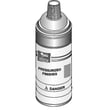
- Confirm the rinse aid cap is installed and not leaking.
Most common causes and what they look like
| Symptom | Most likely cause | What to do next |
|---|---|---|
| Water left in bottom | Clog in drain path or weak drain pump | Clear blockage; if pump is noisy or weak, replace the dishwasher drain pump WPW10348269. |
| Won’t fill or stops early | Water supply off, float stuck, or inlet valve issue | Verify supply is on and float moves; if still not filling, test/replace the dishwasher water inlet valve W11175771. |
| Suds/foam, poor operation | Wrong detergent or too much detergent | Switch to correct detergent, reduce amount, and run rinse cycles to clear suds. |
Why it matters
Drain, fill, and suds problems can trigger safety sensing in the dishwasher, which can prevent normal washing and drying. The manual specifically calls out checking the float movement, confirming the water supply is on (especially after installation), and avoiding suds from incorrect detergents or a missing rinse aid cap.
When a part replacement is the right move
Replace a component when the basic checks pass but the symptom repeats:
- Drain pump: motor hums but doesn’t move water, drains very slowly, or is unusually loud.
- Water inlet valve: dishwasher runs but never gets enough water to wash properly.
Last updated: February 2026
What is the average lifespan of a KitchenAid dishwasher?
A KitchenAid dishwasher typically lasts 10 years on average with normal household use. For your KitchenAid KDFE104DSS3, consistent cleaning, correct detergent use, and proper water temperature help you reach that lifespan and reduce wear on the pump, seals, and racks (see the KDFE104DSS3 owner's manual).
Typical lifespan and what to expect
Most dishwashers fall into a predictable range based on usage and maintenance.
- Average lifespan: 10 years
- Common range: 8 to 12 years
- Heavy use (multiple loads daily): closer to 7 to 9 years
- Light use (few loads weekly): often 11 to 13 years
| Usage pattern | What it usually means for lifespan | Biggest wear areas |
|---|---|---|
| 1 load/day | Around the average | Circulation system, door seals |
| 2+ loads/day | Shorter lifespan | Pump/motor, heater, racks |
| 3 to 5 loads/week | Longer lifespan | Racks, inlet valve |
What extends the life of a KDFE104DSS3
These habits reduce strain on the circulation pump, drain system, and heating element.
- Keep incoming water at 120°F (49°C).
- Use fresh automatic dishwasher detergent (never hand soap or laundry detergent).
- Use rinse aid for better drying and to reduce hard-water buildup.
- Scrape food off dishes before loading (skip heavy pre-rinsing).
- Clean and maintain the dishwasher regularly (filters, spray arms, tub).
Signs your dishwasher is nearing end-of-life
A single symptom does not always mean replacement, but repeated issues usually do.
- Frequent drain problems or standing water (often tied to the drain path or pump)
- Persistent leaks around the door (seal wear)
- Poor cleaning even after maintenance (spray or circulation issues)
- Long cycles with weak results (heating or sensing issues)
- Rack wheels or adjusters breaking repeatedly
Why it matters
Knowing the typical lifespan helps you decide whether to repair or replace. If your KDFE104DSS3 is near 10 years old, investing in maintenance and a few common wear parts can be cost-effective, but repeated pump, control, or leak issues can add up quickly.
Last updated: February 2026