Error Codes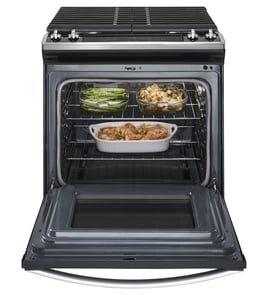




How do you reset a Whirlpool gas oven?
To reset a Whirlpool gas oven like model WFG505M0BB1, we restore power to clear the control’s temporary fault state: turn the oven off, cut power at the breaker for 1 minute, then turn power back on and set the clock. If the problem returns, a failed ignition or sensor circuit is usually involved.
- Turn all oven functions OFF.
- Switch the range circuit breaker OFF (or unplug the range if accessible).
- Wait 60 seconds.
- Restore power.
- Set the clock, then test Bake for 5 to 10 minutes.
A reset only clears the control; it does not fix a part that is failing. On this Whirlpool gas range, these are the most common causes when Bake will not start or keeps erroring:
- Weak or failed oven igniter (glows but does not light, or takes too long to light)
- Temperature sensor out of range
- Loose, burned, or broken wiring connections
- Electronic control problem
| Symptom | Most likely check first | Why |
|---|---|---|
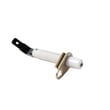
| No bake ignition, long preheat | Igniter, hot surface W11176454 | The igniter must draw enough current to open the gas valve reliably |
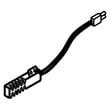
| Oven temperature inaccurate, errors | Range oven temperature sensor WPW10181986 | A bad sensor can prevent normal heat control |
| Random resets, dead display, recurring faults | Control board connections | Power interruptions and heat can stress connectors and relays |
Resetting is a fast way to clear a one-time control glitch after a power flicker. If the same symptom comes back, troubleshooting the igniter, sensor, and wiring prevents repeated no-heat situations and helps avoid replacing the wrong part.
Last updated: February 2026
What is the life expectancy of a Whirlpool gas range?
A Whirlpool gas range like model WFG505M0BB1 typically lasts about 15 years with normal household use and basic maintenance. Keeping burners clean, fixing ignition issues early, and avoiding overheating the oven cavity are the biggest factors that help you reach that lifespan.
Most gas ranges fail early due to heat-related wear, ignition problems, or control issues. These factors have the biggest impact:
- Cooking frequency (daily high-heat use shortens life)
- Keeping burner ports and caps clean for proper flame
- Oven door sealing (heat loss makes components work harder)
- Promptly addressing weak ignition or delayed lighting
- Stable electrical supply for the electronic control and igniters
Use this as a simple routine to extend the life of your Whirlpool range:
- Wipe spills quickly to prevent corrosion and clogged burner ports
- Keep the oven door closing tightly; replace a worn seal when heat leaks
- If bake takes longer than normal, check for delayed ignition symptoms
- Avoid lining the oven bottom with foil (it can trap heat and damage surfaces)
- Level the range so cookware heats evenly and the door aligns correctly
These are the most common symptoms we see as a gas range ages, along with parts that often solve them:
| Symptom | What it often points to | Example part for WFG505M0BB1 |
|---|---|---|
| Oven won’t heat or takes too long to ignite | Weak igniter | Igniter, hot surface W11176454 |
| Oven temperature swings or bakes unevenly | Temperature sensor drifting | Range oven temperature sensor WPW10181986 |
| Excess heat escaping around oven door | Worn door seal | Oven seal WPW10535778 |
A gas range that is heating efficiently puts less stress on the oven burner, igniter, and electronic control. That reduces nuisance failures, improves baking results, and helps your Whirlpool range reach its full expected service life.
Last updated: February 2026
What size gas line for Whirlpool stove?
For the Whirlpool WFG505M0BB1 gas range, we use a 3/4-inch rigid gas supply pipe to the range location for best flow. On LP (propane) systems, 1/2-inch minimum piping is commonly used; long runs may still need larger pipe to prevent low gas pressure.
- Natural gas: 3/4-inch rigid pipe to the range location
- LP (propane): 1/2-inch minimum (increase size on long runs)
- Use an approved flexible gas connector sized for ranges (commonly 1/2-inch ID) between the shutoff valve and range
- Install a manual shutoff valve in an accessible location
- Verify the range is set up for the correct fuel (natural gas vs LP conversion)
| Situation | What we recommend | Why |
|---|---|---|
| Short run, typical home install | 3/4-inch rigid pipe (natural gas) | Helps prevent weak burner flames and slow oven preheat |
| Longer run or multiple appliances on same branch | Upsize the rigid pipe (often 3/4-inch or larger) | Reduces pressure drop under load |
| LP system | 1/2-inch minimum, upsized as needed | LP pressure and regulator setup can be sensitive to restriction |
- Turn off gas at the shutoff valve before any work
- Use pipe joint compound or gas-rated thread sealant where required (not on flare fittings)
- Leak test every connection with a non-corrosive leak-detection solution
- Confirm the range is level; use range leveling leg WPW10058460 if a leg is missing or damaged
Correct gas line sizing helps your Whirlpool range maintain steady gas pressure. That means more consistent surface burner flames, more reliable oven ignition, and fewer heating complaints that look like igniter or valve problems.
Last updated: February 2026
Why is my Whirlpool gas oven not turning on?
For Whirlpool model WFG505M0BB1, the most common reason the oven will not turn on is a weak or failed oven igniter that cannot draw enough current to open the gas safety valve. Power supply issues, a failed temperature sensor, or an electronic control problem can also prevent ignition.
- Confirm the range has power (clock/display on); reset the breaker if needed.
- Set BAKE and listen: you should typically hear a faint “click” and then ignition.
- Look for the igniter glow (many gas ovens use a hot-surface igniter that glows bright).
- Smell for gas: if you smell gas and it is not igniting, stop and ventilate the area.
- If the oven lights sometimes but not always, suspect a weakening igniter.
| Symptom | Most likely cause | What we do next |
|---|---|---|
| No glow from igniter | Failed igniter or no power to igniter | Inspect wiring; test igniter circuit; replace igniter if open |
| Igniter glows dim/orange, no flame | Weak igniter (common) | Replace the igniter |
| Flame starts then shuts off | Sensor/control issue or unstable ignition | Check sensor resistance and connections |
| Oven heats inaccurately or won’t regulate | Temperature sensor out of range | Test/replace sensor |
- Igniter, hot surface W11176454: the primary ignition component for the bake burner.
- Range oven temperature sensor WPW10181986: tells the control board the oven temperature.
- Control, electronic (black) W11126814: can fail and stop bake ignition commands.
- Disconnect power before accessing wiring or removing panels.
- Use a multimeter to check continuity on the igniter and inspect harness connections.
- If the igniter glows but the burner never lights, replacement is typically the fastest, most reliable fix.
A weak igniter can prevent the gas valve from opening, so the oven never lights even though the control is calling for heat. Fixing ignition restores normal bake performance and helps prevent repeated failed-start cycles.
Last updated: February 2026
Why is my gas oven not getting gas?
If your Whirlpool WFG505M0BB1 gas range oven isn’t getting gas, the most common cause is a weak oven igniter that cannot draw enough current to open the gas safety valve. We start diagnosis by checking the igniter glow and burner ignition timing.
- Confirm the surface burners work; this helps rule out a whole-house gas supply issue.
- Set the oven to Bake and watch for igniter glow through the broiler/bottom access.
- Listen for a soft “click” from the gas valve and a steady “whoosh” of ignition.
- If the igniter glows but the burner never lights, suspect a weak igniter.
- If there is no glow at all, suspect power, wiring, or the igniter itself.
In many gas ovens, the hot surface igniter must get hot enough to pull the correct amperage; only then will the safety valve open and allow gas to flow to the oven burner.
| Symptom | Most likely cause | What to do next |
|---|---|---|
| Igniter glows dim/orange, burner never lights | Weak igniter | Replace igniter, hot surface W11176454 |
| Igniter does not glow at all | Open igniter or wiring issue | Inspect harness, then test igniter continuity |
| Burner lights but temperature is erratic | Sensor or control issue | Test range oven temperature sensor WPW10181986 |
| Strong gas smell with failed ignition | Unsafe ignition condition | Stop, shut off gas, and have service performed |
- Disconnect power before resistance checks.
- Use a meter for continuity/resistance checks on the igniter and sensor.
- Inspect for burned connectors or damaged wires; use how to repair broken or damaged wires video if you find a compromised lead.
A weak igniter can prevent the safety valve from opening, so the oven never gets gas even though the control is calling for heat. Fixing the root cause restores reliable ignition and proper baking performance.
Last updated: February 2026