Owner’s manual

What is the standard size table saw?
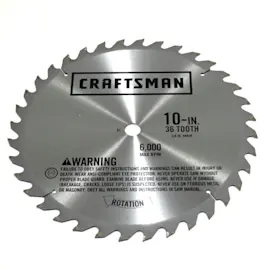
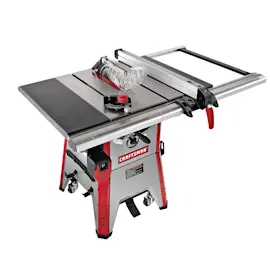
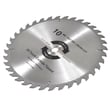
Most “standard size” table saws are defined by blade diameter; the most common size is a 10-inch saw. Your Craftsman table saw model 315218061 is a 10-inch (254 mm) maximum blade capacity saw, so it fits the standard category; see the owner's manual for blade and setup details.
What “size” usually means for a table saw
Table saw size is typically described by blade diameter and arbor (blade hole) size, not the overall footprint.
- Blade diameter: most commonly 10 inches
- Arbor size: most commonly 5/8 inch
- Cut capacity: varies by fence, table width, and extension rails
- Stand/bench setup: affects overall working height and stability
- Table extensions/outfeed support: increase support for wide or long stock
Common table saw sizes at a glance
| Saw type (common) | Typical blade diameter | Typical arbor size | Typical use |
|---|---|---|---|
| Benchtop/jobsite | 8-1/4 in. to 10 in. | 5/8 in. | Portability, general carpentry |
| Contractor/hybrid | 10 in. | 5/8 in. | Shop use, better stability |
| Cabinet | 10 in. to 12 in. | 5/8 in. (varies) | Heavy-duty, high precision |
Model-specific notes for Craftsman 315218061
Our manual for this saw calls out a maximum blade capacity of 10 inches (254 mm) and emphasizes using the correct blade and correct blade hole size.
- Use only blades with the correct center hole (arbor) size
- Keep the throat plate installed and secured before cutting
- Make sure adjustments are secure before starting a cut
- Mount the saw securely to a bench or approved leg stand for safe operation
Why it matters
Choosing the correct blade diameter and arbor size prevents poor cuts, vibration, and unsafe operation. It also helps you match accessories like throat plates, blade wrenches, and guards to the saw’s design.
If you are seeing accuracy issues after installing a blade, use our guide on table saw bad angle cuts.
Last updated: February 2026
What not to do with a table saw?
On the Craftsman 315218061 table saw, do not cut freehand, reach over or around the blade, stand directly in line with the blade, or try to free a stalled blade while the saw is powered. These actions greatly increase kickback and contact risk; follow the owner's manual safety rules every time.
Top “don’ts” that prevent kickback and blade contact
- Do not perform any operation freehand (always use the rip fence or miter fence).
- Do not reach over, across, around, or behind the blade.
- Do not stand directly in line with the blade or the cut path.
- Do not use the rip fence as a cutoff gauge when crosscutting; move the rip fence out of the way.
- Do not rip twisted, warped, or bowed lumber, or stock without a straight edge to guide along the fence.
- Do not release the workpiece until it is pushed completely past the blade (use a push stick when required).
Before you cut: quick safety setup checklist
- Confirm the saw is securely mounted to a workbench or approved leg stand (never operate on the floor).
- Verify the rip fence is parallel to the blade.
- Make sure the blade is sharp and appropriate for the cut.
- Keep the blade guard and riving knife/spreader/splitter installed and working for all through-cuts.
- Provide outfeed and side support for long or wide workpieces.
What to do if the blade stalls
Turn the saw OFF and disconnect power before you attempt to free the blade or move the workpiece. Wait for the blade to stop completely before reaching near the throat plate or blade area.
When guards can come off (and when they must go back on)
Some non-through cuts (grooves, rabbets, dadoes) are performed without the blade guard assembly installed. Reinstall the guard immediately after completing that operation.
| Task | Safe practice | What not to do |
|---|---|---|
| Crosscutting | Use miter fence; keep rip fence clear | Use rip fence as a cutoff gauge |
| Ripping | Use rip fence; push stick past blade | Rip warped/twisted stock |
| Clearing a jam | Power off; unplug first | Free a stalled blade while powered |
Why it matters
Most serious table saw incidents come from kickback (work thrown back toward you) or hands entering the blade path. Using the fence correctly, maintaining guards, and keeping proper body position reduces both risks.
Last updated: February 2026
Does Craftsman make a good table saw?
Craftsman table saws, including the Craftsman 315218061 10-inch table saw, are a solid choice for DIYers who want good cutting power and practical features at a reasonable cost; for furniture-grade precision or daily jobsite use, most owners plan on careful setup and occasional upgrades to improve accuracy.
What “good” means for a table saw
A table saw can be “good” in different ways depending on how you use it:
- DIY and hobby projects: Great value if you tune the fence, blade, and miter setup.
- Home remodeling and general carpentry: Strong performance for ripping and crosscuts with the right blade.
- Fine woodworking: You typically need tighter tolerances, a very consistent fence, and repeatable angle settings.
- Pro, daily use: Durability and precision matter more than price.
For model 315218061, we recommend using the setup, adjustment, and safety procedures in the owner's manual to get the best results.
What we see most often with Craftsman table saw ownership
These are the most common “pros and cons” that determine whether a Craftsman saw feels like a good buy.
Strengths
- Good capability for basic rip cuts and crosscuts
- Widely supported with replacement parts diagrams and service information
- Works well when paired with the correct blade for the cut (rip vs. crosscut)
Trade-offs
- Accuracy depends heavily on initial alignment and ongoing maintenance
- Some users want a more rigid fence or improved work support for repeatable precision
- Performance drops quickly with a dull or wrong blade (especially in rip cuts)
Quick decision guide
| If you mostly do... | Craftsman table saw is a good fit when... | Consider something else when... |
|---|---|---|
| DIY projects | You want value and can spend time tuning | You want perfect cuts with minimal setup |
| Remodeling | You use the right blade and support the work | You need production-level speed and repeatability |
| Fine woodworking | You build jigs/sleds and verify alignment often | You need premium fence accuracy out of the box |
Why it matters
Most “bad reviews” come from setup, blade choice, or alignment, not raw motor power. For example, the manual’s troubleshooting guidance notes that if the motor labors in a rip cut, a common fix is switching to a proper rip blade (rip blades typically have fewer teeth). Using the right blade and keeping the saw tuned is what makes a Craftsman table saw feel “good” in real use.
Last updated: February 2026
Where is the reset button on a Craftsman table saw?
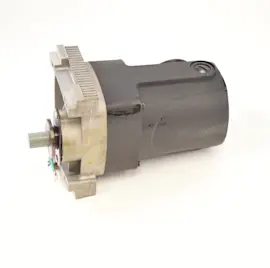
On the Craftsman table saw model 315218061, the “reset” is typically part of the motor’s overload protection, not a big button on the front of the saw. On many versions, it’s accessed at the motor end under small caps or covers; use the 315218061 operator's manual to confirm the exact location and procedure for your saw.
What to check on model 315218061
- Unplug the saw before touching the motor housing or any covers.
- Look at the end of the motor and around the motor housing for small caps, plugs, or a reset access point.
- If your saw has two plastic caps on the motor end, remove them and look for a spring-loaded reset mechanism.
- Let the motor cool 10 to 20 minutes if it tripped from overheating.
- After resetting, verify the blade spins freely by hand (with power disconnected).
Common reasons the overload trips
Overload protection trips to prevent motor damage when current draw is too high.
| Cause | What you’ll notice | What to do |
|---|---|---|
| Dull/dirty blade | Burning, slow feed, rough cuts | Clean or replace blade; verify correct blade type |
| Binding or misalignment | Wood pinches, kickback tendency | Check fence and blade alignment; confirm bevel and height moves smoothly |
| Extension cord too light/long | Weak start, slow blade speed | Use a heavier-gauge, shorter cord or plug directly into outlet |
| Motor ventilation blocked | Hot motor housing | Clear dust buildup; empty dust bag if equipped |
Why it matters
Resetting the overload without fixing the underlying load (binding, dull blade, poor power supply) can cause repeated trips and shorten motor life. If the blade speed seems low even after a reset, use table saw blade spins too slow to narrow down the cause.
Last updated: February 2026
How much is a craftsman 10 table saw?
The price of a Craftsman 10-inch table saw varies by the exact model, condition, and whether key accessories are included. For Craftsman model 315218061, use the included parts list and setup specs in the 315218061 owner's manual to confirm completeness, then price it based on condition and included items.
What drives the price most
- Completeness: rip fence, miter gauge, blade guard, throat plate, push stick, stand
- Mechanical condition: smooth blade height and bevel adjustments, no binding
- Cut accuracy: fence locks securely, blade sets to 90° and 45° consistently
- Motor performance: starts quickly, holds speed under load, no overheating smell
- Safety condition: intact guard system, switch works correctly, cord not damaged
Quick checklist for model 315218061 (what to verify)
The manual for model 315218061 includes diagrams and a parts list that help you confirm what should be present (for example, rip fence assembly and rails). Use this checklist when buying or selling:
| Item to verify | What you want to see | Why it affects price |
|---|---|---|
| Rip fence and rails | Fence clamps firmly and slides smoothly | Missing or slipping fences reduce accuracy and value |
| Height and bevel controls | Handwheels move the blade smoothly | Binding adjustments often mean repairs or heavy wear |
| Blade and guarding | Correct blade type installed; guard parts present | Safety and performance depend on these parts |
Why it matters
Table saw value is tied to safe operation and repeatable cuts. A saw that cannot adjust blade height, hold alignment, or maintain blade speed costs more to correct than the savings from a low purchase price.
Helpful DIY references
- If you are evaluating cut quality issues, see table saw bad cuts.
- If you need to swap blades during inspection or setup, follow how to replace a table saw blade.
Last updated: February 2026