 Installation guide
 Owner’s manual


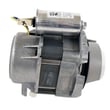
How can I force my dishwasher to drain?
On Kenmore dishwasher model 66517364301, you can force a drain by pressing CANCEL with the door closed; the dishwasher runs an automatic drain for about 2 minutes (if needed). Let it finish draining completely before starting a new cycle; see the 66517364301 owner's manual.
Quick steps to force a drain
- Close the door fully so the unit can drain.
- Press CANCEL once; the Cancel light should turn on.
- Wait about 2 minutes for the drain portion to complete.
- If you need to stop draining, press CANCEL again.
- Before restarting, reselect your cycle and press START.
If it will not drain (common causes)
A forced drain only works if water can flow out through the drain path. Check these items:
- Sink/disposer connection: make sure the drain connection is open and not blocked.
- Drain hose routing: confirm the hose is not kinked or crushed.
- High loop height: the drain connection should be at least 20 in. (50.8 cm) above the floor and connect before the drain trap.
- Air gap (if installed): clean it if you see slow draining or backups.
- Drain pump area: look for debris that could jam the impeller.
Drain setup requirements (installation basics)
Use this as a quick reference for proper drainage on this undercounter dishwasher.
| Item to verify | What “correct” looks like | What happens if it is wrong |
|---|---|---|
| Door position | Door closed and latched | Unit may not drain at all |
| Drain time | About 2 minutes | Standing water remains |
| Drain hose connection | Before the drain trap, with a proper clamp | Slow drain, backflow, leaks |
| Hose height | At least 20 in. above the floor | Backflow, odors, poor draining |
Why it matters
Forcing a drain clears standing water so you can restart a cycle safely and helps prevent odors and rewash issues. If draining is still slow after these checks, the problem is usually a restriction in the drain hose or a blockage at the pump.
Last updated: January 2026
Does a dishwasher drain need a p-trap?
A Kenmore dishwasher model 66517364301 does not need its own separate P-trap; it must drain into the home’s plumbing before the sink drain trap (P-trap) and use a proper high drain loop (or an air gap when required). See the 66517364301 installation guide for the correct routing height and connection point.
What the installation requirements mean
Your dishwasher drain hose should be routed and connected so dirty water cannot siphon back into the tub.
Key requirements called out for this model’s installation:
- Connect the drain hose to a waste tee or disposer inlet above the house drain trap.
- Maintain a high drain loop at least 20 inches (50.8 cm) above the floor/subfloor.
- Use an air gap if the drain hose connects to house plumbing lower than 20 inches above the floor/subfloor.
- Use a drain hose that fits the dishwasher drain connector; if replacing, keep total length within typical limits (often up to 12 feet).
Quick guidance: dishwasher drain vs. P-trap
| Item | Typical location | Purpose |
|---|---|---|
| Dishwasher drain hose | From dishwasher to disposer inlet or waste tee | Moves wastewater out of the dishwasher |
| High drain loop / air gap | Up high under the counter (loop) or at sink deck (air gap) | Prevents backflow/siphoning |
| Sink P-trap (house trap) | Under the sink | Blocks sewer gases from entering the home |
Common installation mistakes to avoid
- Connecting the dishwasher drain after the sink P-trap.
- Skipping the high loop and letting the hose sag low behind the dishwasher.
- Installing the hose so it kinks or gets crushed when the dishwasher is pushed back.
- Forgetting to remove the disposer knockout plug (when connecting to a garbage disposer).
Why it matters
A correctly routed drain (high loop or air gap, and connection before the trap) helps prevent odors, dirty water backflow, and poor draining performance. It also helps protect the pump and wash system from repeated contamination.
Last updated: January 2026
How do I tell if my dishwasher pump is bad?
A bad pump on your Kenmore 66517364301 dishwasher usually shows up as standing water in the tub, weak wash action, or unusual humming or grinding noises. Before replacing parts, we recommend checking for clogs at the filter area and under the overfill float; both can mimic pump failure.
Quick signs the pump is failing
- Water remains in the bottom after the cycle ends (poor draining)
- Dishes come out dirty because spray pressure is weak (circulation issue)
- You hear a loud grinding, rattling, or repeated buzzing/humming
- The dishwasher fills but does not wash or does not drain
- Performance changes suddenly after washing items with labels (labels can clog the pump)
What to check first (fast, no-parts steps)
- Power off the dishwasher at the breaker.
- Pull the lower rack and check the sump area for debris (glass, food, label fragments).
- Lift and move the overfill protection float (front right of the tub); it must move freely.
- If the unit is not draining, inspect the drain path for kinks or blockage; the drain hose routing matters.
- If you have a multimeter, test the pump circuit and related safety devices using the wiring diagram and procedures in the 66517364301 owner’s manual.
Common “pump problem” symptoms and likely causes
| Symptom | More likely cause | What to do next |
|---|---|---|
| Standing water, no drain | Drain hose restriction or drain pump issue | Check hose routing; inspect for clogs; consider replacing the drain hose if damaged |
| Humming but little or no water movement | Jammed impeller or debris in pump area | Clear debris; re-test cycle |
| Poor cleaning, weak spray | Circulation pump issue or clog from labels | Check for label debris; inspect chopper/sump area |
| Intermittent operation | Electrical issue (wiring, fuse) | Inspect connections; test components with a meter |
Parts that commonly apply when the pump truly is bad
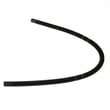
- If draining problems trace to the drain path, the dishwasher drain hose 8269144A is a common wear item to inspect and replace.
- If you suspect an electrical protection issue, the fuse 8193762 is one component that can stop the motor circuit.
Why it matters
A weak or failed pump can leave dirty water in the tub, reduce spray pressure, and increase the chance of odors and redepositing soil. Catching a clog early can prevent unnecessary replacement of higher-cost parts like a pump motor.
Last updated: January 2026
Why is water standing in the bottom of my Kenmore dishwasher?
Water standing in the bottom of your Kenmore 66517364301 dishwasher usually means the unit is not draining fully, or you are seeing the small amount of water that’s normal during certain points in a cycle. We focus first on confirming the cycle is complete, then checking the drain path (air gap, hose, and pump area) for a blockage.
First, confirm whether it’s actually a problem
A small pool of water can be normal during operation. The installation instructions even have you open the door after about 2 minutes to confirm there is water in the bottom of the tub during a test cycle. Use the steps in the 66517364301 installation guide to run a short cycle and check at the right time.
- If water is present mid-cycle, that’s expected.
- If water remains after the cycle ends, treat it as a drain issue.
- If the dishwasher stops before the end, troubleshoot power or door latch issues.
Most common causes (and what to check)
Work from easiest to most likely.
- Drain air gap clogged (if your home has one): The manual recommends checking the drain air gap anytime the dishwasher isn’t draining.
- Drain hose kinked or blocked: Look for a sharp bend under the sink or where the hose routes through the cabinet.
- Sink/disposer drain restriction: A partially clogged house drain can slow dishwasher draining.
- Pump area jammed: Food debris or a foreign object can block the impeller area.
- Drain components leaking or restricted: A soft hose can collapse, or an internal check valve can stick.
Parts that commonly relate to standing water
If you find damage, cracks, or a confirmed blockage you can’t clear, these model-matched parts are common fixes:
| Symptom you see | What it often points to | Model-matched part to consider |
|---|---|---|
| Water won’t drain, hose is brittle or split | Drain path failure | Dishwasher drain hose 8269144A |
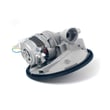
| Drains slowly, pump sounds strained | Pump restriction or wear | Pump motor W10782773 |
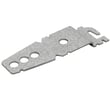
| Water backs up or leaks at connections | Loose connection | Clamp WP596669 |
Why it matters
Standing water can cause odor, poor wash results, and can lead to water backing up into the tub if the sink drain is restricted. Restoring proper drainage protects the pump and keeps cycles finishing normally.
Last updated: January 2026







