

What's the average lifespan of a KitchenAid dishwasher?
A KitchenAid dishwasher like model KDTM504EPA2 typically lasts 10 to 14 years. Consistent cleaning, correct detergent use, and fixing small issues early (leaks, poor draining, weak wash) are what most often push lifespan toward the high end.
What affects dishwasher lifespan most
- Water quality (hard water speeds up mineral buildup on the heating system and spray paths)
- Cleaning and maintenance (filter area, spray arms, door seals)
- Loading habits (overloading blocks spray and strains the pump)
- Detergent and rinse aid use (too much soap can cause residue and poor washing)
- Early repair of wear items (seals, hoses, latches, rack hardware)
Quick maintenance checklist (monthly and as needed)
- Run a cleaning cycle and wipe the tub edges and door area.
- Inspect the lower spray arm for clogs; clean the holes if needed.
- Check the door sealing surfaces for debris and wipe them clean.
- Look under the unit for slow leaks and address them quickly.
- Confirm the drain hose routing is not kinked or crushed.
Common wear items that can extend service life
If performance drops, these are frequent fixes on many KitchenAid dishwashers:
| Symptom | What to check first | Example part for KDTM504EPA2 |
|---|---|---|
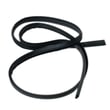
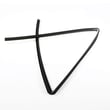
| Leaking at the bottom of the door | Lower door seal and sealing surfaces | Dishwasher door seal, lower WPW10497235 |
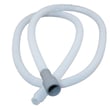
| Not draining well | Drain hose routing and clogs | Dishwasher drain hose 8269144A |
| Not drying well | Heating circuit and wash temperature | Element assembly W10703867 |
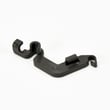
| Door won’t latch or pops open | Door latch alignment and wear | Dishwasher door latch WPW10653840 |
Why it matters
A dishwasher that is kept clean and sealed properly runs with less strain on the pump, motor, and heating system. That reduces repeat cycle issues, improves drying, and helps avoid the kind of leaks that shorten the life of the appliance.
Last updated: February 2026
How to fix rubber seal on KitchenAid dishwasher?
On the KitchenAid KDTM504EPA2 dishwasher, a “rubber seal” problem is usually a door gasket that has popped out of its channel or a lower door seal that’s torn or deformed. Reseating the seal evenly and correcting door alignment typically stops leaks and helps the door close smoothly.
Quick fix: reseat the seal
- Turn off power at the breaker.
- Open the door and inspect the seal for twists, gaps, or hardened sections.
- Starting at the top center, press the gasket firmly into the channel a few inches at a time.
- Work down both sides evenly; avoid stretching the rubber.
- Close and latch the door for several hours so the seal “sets” in place.
What to check before replacing parts
- Food debris or detergent buildup on the tub lip where the gasket seats
- A section of seal folded under itself (common at corners)
- Door not latching fully (misalignment or latch issue)
- Lower edge leaks that point to the bottom seal instead of the perimeter gasket
- Racks or tall items preventing the door from closing squarely
Parts that commonly solve sealing and leak issues
If the leak is coming from the bottom of the door (not the sides/top), the lower door seal is often the fix for this model.
| Symptom | Most likely area | Part to consider |
|---|---|---|
| Water at bottom center of door | Lower door seal | Dishwasher door seal, lower WPW10497235 |
| Door won’t stay shut or pops open | Latch/strike alignment | Dishwasher door latch WPW10653840 |
| Drips near left/right front corners | Door not closing evenly | Reseat seal; check loading and rack interference |
Why it matters
A seal that’s not seated correctly can let water escape, trigger poor wash performance, and cause the door to feel “stiff” or hard to latch. Fixing the seal early helps protect the floor and keeps cycles running normally.
If it still leaks
- Run a short cycle and watch where the first drip appears (bottom center vs. corners).
- Clean the sealing surfaces with warm water and a soft cloth; avoid abrasives.
- If the seal is torn, permanently flattened, or won’t stay in the channel, replace the affected seal.
- For wash-related issues that mimic leaks (oversudsing, poor draining), use dishwasher leaks video for step-by-step checks.
Last updated: February 2026
What is the most common problem with KitchenAid dishwashers?
For KitchenAid dishwashers like model KDTM504EPA2, the most common complaint is poor cleaning (food left on dishes). The root cause is usually restricted water flow from a dirty filter area, clogged spray-arm jets, or loading that blocks spray; draining and door leaks are also frequent.
What we see most often (symptom to likely cause)
- Dishes still dirty or gritty: spray jets clogged, filter area packed with debris, or items blocking rotation
- Standing water in the bottom: drain path restriction or a kinked/plugged drain hose
- Leaking at the front: lower door seal wear or the door not latching tightly
- Weak wash action or loud wash noise: circulation problem in the wash system
- Poor drying: heater circuit issue, rinse aid empty, or heat option not selected
Quick checks before replacing parts
- Spin spray arms by hand; they must rotate freely.
- Clear spray holes and remove labels or seeds that block jets.
- Verify the drain hose has a proper high loop and is not kinked.
- Run hot water at the sink 30 to 60 seconds before starting.
- Load so tall pans do not block the lower spray arm.
Parts that commonly fix the “big three” issues
| Problem | Part to inspect | What it does |
|---|---|---|
| Leaks at bottom/front of door | Dishwasher door seal, lower WPW10497235 | Seals the lower edge of the door opening |
| Door won’t stay shut | Dishwasher door latch WPW10653840 | Pulls the door closed to maintain a watertight seal |
| Poor cleaning, low spray | Dishwasher spray arm WPW10448645 | Distributes wash water through spray jets |
When an error code shows up
An error code helps us narrow the issue to the wash motor, drain system, heater, or sensors. Use KitchenAid microclean he dishwasher error codes to match the code to the fastest next checks.
Why it matters
Dishwashers clean by delivering the right water volume and spray pressure for the full cycle. Restoring spray-arm rotation, clearing restrictions, and ensuring a tight door seal fixes most “common problems” without guesswork.
Last updated: February 2026
What are the commonly replaced parts in a dishwasher?
In our experience with the KitchenAid KDTM504EPA2 dishwasher, the most commonly replaced parts are the wash system parts (spray arms, pump and motor), the heating and fill parts (heating element, water inlet valve), and door and rack hardware that wears, breaks, or leaks over time.
Common wear parts and failure points
- Spray arms clog or crack and reduce cleaning performance
- Heating element fails and causes poor drying or lukewarm washes
- Water inlet valve sticks and causes no-fill or slow-fill
- Door latch and lower door seal wear and lead to leaks or no-start
- Drain hose leaks, kinks, or restricts draining
- Rack adjusters, rails, and clips break from loading stress
KDTM504EPA2 part examples matched to symptoms
| Symptom you notice | Model-matched part example | What it does |
|---|---|---|
| Dishes not cleaning well | Dishwasher spray arm WPW10448645 | Distributes wash water through the tub |
| Not filling or fills slowly | Dishwasher water inlet valve W11175771 | Controls water entering the dishwasher |
| Poor drying or lukewarm wash | Element assembly W10703867 | Heats water and supports drying |
| Door won’t latch or won’t start | Dishwasher door latch WPW10653840 | Confirms the door is closed and latched |
| Leaks at the bottom of the door | Dishwasher door seal, lower WPW10497235 | Seals the lower edge of the door |
Quick checks before replacing parts
- Clear debris from the sump area; remove any standing water
- Rinse spray arm holes; clear mineral buildup with warm water
- Verify the shutoff valve under the sink is fully open
- Check the drain hose for kinks and a proper high loop
- Inspect the lower door seal for tears, gaps, or deformation
Why it matters
Dishwashers depend on correct fill, strong circulation, proper heating, and a tight door seal. When one system weakens, you typically see repeat symptoms like poor cleaning, poor drying, leaks, or no-start.
For flashing lights or code-related symptoms, use our KitchenAid microclean he dishwasher error codes guide to narrow the problem to a specific function.
Last updated: February 2026